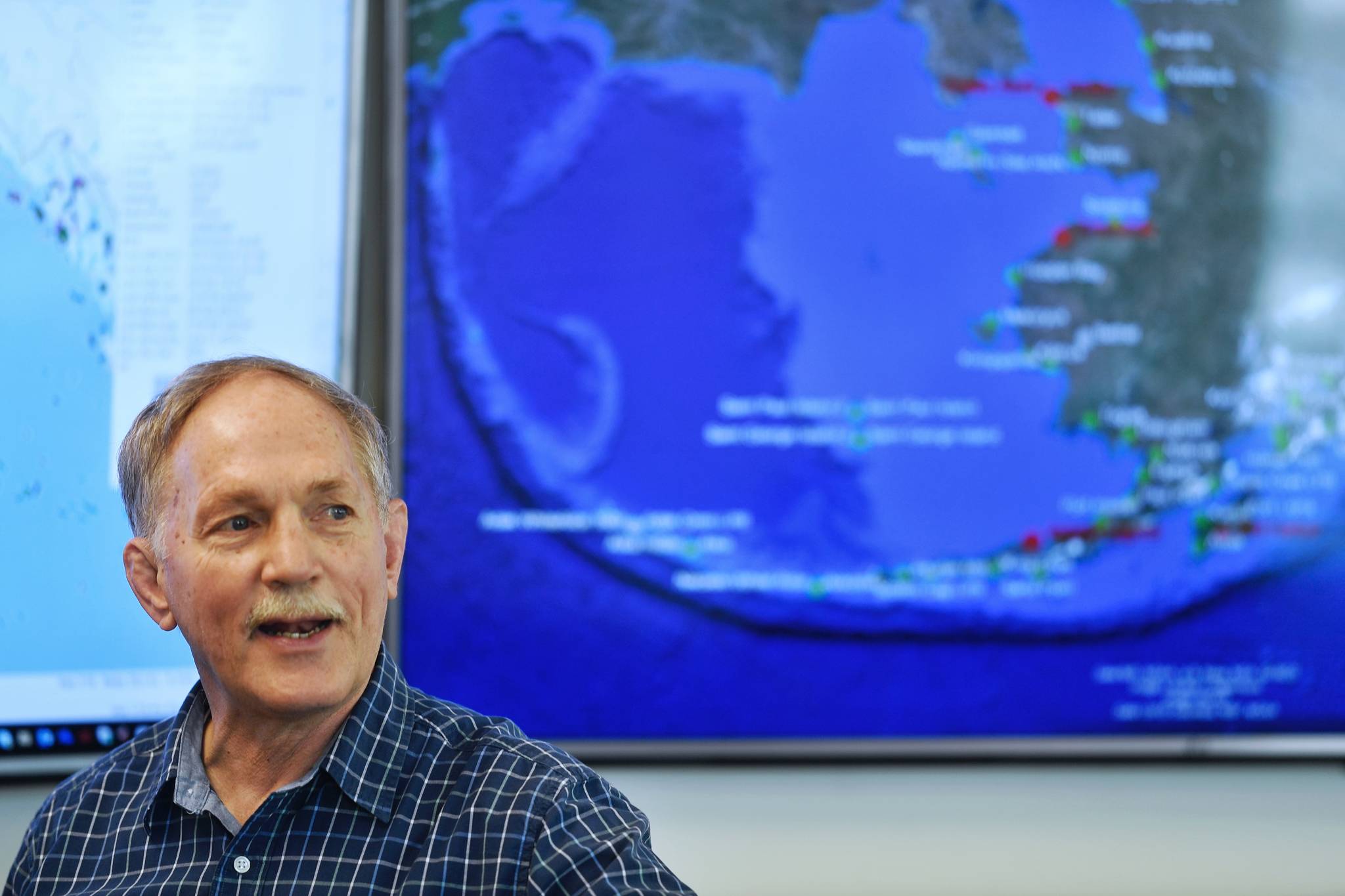
When Ed Page flew over the Exxon Valdez oil spill 30 years ago this week, he was overwhelmed at how expansive it was.
“When you’re flying in a plane and you see that much oil, you’re just flabbergasted,” Page recalled. “You go, ‘This is mission impossible. Absolutely mission impossible.’ Oil spreads like crazy. It’s like a forest fire.”
Just like forest fires, Page now says, the best way to fight oil spills is to stop them before they start. Page, who was the Coast Guard’s chief of marine safety in Alaska at the time, was helping cleanup efforts in the years following the Exxon Valdez oil spill (which happened March 24, 1989).
About a decade after the spill, Page founded the Marine Exchange of Alaska, which tracks and monitors ships that go through Alaska waters. One of his main motivations for creating the organization, he said, was simply that he doesn’t like oil spills.
In multiple ways, the Exxon Valdez oil spill led to the creation of the Marine Exchange, which aims to make sure an oil spill of that magnitude never happens in Alaska again.
[30th anniversary: Exxon Valdez oil spill inflicted lasting wounds]
In fact, Page got money from the state from the Exxon Valdez settlement to help create the Marine Exchange in 2000. The nonprofit has grown since then, now with a permanent building in Juneau and 20 staff members who keep an eye on 1.5 million square miles of Alaska waters and 33,000 miles of coastline. They’ve installed 130 vessel trackers around the state in the past 10 years, closely watching everything from cruise ships to tankers to Coast Guard vessels.
Technology has changed drastically over the years, and Page — the executive director of the Marine Exchange — and his staff have taken advantage. The idea of a marine exchange began in the 1800s, but Alaska didn’t have one until Page founded this one. He said the goal was to “tame the Wild West” of Alaska’s waters.
“We had no clue what they were doing until they called and said they were on the rocks,” Page said.
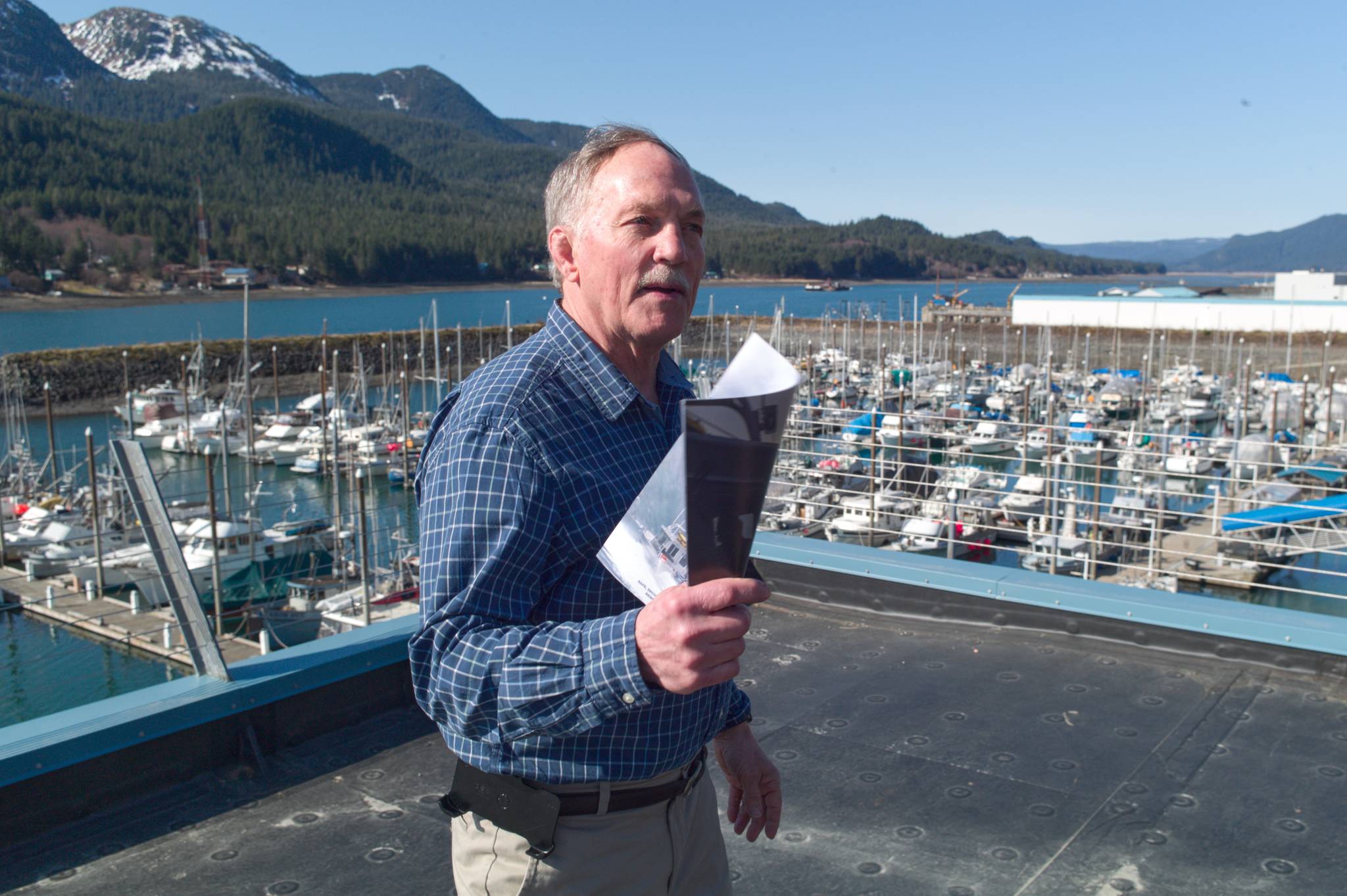
From the roof of their new building over looking Harris Harbor in Juneau, Retired U.S. Coast Guard Captain Ed Page, Executive Director of the Alaska Marine Exchange, explains Wednesday, March 27, 2019, how the exchange came about and how it now keeps track of ships in Alaska waters and beyond. (Michael Penn | Juneau Empire)
Now, boats can update their location every six seconds, Page said. Advances in technology and Simple artificial intelligence software tracks boats around the clock, monitoring how fast they’re moving, if they’re too close to shore and more. Watchstanders such as Maritime Information Specialist Shelby Martin also keep an eye out for vessels in trouble.
On Wednesday afternoon, for example, Martin was at her computer in the Marine Exchange’s operations center and saw a cargo ship near the Aleutians that was moving in the wrong direction. The ship, which was bound for Japan, was broken down and drifting in the wrong direction. Martin sprung into action, reaching out to the vessel and trying to figure out what was wrong. It was a typical day in her job, looking at a computer screen tracking hundreds of vessels and trying to spot which ones might need help.
[Opinion: Thirty years since the Exxon Valdez oil spill and our current ship of state]
The threat of disaster is always hanging over the employees’ heads at the Marine Exchange — sometimes literally. On the wall just a few feet from Martin is a photo of the MV Selendang Ayu, which ran aground off Unalaska Island in the Aleutians in 2004. The ship split in half, spilling oil into the ocean. Six crewmembers died when a wave engulfed a rescue helicopter. The photo on the wall depicts the wrecked vessel being overtaken by the waves.
“It’s a reminder,” Page said. “That’s what we want to prevent.”
Ships will have problems. Things will go wrong. That’s unavoidable. But the Marine Exchange aims to make sure those small problems remain as small as possible. They tell large vessels to stay 50 nautical miles away from shore so that if the boat breaks down and starts drifting, there’s a buffer zone that allows rescuers to get there before the ship runs aground.
That’s one of the biggest goals of the organization, to leave enough time for rescuers to get there before a disaster like Exxon Valdez or Selendang Ayu happens again. They’re also constantly adjusting, like looking to an Arctic future that involves more ship traffic as ice melts.
Having the Marine Exchange in Juneau, Page said, allows him and his employees to have access to both the Alaska Legislature and the Coast Guard station in town.
“There’s nothing like it in the world, quite honestly, that’s that actively involved in tracking vessels in 1.5 million square mile area,” Page said, “and it’s happening in Juneau, which is really cool.”
• Contact reporter Alex McCarthy at amccarthy@juneauempire.com. Follow him on Twitter at @akmccarthy.
