Tales from 2 trails and some bird stories
Published 10:30 pm Monday, August 24, 2020
By Mary F. Willson
For the Juneau Empire
A group of friends went up the Granite Basin Trail in mid-August. Lots of work has improved the trail mightily, and big boards stashed alongside indicate that more work may be planned.
Snow still covered the trail at the place where spring avalanches always dump their icy loads. That was perhaps a measure of how unseasonably cold this “summer” has been.
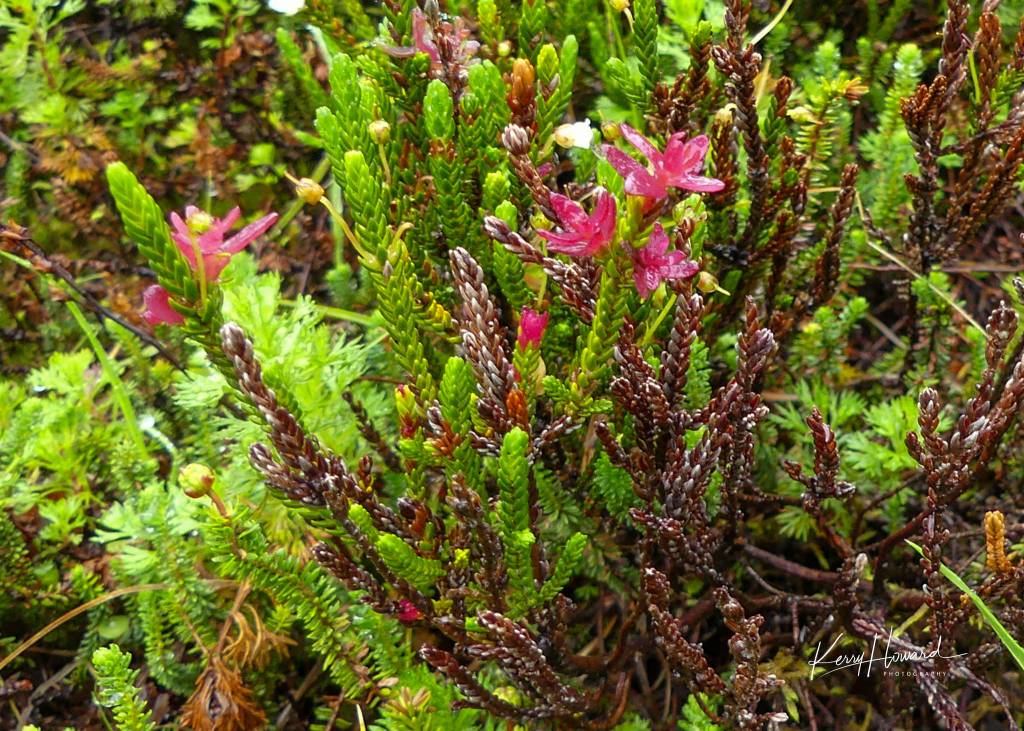
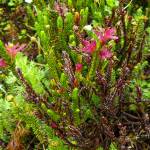
Salmonberries were ripening at trailside, but in one place skimpy, pale leaves made it clear that the canes had only recently come out from under snow cover. Purple fleabanes (or daisies) and grass-of-Parnassus flowered. White mountain-heather and partridgefoot were in full bloom. We found odd red structures on one mountain-heather and did not have the least idea what they are; we found out that they are a result of a fungus infection that makes the plant turn leaves into false flowers, with nectar(!), to attract insects that then spread the fungus.
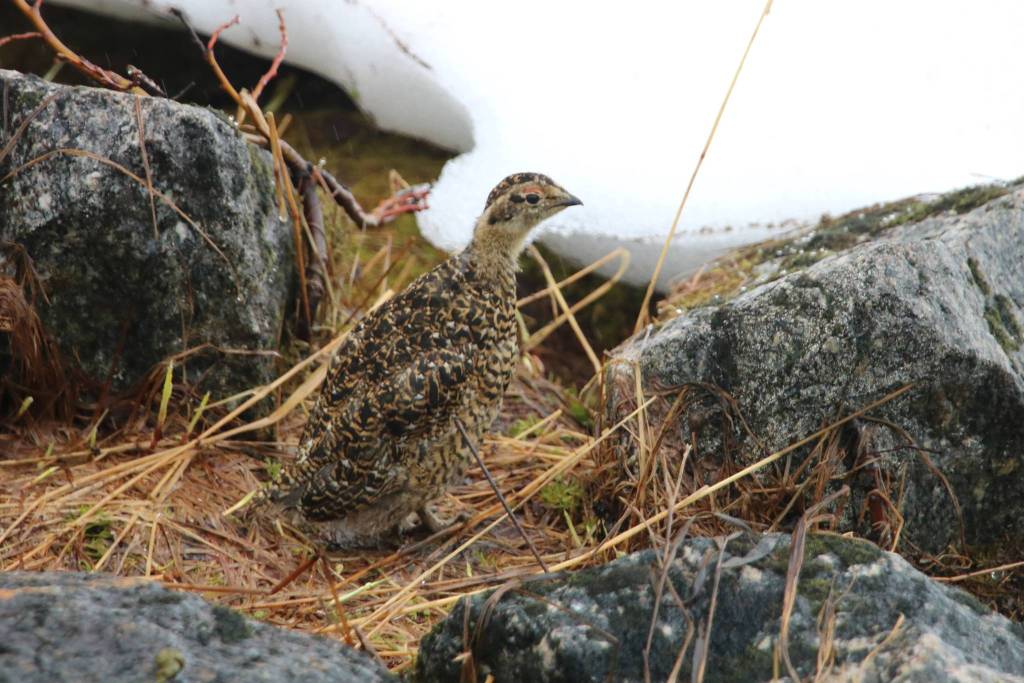
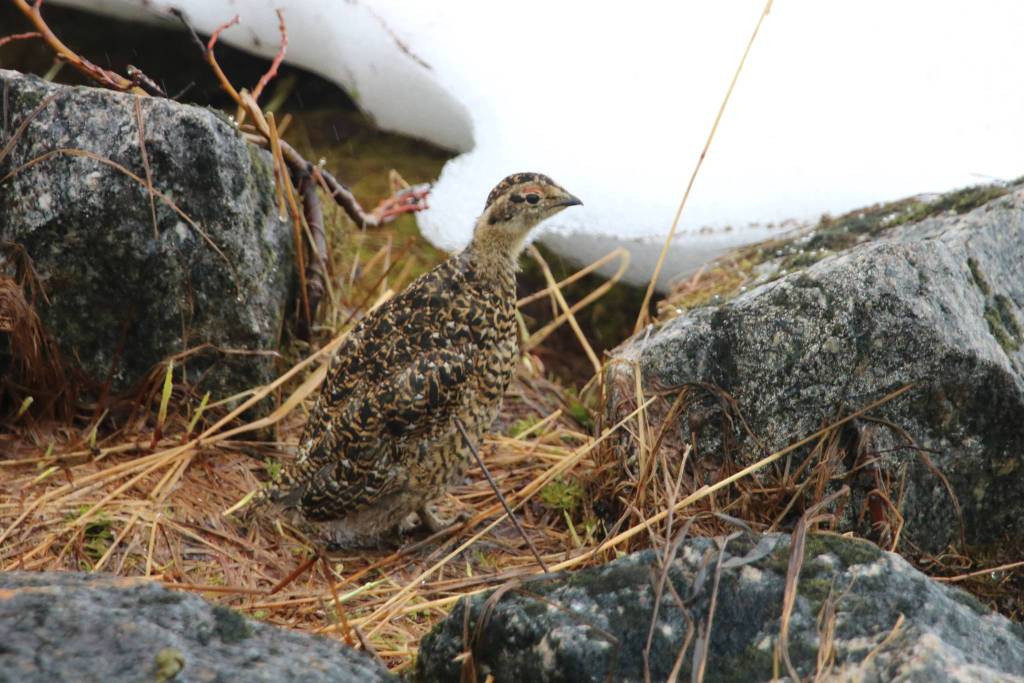
Clouds hung low that day, obscuring any long vistas. They lifted, just slightly, about midday; not enough to even say there was watery sunshine. But that was enough for the marmots to come out and “sun” themselves on the rocks. Folks watched a dipper foraging in the pool above the falls, where we often see them. Those who ventured farther into the basin saw ptarmigan, including chicks.
The previous week, I went to check out the Horse Tram Trail. From the Boy Scout Trail, the route goes up the hill a bit and then there’s a junction with a yellow marker. The original tram route went down over the saddle into Amalga Meadow, but the newer route heads up the hill to a little meadow and then down to a cove and toward the Eagle Valley Center in Amalga Meadow. Some work had been done on the stretch going up the hill but then there was a long, muddy, squishy reach to the small meadow — but work was in progress. From the meadow on down toward the EVC, the trail is now in great shape.
[Gross but good: How animals make use of dung, mucus and more]
Parks and Rec hikers used to do a loop, from the Boy Scout Trail up the — then-unimproved — Horse Tram Trail to the little meadow, down to Amalga Meadow, and back up over the saddle where the bent and twisted tram tracks are still visible in places to the junction and on down to the Boy Scout Trail. The old tram-track trail over the saddle is now badly eroded and overgrown, and it’s hard to pick up that trail from Amalga (even when you know, in general, to aim for the saddle). If a hiker wants to do the loop, it’s easier to do it in the other direction: over the saddle from the junction down into Amalga, where it is possible to pick your way by several damp routes over to the trail up to the small meadow and back down the hill.
As we hiked down on the good trail from the little meadow recently, a family of chickadees flitted around our heads, quite fearlessly. So we wondered if they sometimes got treats from people at the EVC. Sapsuckers had made a double row of sap wells up the side of a damaged spruce –not a usual place for their wells. In the wet meadow, a bear had dug up one skunk cabbage out of thousands that grow there; so we had to ask Why that one in particular?
Words on birds
A friend sent me a video of a raven following a marmot, pecking at its tail; the marmot continues to browse, the raven continues to pester its tail. Pure mischief!
Not at all like ravens and crows pecking at an eagle’s tail to distract it from a captured salmon. Ravens also destroy the padding on car-top canoe carriers; is that just for fun and something to do when bored? A friend tells of watching a raven carefully selecting a spot to cache something held in its bill. The raven could see the observer well, but it completed the cache and flew off. My friend went to the cache and found — a small, smooth quartz pebble. Trickster, indeed!
[How tails help birds get ahead]
Finally, one day in August, I came up the steps into my living room and, as always, glanced out the front windows. There was a fair-sized, brownish lump on the railing, looking a bit disheveled. Huh? Oh. That heap of stuff is a juvenile goshawk! It was glaring at a cat crouched a few feet away in the living room. The bird was ‘mantling’—displaying by hunching over, raising the feathers on its upper back (its mantle), and spreading its wings. Typically used as a display to protect a captured prey from challengers, it can also be a defensive display, it seems (it held no prey). So it was a stand-off—neither cat nor bird liked the other one. I later saw the goshawk perched in a nearby tree. What drew it here in the first place? Maybe a duck or two on the pond (I once saw a goshawk take a duck there), but perhaps more likely the hairy woodpeckers that frequent my peanut-butter feeders. Goshawks commonly forage by dashing through tree canopies, snatching squirrels and woodpeckers from branches and tree trunks; at least in some places, woodpeckers are a common prey.
.• Mary F. Willson is a retired professor of ecology.“On The Trails” is a weekly column that appears in the Juneau Empire every Wednesday.