State changes interstate and international travel guidelines
Published 9:30 pm Wednesday, October 14, 2020



This article has been updated to include new information.
The state updated its out-of-state travel regulations Friday, shortening the time for social distancing after arrival and lifting the requirement for a follow-up test.
Under the new guidelines, which are effective as of 12:01 a.m. Friday, out-of-state travelers must complete strict social distancing for five days, according to a news release from the governor’s office. A second COVID-19 test is recommended five to 14 days after arrival but is not required.
[Governor’s office, city, state report cases]
Previously, travelers coming into the state were required to social distance for 14 days, but that could be reduced if they received negative test results after coming into the state.
Another change: Residents who travel outside of Alaska for fewer than three days do not need to quarantine or test. The previous no-test limit was one day of travel outside of the state. Residents who travel outside of the state for more than three days also have the option to self-quarantine for 14 days without being tested.
Critical infrastructure employees traveling for any reason should follow their employers’ plans for testing and quarantine, under the revised guidelines.
All travelers coming into the state must still either have negative test results from a test taken within three days of departure and practice social distancing for five days or until they leave the state; have proof of a test taken within 72 hours of departure, self-quarantine until results arrive and upload test results to the Alaska Travel Portal and practice social distancing if results are negative or quarantine if results are positive; or get tested at the airport, self-quarantine until results are known and either practice social distancing or self-quarantine depending on the results.
Tests at the airport cost $250 for nonresidents and are free for residents.
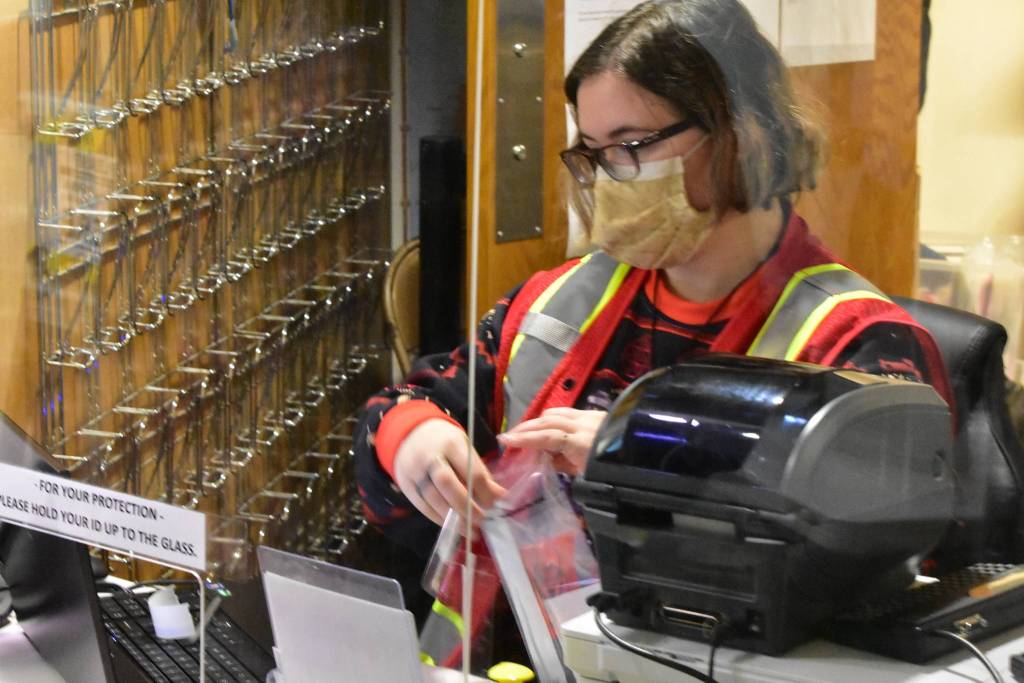
The changes aren’t likely to have any major immediate impacts on the operations at the Juneau International Airport, Robert Barr, planning section chief for the City and Borough of Juneau’s Emergency Operations Command told the Empire in a phone call.
Barr said they expected fewer people to seek a follow-up test now the requirement has been lifted. That is slightly concerning, he said, because while most cases are caught on the first test, there have been some positive cases identified by the second.
The next few months
The changes to state regulations were announced at a news conference Thursday even as the state reported rising numbers and new deaths. In a Facebook update Thursday, Chief Medical Officer Dr. Anne Zink said actions Alaskans have taken to slow the spread of the coronavirus have made a big difference, but they’ll need to continue particularly into the winter.
“What we do in the next few months is going to determine our fate,” she said. “What future generations will say about this time will be based on what we do in the next few months.”
Alaska still had some of the lowest number of positive cases requiring hospitalization, Zink said, and had fared better than comparable states such as Idaho and Montana. That was partially attributable to the large number of tests being done in the state, which help identify cases early giving time for preventative measures.
She urged Alaskans avoid what she called the three C’s; congregate settings, close contacts and confined spaces, and to follow the three W’s; wash your hands, wear a mask and watch your space.
“What you’ve done has made a big difference and what we do this fall and winter will continue to be challenging but will be really important,” she said.
The state is getting ready to submit its vaccine distribution plan to the federal government Friday, Zink said, which would touch off a series of long conversations about how best to deploy the medicine.
“We don’t have all the information and data about which vaccines may be available and which groups it would be best for,” she said.
A number of vaccines are in development a few of which appear to be “safe and efficacious,” she said.
Local Cluster
Locally, CBJ officials are working to contain a coronavirus outbreak among the city’s unsheltered population. On Tuesday Centennial Hall was opened as an emergency quarantine facility, and the downtown public library was closed.
CBJ announced Friday afternoon cases among the city’s unsheltered had grown to 38, and that testing was taking place at various homeless service organizations in town.
Also on Friday, the state announced an additional 220 new COVID-19 cases statewide, and raised its alert level for CBJ to high, as the borough’s average daily case rate rose to over 10 per 100,000 over a 14-day period. The state’s alert levels don’t come with any restrictions built in like CBJ’s do.
Juneau uses a combination of 20 metrics to determine it’s own emergency rating. Friday afternoon only one of those metrics was in the high category; new cases over the past seven days. CBJ’s emergency ratings do have restrictions built-in, and if the city raises its rating to Level 3 High bars must close to indoor service and restaurants must limit their capacity.
The state also reported a new death, the state’s 66th. The person was a Fairbanks man in his 80s, according to the state.
Cumulatively, there have now been 10,549 resident cases in the state and 1,027 nonresident cases, according to state data. So far, 5,605 people have recovered.
Common symptoms of COVID-19 include fever, cough, breathing trouble, sore throat, muscle pain, and loss of taste or smell. Most people develop only mild symptoms. Some people, usually those with other medical complications, develop more severe symptoms, including pneumonia, that can be fatal.
• Contact reporter Peter Segall at psegall@juneauempire.com. Follow him on Twitter at @SegallJnuEmpire.