Solving the salmon problem
Published 6:00 am Friday, January 11, 2019
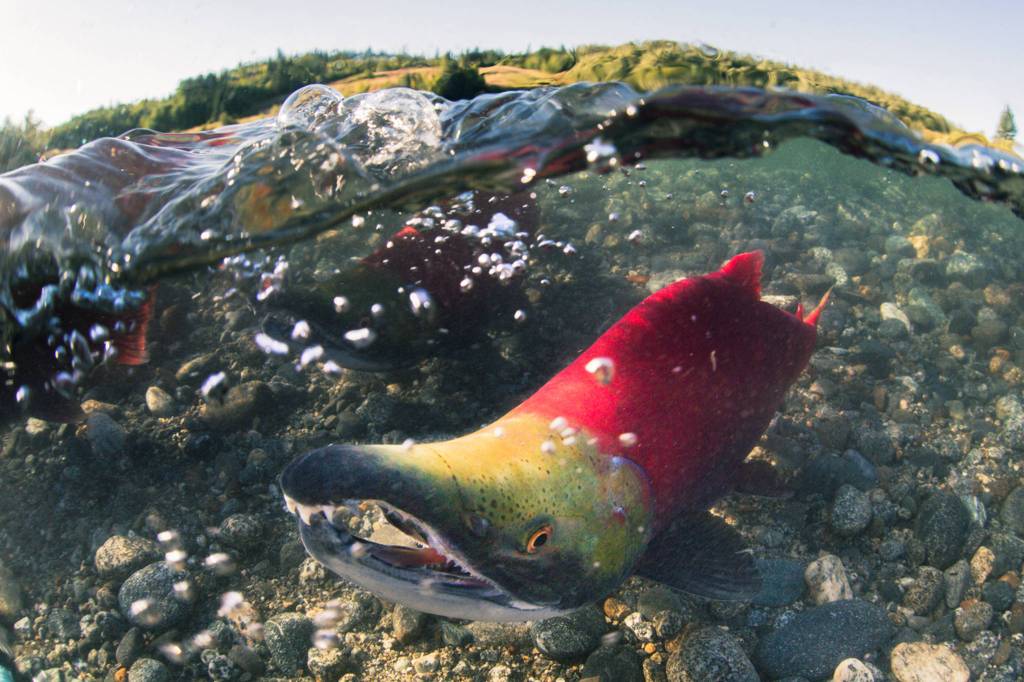
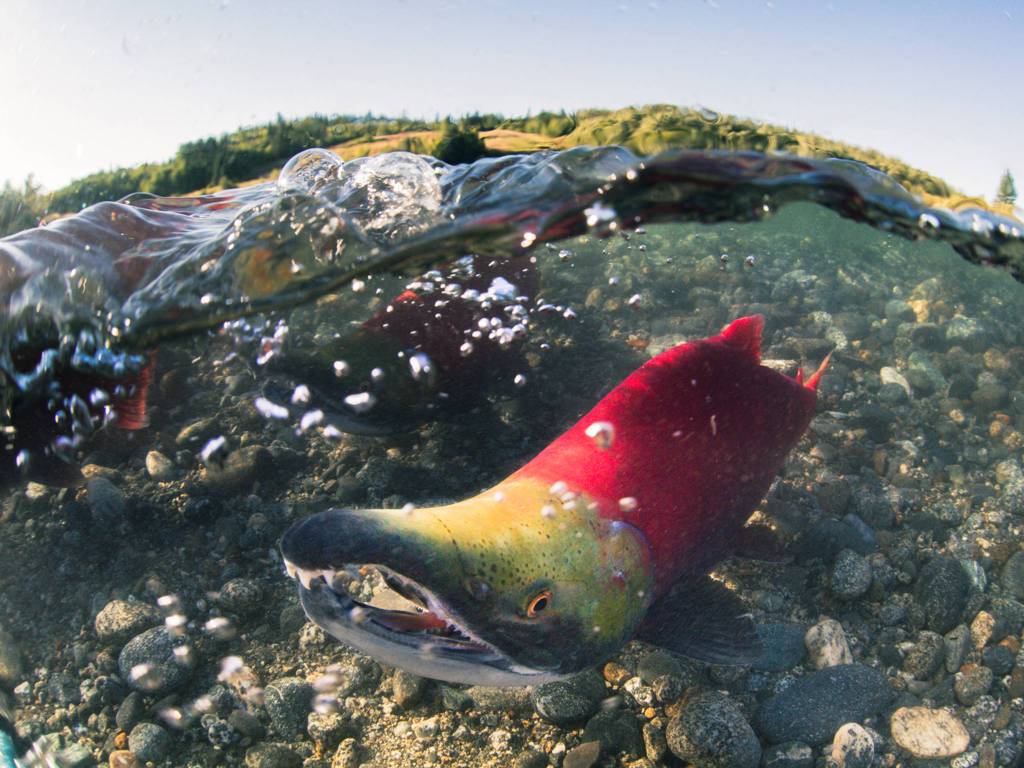




2018 was a mixed year for Alaska salmon. Bristol Bay saw its biggest run on record when 62.3 million sockeye returned to the bay. Other Alaska runs, in contrast — the lowest number of sockeye returned to the Chignik River since statehood — were disastrous.
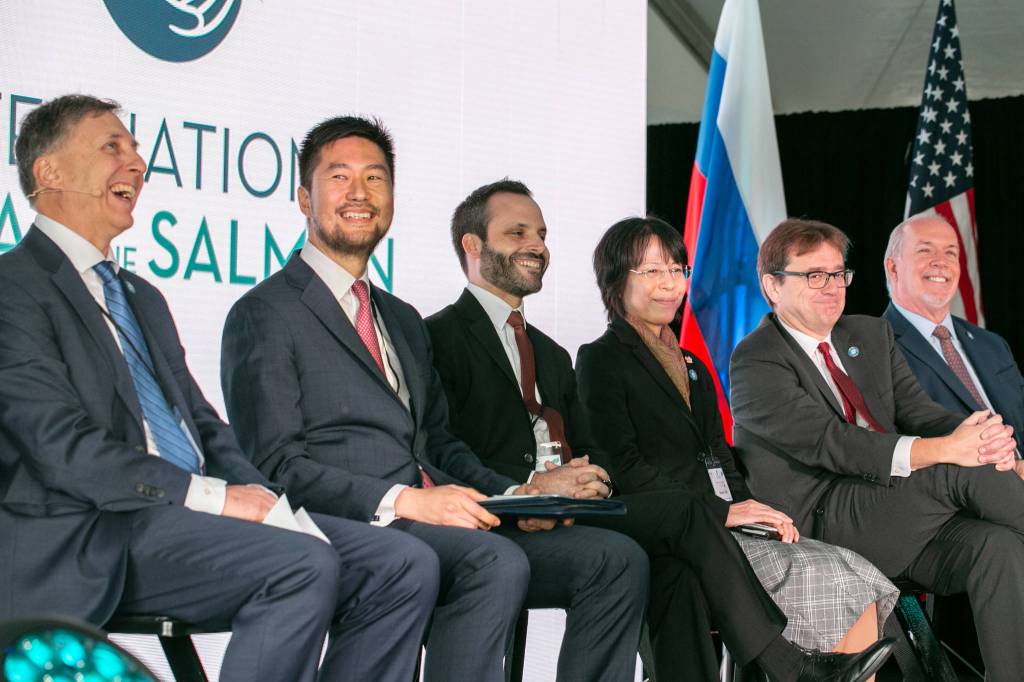
In 2019, however, salmon in Chignik and Bristol Bay will have something in common not only with each other, but with populations across the Northern Hemisphere: the International Year of the Salmon, for which researchers around the world will be collaborating to help solve shared problems.
Atlantic salmon were once just as abundant as Alaskan salmon were during their healthiest periods. Roman soldiers invading Britain wrote home about feeding the army with vast quantities of salmon fighting their way up the Thames River, which flows through modern-day London. On the East Coast of the United States, salmon were once taken for granted as a food source and used to fertilize fields. The plight of salmon in the Lower 48 Pacific Northwest — their historically impressive populations were damaged due to dams blocking fish passage, overharvesting, development and other human-created problems — is another familiar story.
[Short-lived salmon play a role in long-term survival]
But whether their populations are healthy compared to historic levels or not, Pacific and Atlantic salmon now share many of the same threats and are displaying the same trends, said International Year of the Salmon Director for the North Pacific Region Mark Saunders.
In the 1990s, Saunders said, salmon populations in very different parts of the world began to change “at an almost exponential rate.” Fewer were coming back from the ocean. Those that did were coming back smaller.
A now-retired Canadian scientist, Dr. Dick Beamish, suggested the International Year of the Salmon, or IYS, to promote research on how ocean conditions are contributing to those changes.
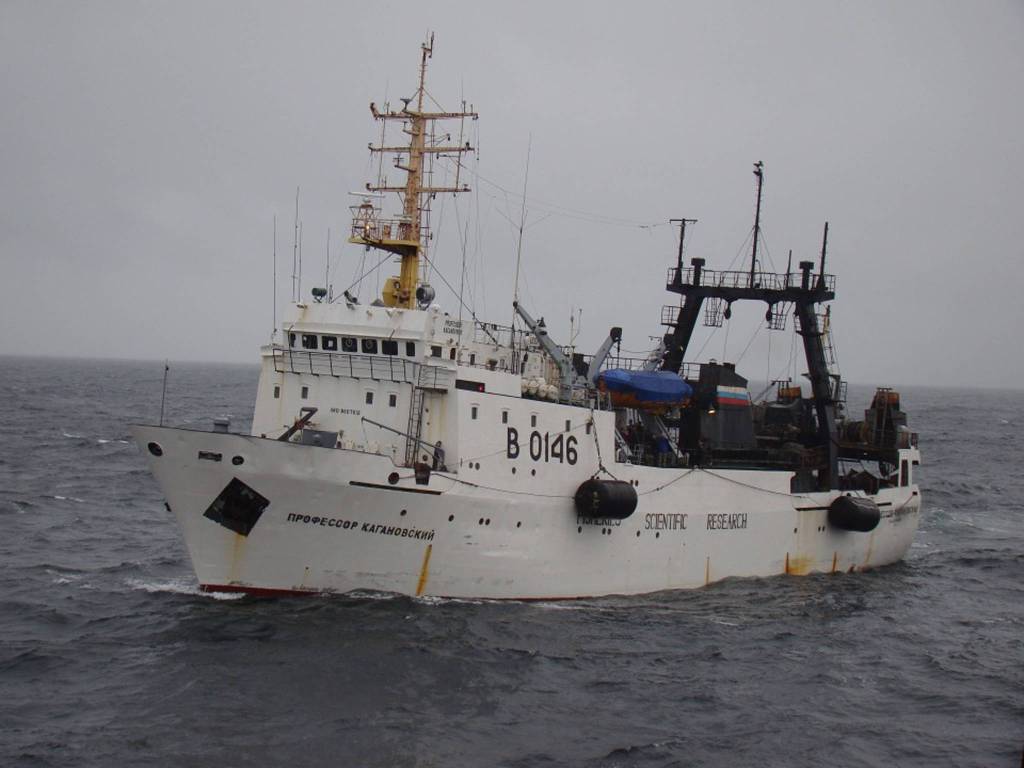
IYS has now grown into an effort to ensure the “resilience of both salmon and people” in a changing climate. In one of the first research efforts under IYS, more than a dozen scientists from every country participating in NPAFC, or the North Pacific Anadromous Fish Commission (Japan, Korea, Russia, the United States and Canada) will be on board the ship the Professor Kaganovsky from mid-February to mid-March. They’ll do trawl surveys of surface-level fish at “a checkerboard” of around 40 stations in the Gulf of Alaska, Saunders said. Some fish will be funneled into an aquarium-like tank, allowing all five species of salmon to come on board in good condition to be tagged and released. Special satellite tags will help scientists track the migration routes of salmon while they’re feeding in the open ocean.
Scientists will keep some salmon, collecting otoliths (salmon ear bones, which, like tree rings, carry information about a salmon’s life history.) Otoliths can be used to determine the age of a salmon and where it has been in the ocean during different stages of its life. Scientists will use the latest genomics technology to figure out salmon’s natal streams as well as to test for a variety of 46 pathogens. They’ll also be noting the salmon’s overall physical health and measuring ocean conditions by taking plankton surveys and testing temperature at depth.
[Researchers threw salmon carcasses on one side of a creek for 20 years. Here’s what happened]
The overall hope is to figure out what’s going on in the high seas in the winter — a critical time in a salmon’s life.
By 2021, they hope to expand the surveys beyond the gulf to include the entire North Pacific, Saunders said.
“The salmon can teach the climatologists and ecologists a lot. What the salmon are telling us can really help us understand what is changing out there in the open ocean,” he said.
The North Atlantic Salmon Conservation Organization, or NASCO, which includes Canada, the United States, Russia, Norway, the Kingdom of Denmark’s Faroe Islands and Greenland, and the European Union, is an equally central part of IYS.
“If we’re not collaborating, we’re missing an opportunity to find the answers much more efficiently,” Saunders said. One of the main goals is to encourage scientists, governments and organizations to share data.
“We can’t solve it all in four or five years, but our institutions and people can be connected,” he said. “The clues lie in comparisons across hundreds, if not thousands, of populations that are experiencing these changes differently. A lot of 2019 is about bringing people together to work on setting the conditions for resilience for both salmon and people. I liken it to an intelligence network.”
[Salmon measure suffers resounding defeat. What happened?]
A central part of that intelligence network is indigenous knowledge in Russia, Alaska, and Canada. So is looking at how climate change and its effect on salmon will impact people.
“Sometime in the next ten years, Atlantic and Pacific salmon are going to meet in the mid-polar region,” he said. “What does that mean to people? What does it mean, culturally, as these distributions change?”
Saunders suggests those interested in getting involved with IYS go to the website, www.yearofthesalmon.org. Another thing people can do is alert IYS about local salmon-related events, knowledge and studies.
“There’s something in it at every level if you’re interested in sustaining salmon,” Saunders said.
• Mary Catharine Martin is the communications director of SalmonState, a nonprofit initiative that works to ensure Alaska remains a place wild salmon thrive.