Sealaska Heritage Institute sues Neiman Marcus for “blatant” copyright infringement
Published 1:01 pm Monday, April 20, 2020
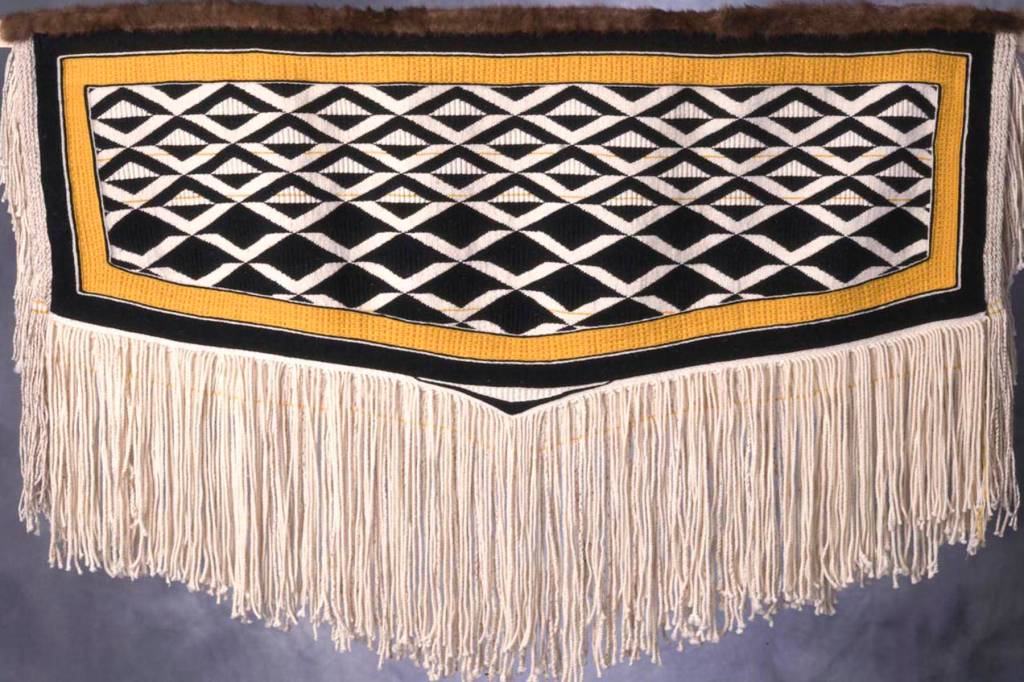
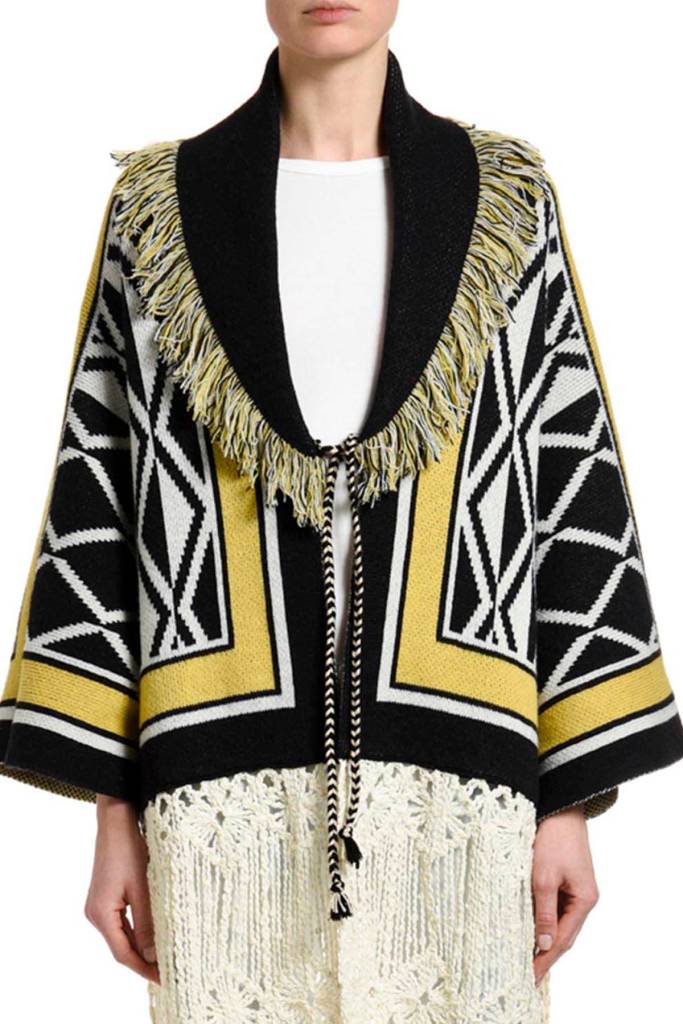


Sealaska Heritage Institute filed a lawsuit Monday in the U.S. District Court against luxury department store chain Neiman Marcus over alleged unlawful use of the term “Ravenstail” and copyright infringement.
“In our opinion, this retail garment looks like a Ravenstail robe, and it features a replica of a design that is protected by copyright,” said SHI President Rosita Worl in an email. “It’s one of the most blatant examples of cultural appropriation and copyright infringement that I’ve ever seen.”
Ravenstail weaving style, along with Chilkat weaving style, are two prominent art forms utilizing hand-twined textiles present in Tlingit, Haida and Tsimshian cultures, said Lily Hope, a Chilkat and Ravenstail weaver and teacher, and daughter of Clarissa Rizal, who in 1996 created the specific design involved in the allegations.
Neiman Marcus was made aware of the alleged issues with their product but took no action, wrote SHI media specialist Kathy Dye in a release.
The idea of companies blatantly copying indigenous art and designs without permission is not a new one, but this is the first time a company has been sued in the United States for copyright protection of a traditional pattern or design, said Jacob Adams, a specialist in the area of cultural appropriation of copyrighted designs.
A venerable tradition
The traditional Ravenstail design has deep roots in the region and its history.
“Ravenstail and Chilkat weavings have been being woven on the Northwest Coast and in Canada for hundreds of years,” Hope said. “Every writing that we can find from the 1800-1900s refers to the indigenous peoples, the Tlingit and Haida and Tsimshian, wearing these robes as traditional attire.”
The robes and their traditional designs have deep cultural and spiritual significance to the Alaska Native tribes in the region, Worl said.
“Ravenstail robes that are associated with ceremonial rites are considered to be clan at.óowu or sacred objects and represented spiritual links to ancestors who used these robes,” Worl said. “Like Chilkat robes, Ravenstail robes are complex and can take years to make. Because of this, traditionally the robes were associated with the wealthiest of the tribes’ noble class.”
The Ravenstail name in particular has been associated exclusively with the Tlingit, Haida and Tsimshian, and Sugpiaq/Alutiiq tribes, said Worl. The geometric designs come from the style of weaving of the robes which comes from basketry, Hope said.
“The use of the term ‘Ravenstail’ implies it came from northern Northwest Coast tribal people,” Worl said. “The unlawful taking of indigenous intellectual property has to stop.”
Allegations of appropriation
Fellow artists began messaging Hope about the “parallels” between the “Ravenstail Knitted Coat,” still retailing on the Nieman Marcus site for $2,555 as of Monday, and her mother’s copyrighted work, Hope said.
“I was quite shocked to see how it was presented. Multiple artists messaged me privately, sending links from social media,” Hope said. “We kind of looked at each other and said, ‘What can we actually do about it?’ Similar instances have happened before like this, and it was kind of a mutual exploration to see what kind of action we could take.”
Hope said that they arrived at a meeting of the minds at roughly the same time as members of SHI did, approaching each other to choose a course of action. SHI is requesting an injunction against Neiman Marcus banning the sale of the garment. SHI is also seeking statutory, compensatory, punitive and other damages, according to the press release.
“From my understanding, the sale of this product by the defendants created a stir in late 2019 most notable on social media,” Adams said. “It was primarily through this and SHI’s contacts with the community that brought this to our (SHI’s) attention.”
Adams said that the issue is a straightforward one.
“It works no dissimilar from any other protectable textile or visual work of art. It is common that artists protect their works through the copyright laws in many different mediums,” Adams said. “It must also be remembered that there are important collective cultural ownership of cultural properties, such as the Ravenstail robes, generally, but this is in addition to the rights that individual artists and craftspeople have in their works through the laws of the United States.”
Adams said he hopes the matter can be resolved rapidly and peaceably.
“This is only the beginning of the process, and while we are hopeful for an amicable and efficient resolution, at this point the Defendants will have 21 days from the time they are served with the complaint to answer it and appear in the District Court here in Juneau,” Adams said.
According to Reuters, Neiman Marcus may file for bankruptcy this week as the effects of the coronavirus have ravaged its sales. SHI is unmoved by their plight, Adams said.
“We hope that Neiman Marcus’ financial situation does not affect our ability to seek justice for this, as we see it, insensitive and unlawful taking of cultural property,” Adams said.
Neiman Marcus did not respond to a request for comment.
“I’m hoping it gives other designers great pause,” Hope said. “I’m hoping this serves as a little warning that this is not OK.”
“I hope that it brings an awareness to the value of indigenous made art, what really is Ravenstail,” she added. “This is not a dead art form, we’re still out here.”
• Contact reporter Michael S. Lockett at 757.621.1197 or mlockett@juneauempire.com.