Rosalind Franklin’s role in DNA discovery gets a new twist
Published 10:30 pm Monday, April 24, 2023
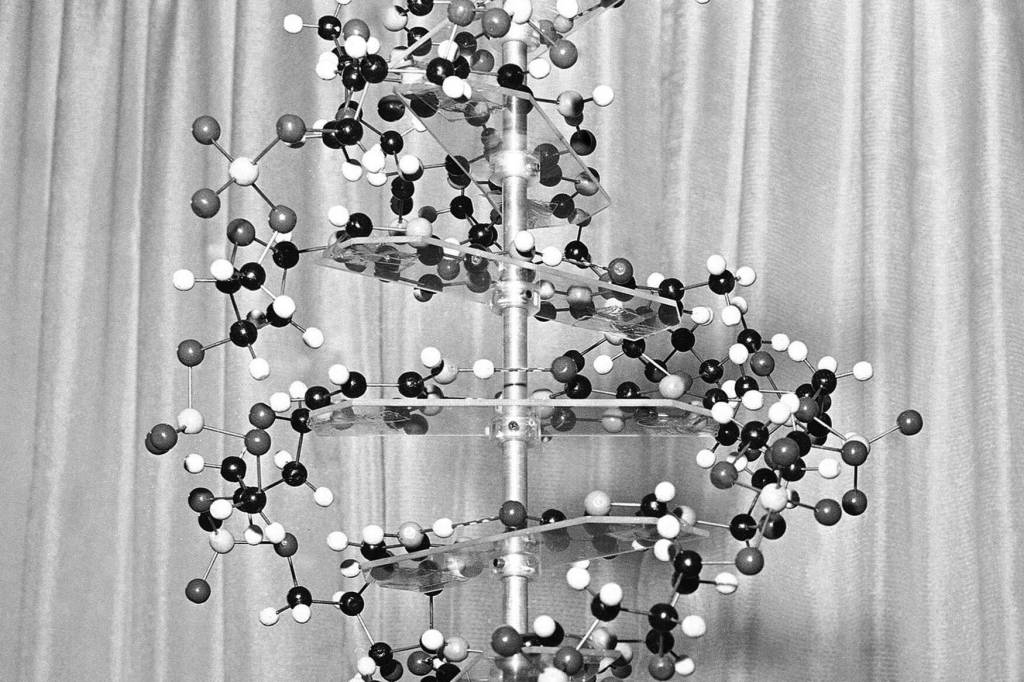
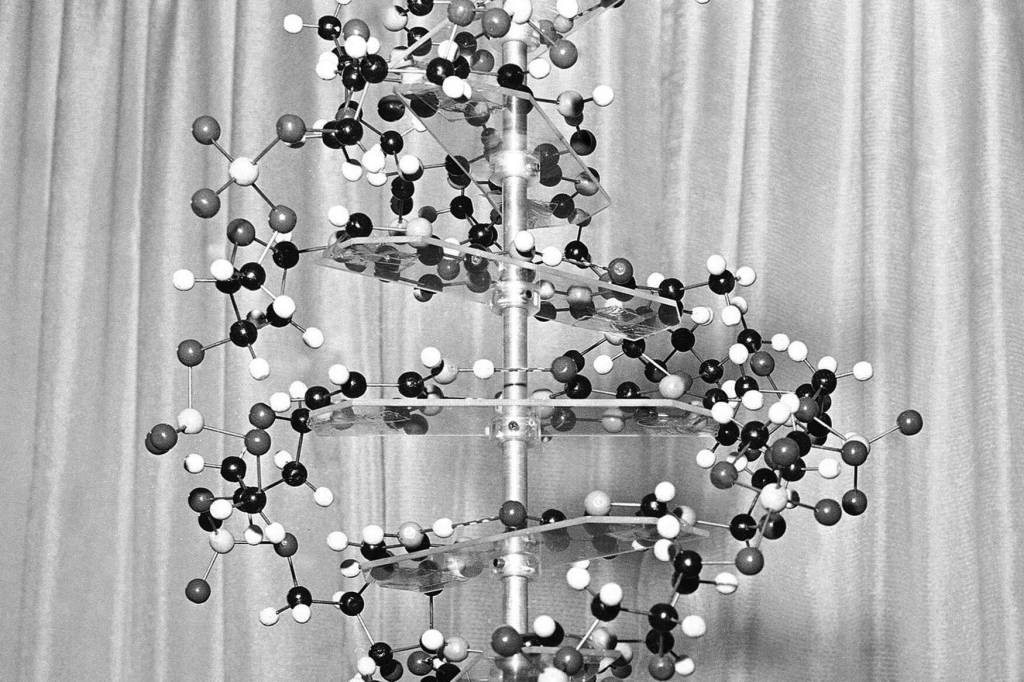
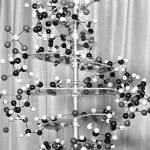
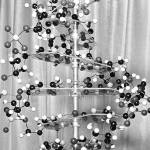
NEW YORK — The discovery of DNA’s double helix structure 70 years ago opened up a world of new science — and also sparked disputes over who contributed what and who deserves credit.
Much of the controversy comes from a central idea: that James Watson and Francis Crick — the first to figure out DNA’s shape — stole data from another scientist named Rosalind Franklin.
Now, two historians are suggesting that while parts of that story are accurate — Watson and Crick did rely on research from Franklin and her lab without their permission — Franklin was more a collaborator than just a victim.
In an opinion article published Tuesday in the journal Nature, the historians say the two different research teams were working in parallel toward solving the DNA puzzle and knew more about what the other team was doing than is widely believed.
“It’s much less dramatic,” said article author Matthew Cobb, a zoologist at the University of Manchester who is working on a biography of Crick. “It’s not a heist movie.”
The story dates back to the 1950s, when scientists were still working out how DNA’s pieces fit together.
Watson and Crick were working on modeling DNA’s shape at Cambridge University. Meanwhile, Franklin — an expert in X-ray imaging — was studying the molecules at King’s College in London, along with a scientist named Maurice Wilkins.
It was there that Franklin captured the iconic Photograph 51, an X-ray image showing DNA’s criss-cross shape.
Then, the story gets tricky. In the version that’s often told, Watson was able to look at Photograph 51 during a visit to Franklin’s lab. According to the story Franklin hadn’t solved the structure, even months after making the image. But when Watson saw it, “he suddenly, instantly knew that it was a helix,” said author Nathaniel Comfort, a historian of medicine at Johns Hopkins University who is writing a biography of Watson.
Around the same time, the story goes, Crick also obtained a lab report that included Franklin’s data and used it without her consent.
And according to this story, these two “eureka moments” — both based on Franklin’s work — Watson and Crick “were able to go and solve the double helix in a few days,” Comfort said.
This “lore” came in part from Watson himself in his book “The Double Helix,” the historians say. But the historians suggest this was a “literary device” to make the story more exciting and understandable to lay readers.
After digging in Franklin’s archives, the historians found new details that they say challenge this simplistic narrative — and suggest that Franklin contributed more than just one photograph along the way.
The proof? A draft of a Time magazine story from the time written “in consultation with Franklin,” but never published, described the work on DNA’s structure as a joint effort between the two groups. And a letter from one of Franklin’s colleagues suggested Franklin knew her research was being shared with Crick, authors said.
Taken together, this material suggests the four researchers were equal collaborators in the work, Comfort said. While there may have been some tensions, the scientists were sharing their findings more openly — not snatching them in secret.
“She deserves to be remembered not as the victim of the double helix, but as an equal contributor to the solution of the structure,” the authors conclude.
Howard Markel, a historian of medicine at the University of Michigan, said he’s not convinced by the updated story.
Markel — who wrote a book about the double helix discovery — believes that Franklin got “ripped off” by the others and they cut her out in part because she was a Jewish woman in a male-dominated field.
In the end, Franklin left her DNA work behind and went on to make other important discoveries in virus research, before dying of cancer at the age of 37. Four years later, Watson, Crick and Wilkins received a Nobel prize for their work on DNA’s structure.
Franklin wasn’t included in that honor. Posthumous Nobel prizes have always been extremely rare, and now aren’t allowed.
What exactly happened, and in what order, will likely never be known for sure. Crick and Wilkins both died in 2004. Watson, 95, could not be reached and Cold Spring Harbor Laboratory, where he served as director, declined to comment on the paper.
But researchers agree Franklin’s work was critical for helping unravel DNA’s double helix shape — no matter how the story unfolded.
“How should she be remembered? As a great scientist who was an equal contributor to the process,” Markel said. “It should be called the Watson-Crick-Franklin model.”