Planet Alaska: Life signs of spring
Published 10:30 pm Tuesday, May 10, 2022
By Vivian Faith Prescott
For the Capital City Weekly
A young hemlock topples sideways out into the roadway, leaving only one side of the dirt road open. My dad drives around the tree. We’re heading to Earl West at the end of the main logging road, a tradition we do every spring, looking for signs of spring. Snow is still melting in patches and the ruts are deep and muddy. Robins flit across the road in front of us.
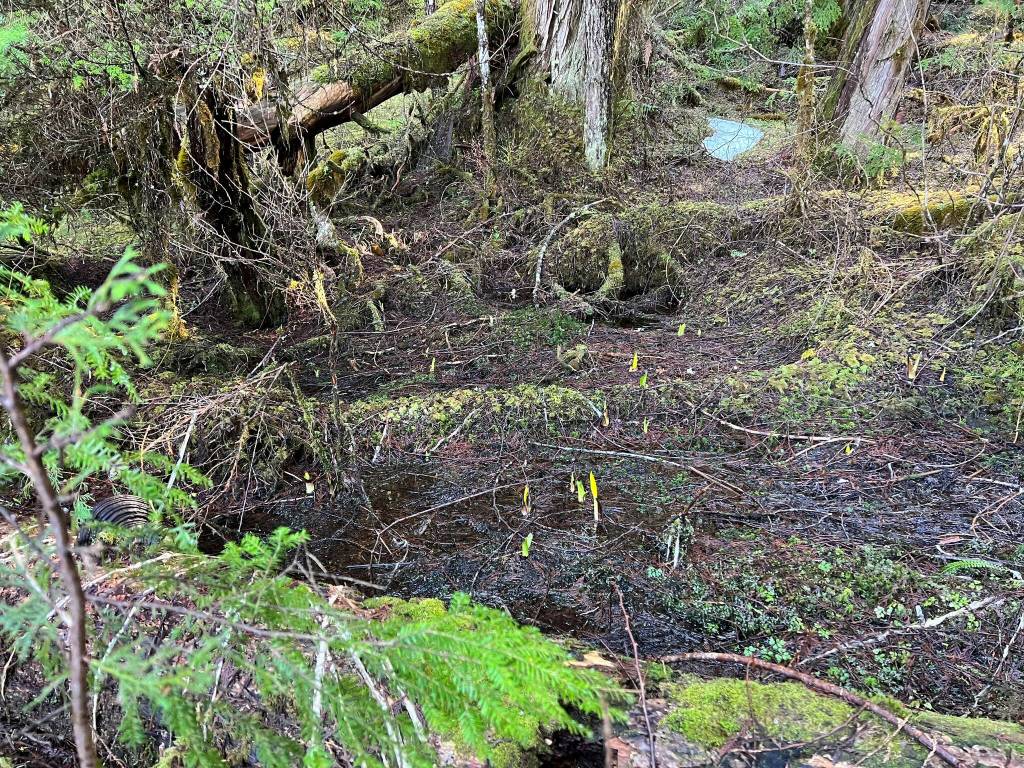
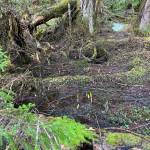
This is my dad’s 83rd spring. He’s seen 83 first skunk cabbages, first piles of bear scat, first robins, first salmonberry blossoms, and the first honks of returning sandhill cranes. Oscar sits by the passenger window and I’m in the middle as my dad drives farther on. Spring is a bit later this year, with temperatures noticeably cooler. This end of the island seems warmer, but the skunk cabbage is hardly up. Many still have their yellow tops; the deer haven’t eaten them. After a couple miles, we pull over to the side of the road. I jump out and Oscar follows me. I step across the ditch and up onto the embankment. Inside the treeline I’ve spotted a few bright yellow skunk cabbages. I duck around the trees to find a large mucky spot. A couple dozen skunk cabbages poke their happy heads up from the black dirt. “There you are, little friends.”
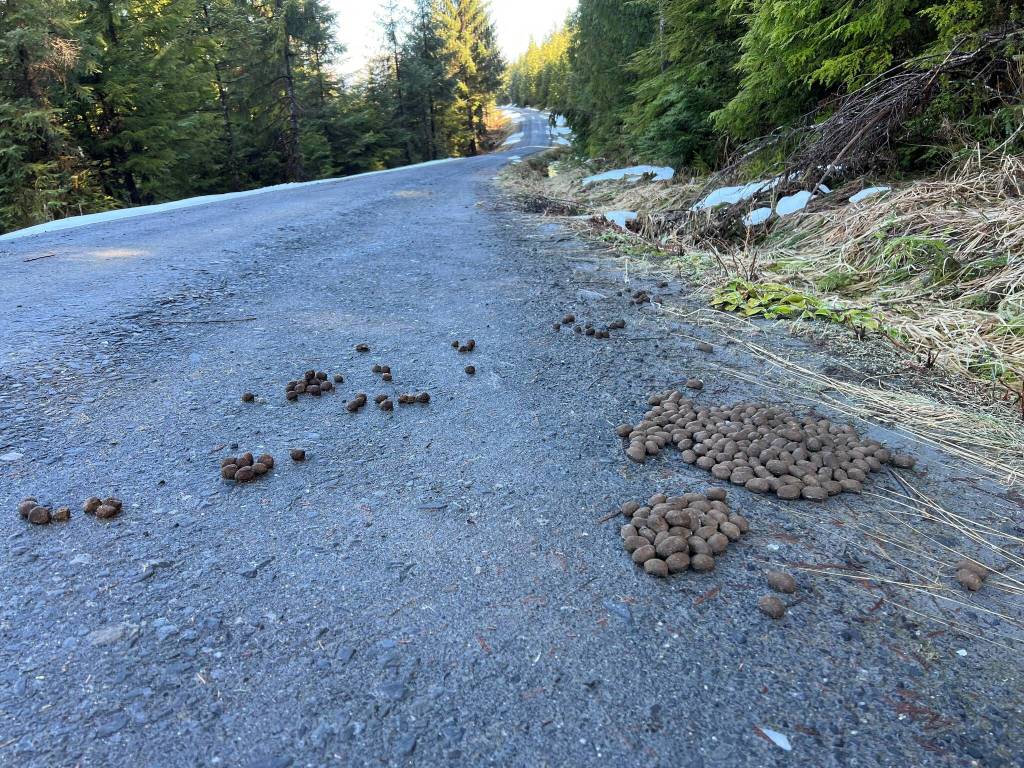
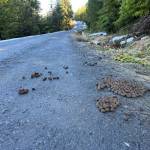
Another mile, we come across a few piles of moose nuggets on the road. The moose overwintered here, but we don’t usually see moose sign in this area. I get out of the truck and do my spring ritual and take photos of critter scat. Oscar sniffs the pile and doesn’t seem at all worried.
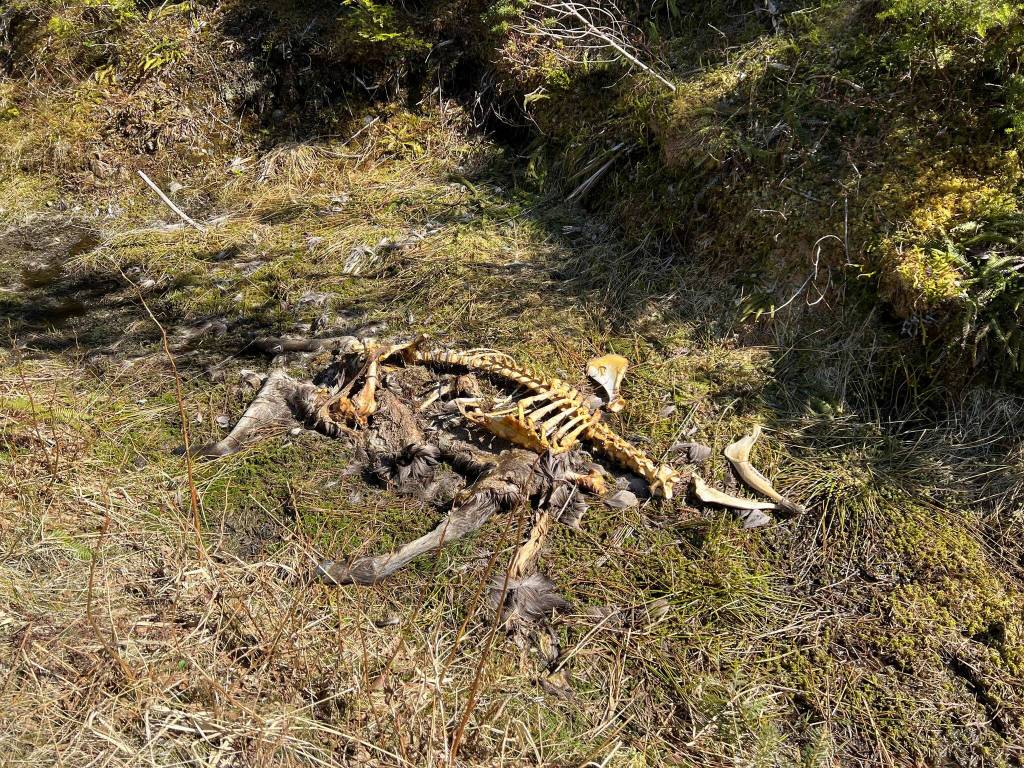
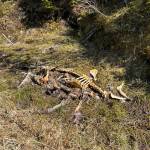
Just past another mile marker, we stop again, noting the skeletal frame of a deer down in the ditch. I get out to examine it, stepping careful in the bog. I take a few photos. My Dad says it doesn’t look like a wolf kill because the wolf scatters the bones. Maybe it died of starvation, but we don’t know.
I think about all this new life protruding and blooming and bursting, but after seeing the deer I realize spring also means endings. Winter can be harsh on birds and animals and humans, too. Like the deer, some of us did not make it through the winter.
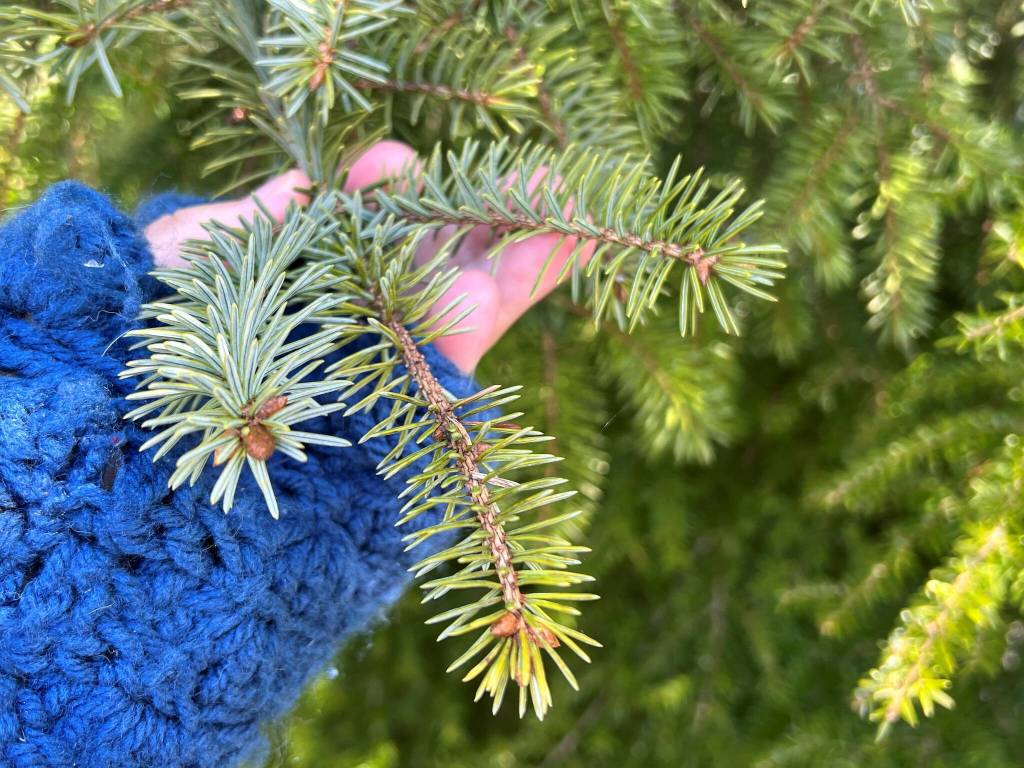
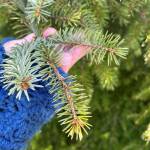
We drive slower, seeming to absorb the deer’s death. We pass a grove of familiar spruce trees I often harvest from. I get out with Oscar behind me, and we cross another ditch. At the grove, we examine the tips, but don’t see any signs, which is expected. I stand for a few moments inhaling the cool air thinking about my writer friend who died this past winter from Covid-19, leaving behind a husband and three children. She was young, in her mid-30s.
My friend was Hawaiian and when I’d met her, she’d never seen snow, and she’d never been to Alaska. She promised she would visit some day and bring her husband and kids and I’d show them around the island:
Dear Friend, I can hardly wait to taste the first spruce tip of the season. I imagined sharing this first with you. You’ve never been to Alaska—See the blue sky dotted with white clouds. The sun has some warmth to it and the chill of winter is gone and when I point that out, you laugh at my definition of “warm.” Let’s get our clumsy bodies down the embankment and around the soggy ponds. When your boots get stuck, you lift your foot, and it makes a sucking sound. You make an off-color joke, and we giggle together like a pair of northern flickers.
Let’s stand here, Friend, surrounded by trees blooming with new green tips. I’ve been hungry for spruce tips and friendship all winter. Yes, you’re more familiar with hibiscus and doves. You could not have imagined muskeg, fairy barf lichen, and witch’s hair. A thrush in the nearby tree trills to another—I’m alive. I’m alive.
I pull a spruce tip from the branch, and you take it from me. You look curiously at it, just like I did at the shave ice stand in Honolulu when you introduced me to your favorite local concoction saturated with syrup. I put the spruce tip in your palm and show you how to chew the whole thing. Wahine dis ono!
But, Friend, our time here is brief, too. I close my eyes and inhale the aroma of Labrador tea and you become just a memory moving through the trees. I reach for you, but you’ve already gone, been gone for months now, your lungs filled with a deadly virus not springtime air.
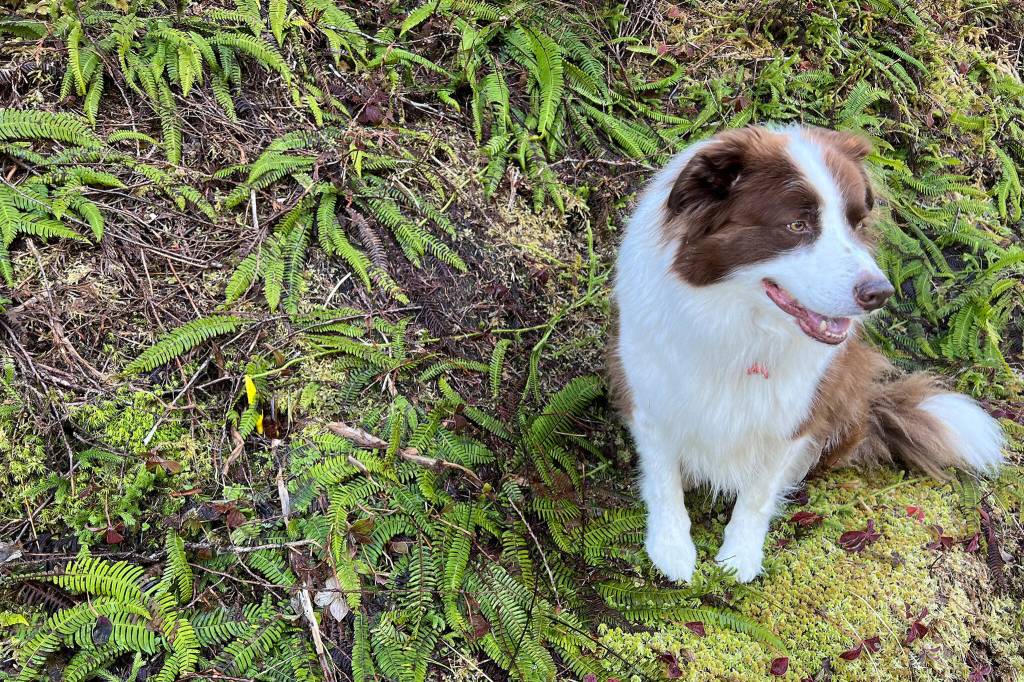
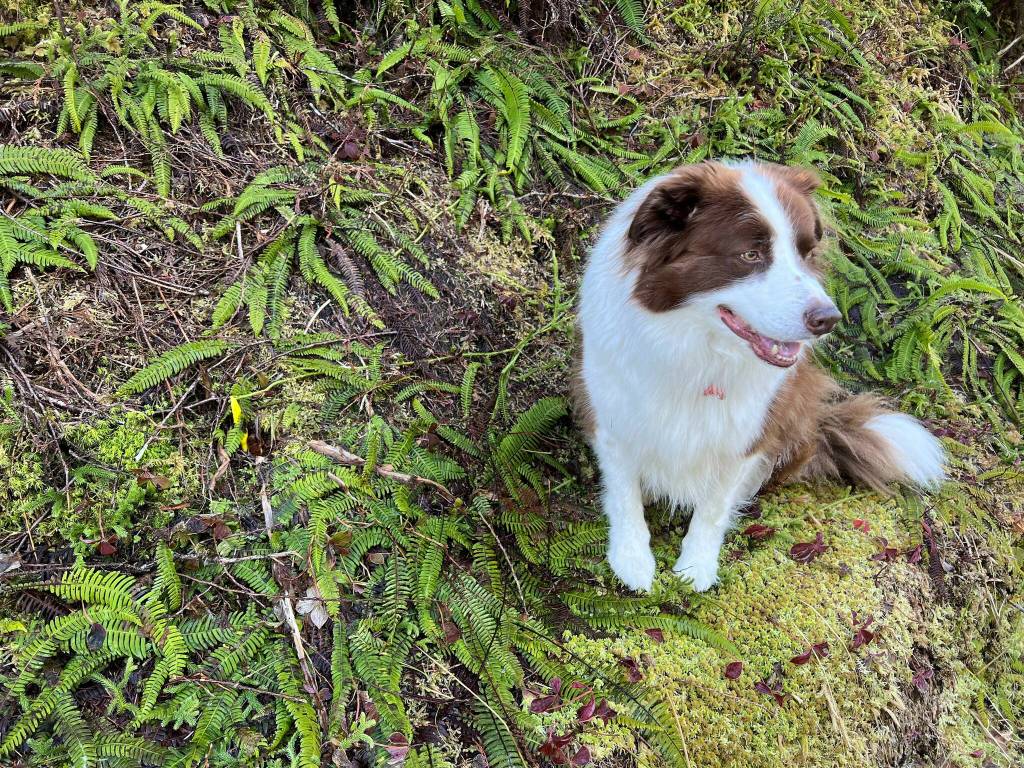
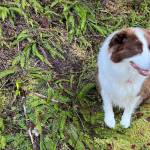
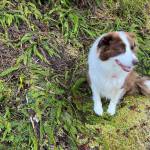
Beside me, Oscar sniffs the ground then raises his nose as if to catch a scent wafting away. He doesn’t growl. I reach down and pet him, then we walk back on the short trail. The melancholy fades as I recall my friend’s mischievous sense of humor, the sound of her voice reading me something she’d written in Hawaiian pidgin. I pause on the trail to take a photo of Oscar, who sits as soon I raise the camera and grins humanlike. My friend, also a dog lover, would have loved this moment, this muskeg, I think to myself.
At the end of the road, my dad and I have a lunch of smoked salmon spread and crackers at the picnic area. Afterward, we turn the truck around and head back toward home. We pass the dead deer in the ditch again, and I say a prayer for those who didn’t survive this last winter, and for the survivors who are still trying to make sense of a life of uprooted trees and bleached bones. Cedar perfumes the spring air and the sun is warm. For a moment, I see my friend standing in front of me, welcoming me to Hawaii, with sunlight haloing her face, a lei in her hands, raising the circle of fragrant flowers to drape them on my shoulders.
• Wrangell writer and artist Vivian Faith Prescott writes “Planet Alaska: Sharing our Stories” with her daughter, Yéilk’ Vivian Mork. It appears twice per month in the Capital City Weekly.