On the Trails: Considering variation in flower colors
Published 10:30 pm Monday, July 25, 2022
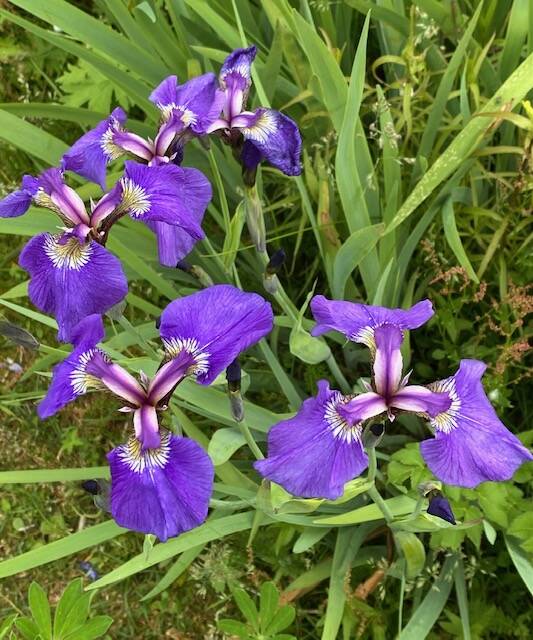
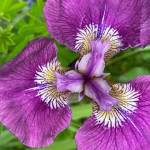
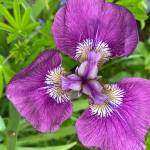
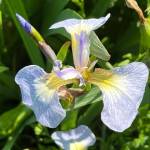
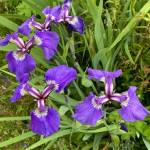
The flowers of any species are typically controlled by genes and are usually of a certain color: bog cranberry typically has pink flowers, starflowers are white, forget-me-nots are blue, and so on. Biologists often think that deviations from those norms would break up the important relationships with the usual pollinators of each species, causing failures of reproduction. And perhaps that often happens. However, over the course of thousands of years of evolution, there must have been many mutations of flower color (including ultraviolet) and many of them must have found an adequate pollinator — otherwise we would not see the array of flower colors that we do. Natural selection favored some of those mutants, and they persisted, then becoming more common (and eventually the norm) in a population.
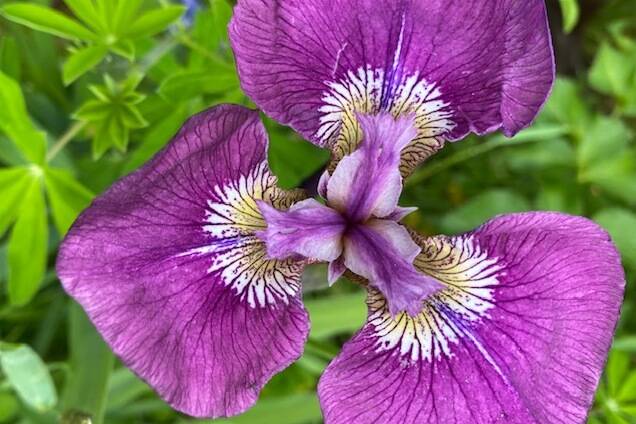
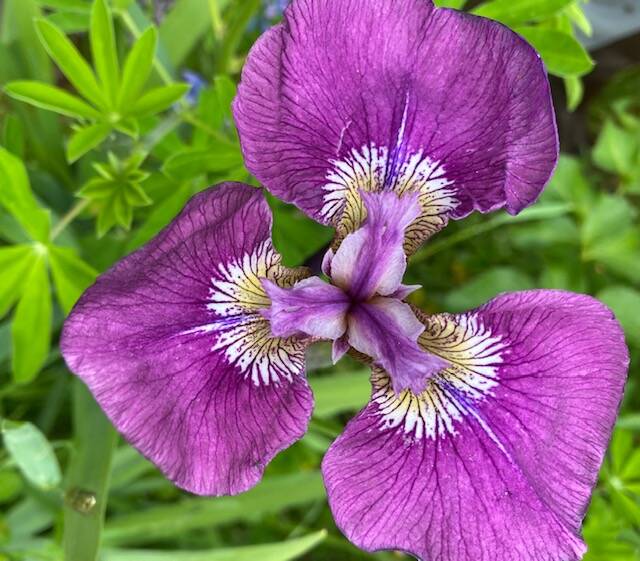
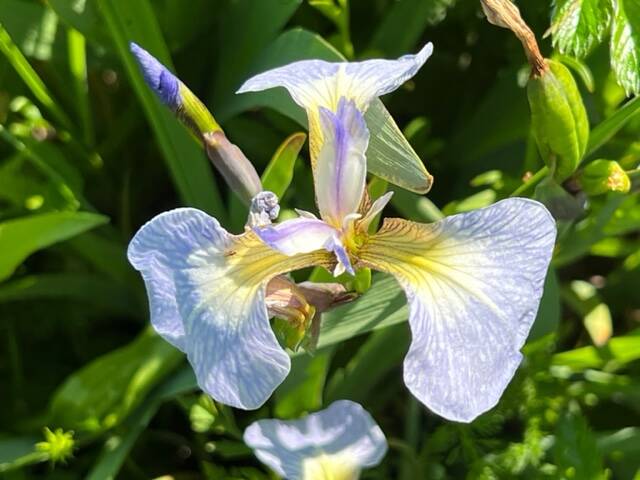
So it may be interesting to consider flower-color variation in some of our local species. In some species, flower color is almost constant across the population: e.g. lupines are blue, with occasional pink- or white-flowered individuals; northern geraniums are pink, with rare white-flowered individuals. In other cases, there’s a continuous range of hue: wild iris flowers are usually deep, rich purple, but some are paler, even lavender, while others are various shades of reddish purple. Rice-root (chocolate lily to local folks) flowers are usually maroon-brown, but some plants make flowers that are mostly yellow with brown lines, and there are many intermediates. On the road above Eaglecrest, there’s a stand of white-flowered river-beauty, not just one individual but an aggregation of them, quite unlike the usual pink-flowered ones.
That raises obvious questions about the pollination of these variants. Are the variations determined simply by genes or are there environmental effects too? Who pollinates the variants? Do pollinators favor the normal deep purple irises, or the brown rice-roots, thus reinforcing the norms? How well do the variants reproduce: Do pink or white lupines reproduce (as either pollen donors or pollen receivers) as well as blue ones; do yellow rice-roots do as well as brown ones? If so, could the variant colors spread? Could the white-flowered river beauties show how a variant could spread more widely?
There are cases of environmental effects on flower color, with potential consequences for pollinator interactions. The hues themselves are presumably determined genetically, but the environment affects gene expression — which genes are turned on or off, for instance. The best known, perhaps, is that in certain species of hydrangea the colorful sepals can be blue, or red, or something in between. Flower color in this hydrangea is sensitive to soil conditions: in acid soils that contain aluminum ions, the flowers are blue, but if the soil is alkaline or neutral, the flowers are pink or red. The color change may affect visitations by pollinators, but so far I have found no information about this.
However, in two other, less well-known, instances, flower-color changes on individual plants are associated with pollinator changes:
Moricandia arvensis is a type of mustard that grows in semiarid and arid ecosystems in the western Mediterranean area. Recent studies have found that the difference between spring climate conditions (mild, wet) and summer conditions (hot, dry) produce quite dramatic changes in the flowers produced by each individual plant. In one set of conditions, the flowers have large, purple petals that reflect UV light; in the other set of conditions, the petals are small, white, and UV-absorbing, with a different shape as well. Experiments showed that the floral changes are a response to changes in temperature and photoperiod that correspond to the seasonal shift. Conveniently, there were corresponding changes in the pollinators of the flowers (from long-tongued bees to small bees, small beetles, and butterflies) and seed production was achieved.
Equally intriguing is a recent study that found effects of herbivory on floral traits. Black mustard (Brassica nigra) is native to parts of the Old World and considered to be invasive on the Pacific coast of North America. Individuals of this species altered many floral characteristics in response to insect herbivory—reflectance of the petals, morphology, composition of volatile compounds, nectar and pollen production. If that’s not sufficiently amazing, then consider that the particular floral response varied with the specific insect herbivore. The pollinator fauna shifted too and successfully effected seed production.
These two examples, both from the mustard family, raise interesting questions. They are present-day examples of pollinator shifts; individuals of these two are sufficiently flexible to engage different sets of pollinators under different conditions. By so doing, they may extend their reproductive seasons or overcome some effects of herbivory. What is it about these plants that allows them (but not many others) to do this, and do any other plants do so? Maybe they do—and have yet to be discovered? It’s a fertile area for more research.
• Mary F. Willson is a retired professor of ecology. “On the Trails” appears every Wednesday in the Juneau Empire.