NEA chair says loss of arts funding would hurt Alaska’s economy
Published 1:15 pm Thursday, August 15, 2019
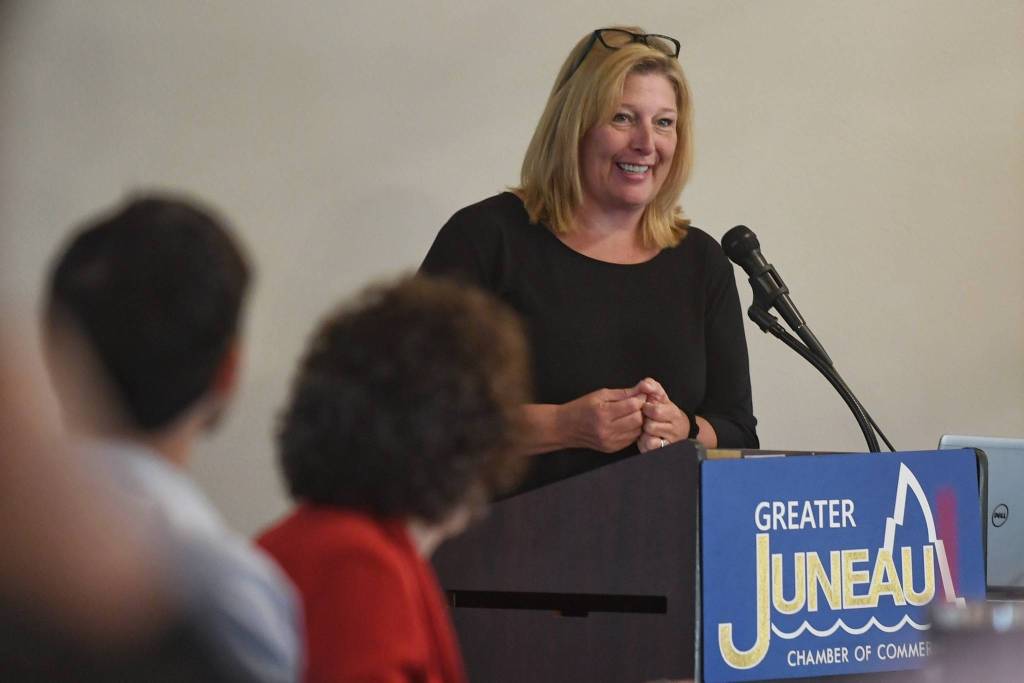
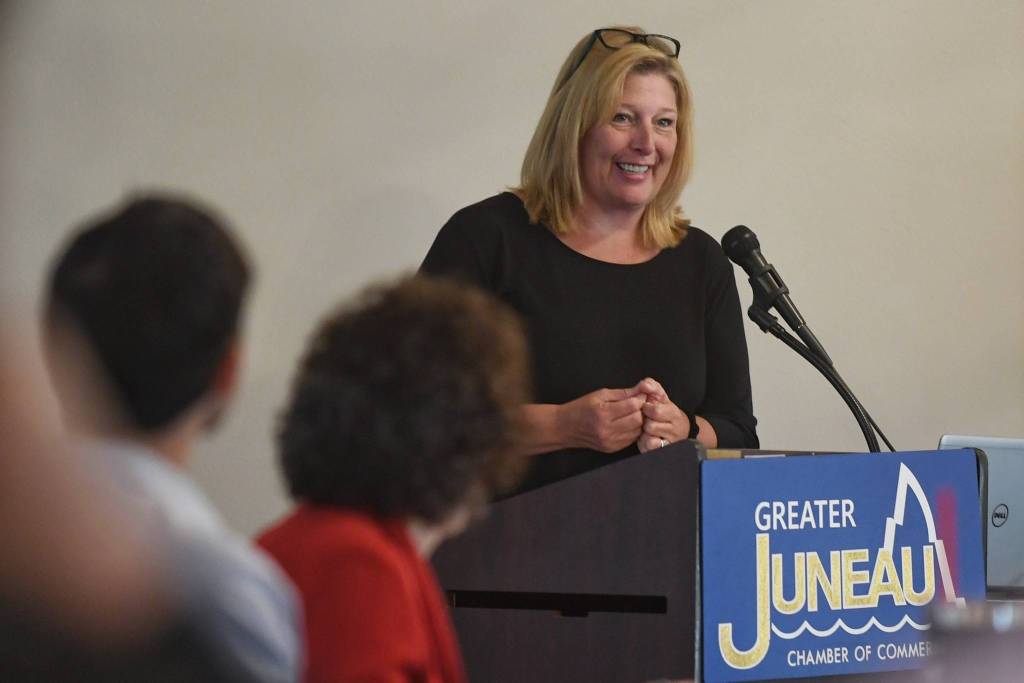


Spending public money to support the arts has a positive economic impact, said National Endowment for the Arts Chairman Mary Anne Carter.
Carter was the speaker at the Greater Juneau Chamber of Commerce luncheon Thursday and ended her remarks by weighing in on whether arts should be supported solely by private funds, with a clear and concise answer.
“The simple answer is no, actually, private dollars cannot replace public dollars,” Carter said.
She noted she was previously worked for a conservative think tank — Heritage Foundation — and was familiar with advocates for further privatization, but she maintained private contributions alone can’t provide the funding necessary to support something that has a positive fiscal effect.
“We reviewed the top 1,000 foundations across the nation that give to the arts, and we found they don’t fund 65 percent of the counties in America,” Carter said.“There is a need for public dollars, there is a need for private dollars, and neither can do it all by themselves.”
Carter’s words did not directly reference Alaska State Council on the Arts’ uncertain situation, as it waits to see whether Gov. Mike Dunleavy will again veto all funding for the state arts organization. However, she did speak about the important role arts play in Alaska’s economy and the general prudence of investing in the arts.
Carter cited NEA figures that found arts and culture production in Alaska added $1.4 billion to the state’s economy, which Carter said represents 2.7 percent of the state’s gross domestic product. Over 11,000 people are employed by Alaska’s arts and cultural industries with wages totaling $900 million.
[Empire Live: NEA Chair speaks at chamber luncheon]
Comparatively, NEA figures put arts contribution to Montana’s economy at $1.5 billion or 3.3 percent; $41.1 billion or 8.3 percent for Washington’s economy and $1.9 billion or 2.8 percent for Idaho’s economy.
“You wouldn’t want to lose any activity or industry that is contributing to the economy,” Carter said in an interview after her speech. “What state can afford to lose 2.7 percent of their GDP? What makes a state, what makes a nation are all types of industries, all types of factors, and the arts and culture provide significant economic impact.”
She deferred to Alaska State Council on the Arts Chairman Ben Brown when asked what Alaska can do to avoid losing that portion of its economy.
“We are like everyone else waiting to see what the governor will do in terms of vetoing or hopefully not vetoing the funding that was restored,” Brown said. “I’ve certainly been reaching out to the administration through as many avenues as possible trying to convey our unique value proposition, the way we’re leveraging more private money than government money — 3:1 including National Endowment for the Arts money — and I hope the governor’s office will be receptive to those arguments.”
[Cartoon premiere drums up fun and cultural pride]
Carter also spoke to some challenges a lack of state funding for the arts could add to supporting programs and organizations in Alaska. Over the past five years, NEA has distributed $3.6 million in grants in Alaska.
Forty percent of NEA’s funding must go to states, Carter said, but that money must be matched by the state. Carter was asked in light of that if there are other ways the organization she heads could still support things such as Poetry Out Loud.
“We’ve started looking into those questions,” Carter said. “I think they can be resolved. The minute we heard about all this, we started to look into what else could be done. Some of these programs are so good and so amazing that it would really be a shame to see some of them go away. We will still be able to provide grants to 501(c)(3)s.”