Legislature kills most of Dunleavy’s executive orders in rare joint session
Published 9:30 pm Tuesday, March 12, 2024
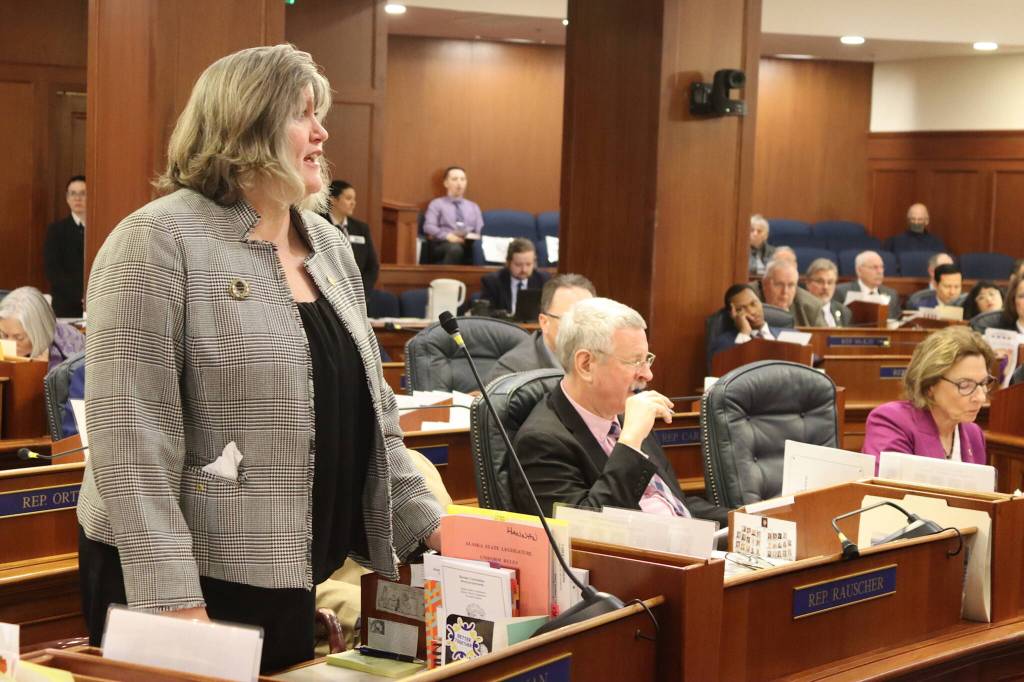
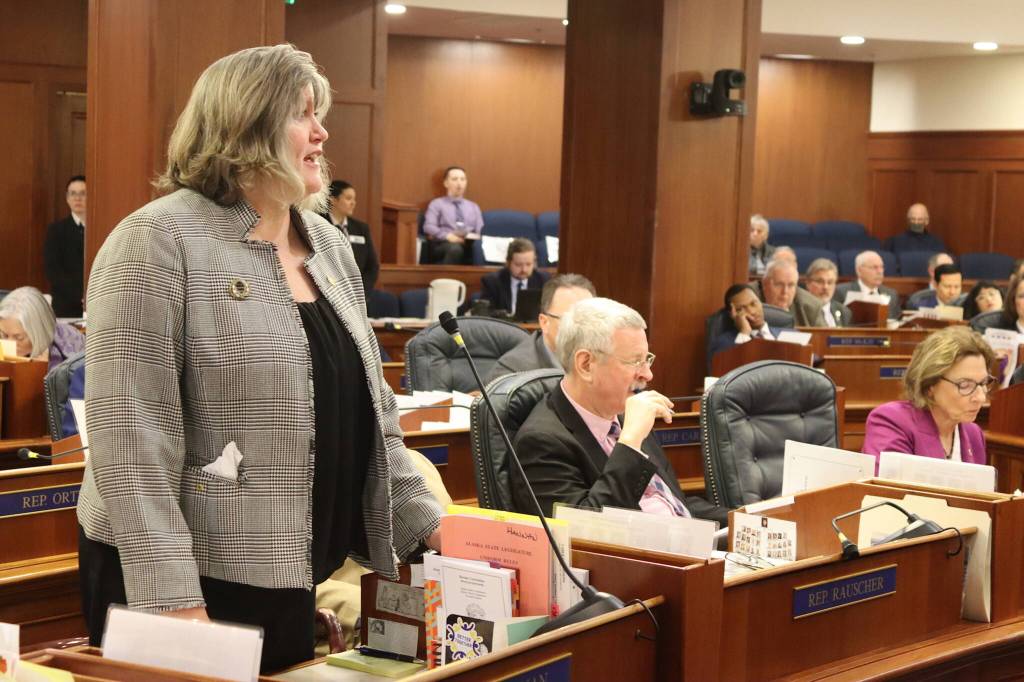
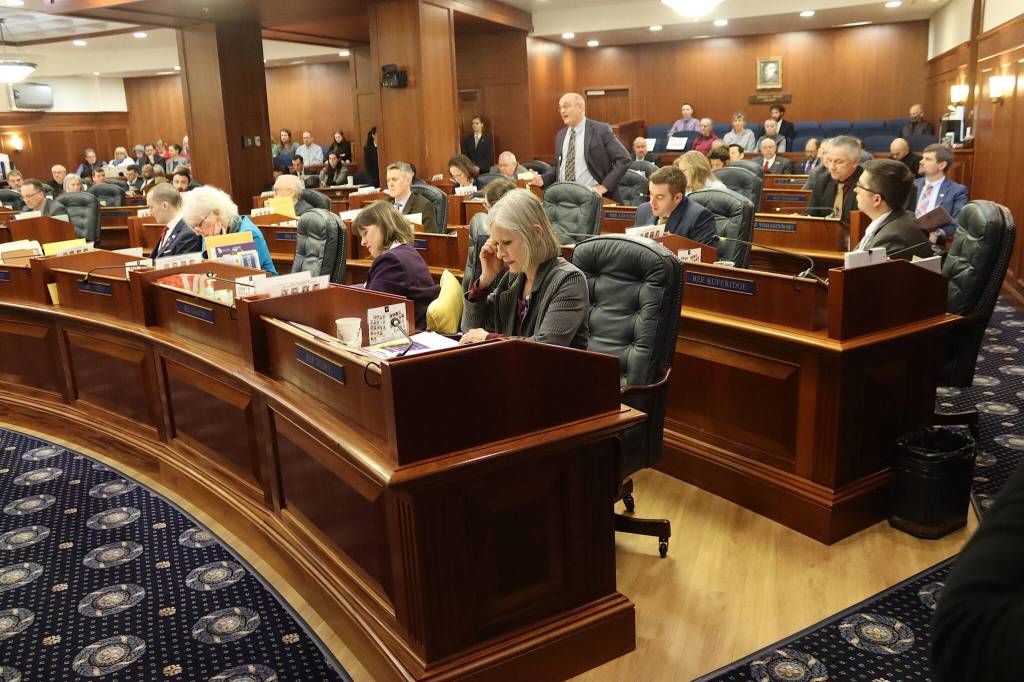
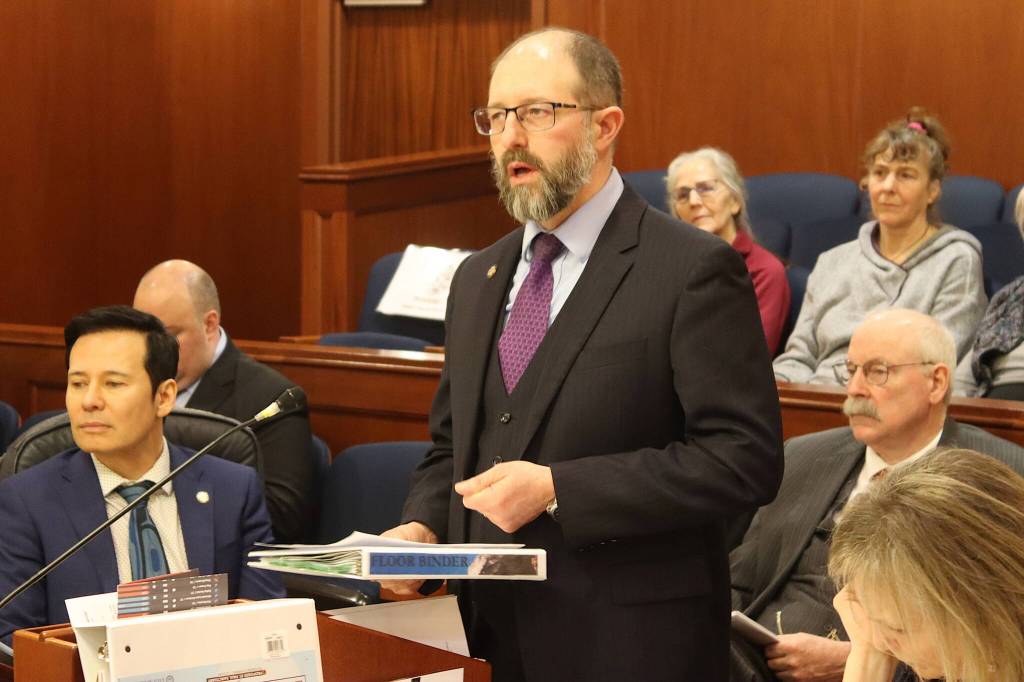

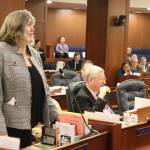
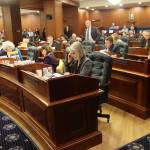

State lawmakers rejected eight of the 12 executive orders handed down this session by Gov. Mike Dunleavy in a rare joint meeting of the Alaska Senate and House of Representatives.
All the proposed orders would have shuffled or eliminated the responsibilities of various state boards.
The Alaska Constitution gives the governor the power to change the way the executive branch or its units function when he thinks doing so is necessary for efficient administration. Lawmakers have 60 days to either reject those orders, which must be done as a resolution approved by a majority of members in a joint session, or let the orders take effect.
The absence of Sen. Lyman Hoffman, a Democrat from Bethel, on Tuesday meant each resolution only needed 30 votes in favor of rescinding the governor’s executive orders — rather than 31 if all 60 lawmakers were present.
The executive orders rejected by lawmakers would have eliminated the state public advisory board or licensing boards responsible for:
• Managing Wood-Tikchik State Park near Dillingham
• Advising the state on how the Chilkat Bald Eagle Preserve should be managed
• Licensing and setting standards for barbers and hairdressers
• Licensing and setting standards for massage therapists
• Certifying and regulating the practice of midwifery
Votes rejecting the executive orders were as overwhelming as 44-16 on the massage therapist board, to a moderate 34-25 on the barbers and hairdressers board.
Lawmakers also rejected executive orders that would have eliminated the Legislature’s participation in appointing members of the public to the Alaska Marine Highway Operations Board, transferred responsibility for native or exotic game from the Board of Game to the Alaska Department of Fish and Game and separated the Alaska Energy Authority from the Alaska Industrial Development and Export Authority.
Because of the large number of orders considered Tuesday, Senate President Gary Stevens, R-Kodiak, asked that lawmakers limit their comments and debate during the joint session. Among the orders that drew comments were those addressing Wood-Tikchik State Park, the Alaska Marine Highway and the Board of Certified Direct-Entry Midwives.
Rep. Maxine Dibert, a Democrat from Fairbanks, was one of many to speak in favor of retaining the management council for Wood-Tikchik State Park — the largest state park in the United States and approximately the size of Connecticut. She said meetings of the council are public forums for the area’s residents and that eliminating the group runs counter to the community’s wishes.
“(The council) serves as a conduit for the community and where the community can get feedback on the park, recommendations and public engagement,” Dibert said. “Dissolving this council, Mr. President, would not only remove crucial local input but also jeopardize the integrity of management processes, effectively severing ties with those who depend on the park’s resources for their livelihood.”
A similar argument about local management was offered by Sen. Jesse Kiehl, a Juneau Democrat, for rejecting an executive order to dissolve the Alaska Chilkat Bald Eagle Preserve Advisory Council and have its duties taken over by the Department of Natural Resources. He noted, however, the area is unique in state law because it’s a preserve rather than a park “and part of the reason for the Chilkat Bald Eagle Preserve Council is to make sure it’s not managed like a park.”
“Unlike so many advisory boards this board has in our statute in our laws, some powers,” he said. “The Department of Natural Resources, they manage it in parts where they’ve got the staff. But they can’t change the management plan without the board. They can’t apply a new regulation to the preserve without running it through this board. Doing away with this board would take away the local role.”
Legislators diverged on Dunleavy’s proposal to change the way members of the public are appointed to the Alaska Marine Highway Operations Board, a three-year old advisory panel. Those in favor of Dunleavy’s changes said the appointment process has become politicized, while those opposed to the changes said it’s important to board members with a diversity of viewpoints.
Rep. Kevin McCabe, a Republican from Big Lake, said dysfunction among the board can be attributed to that diversity of viewpoints, which is ultimately to the detriment of Alaskans.
“I don’t disagree that we should have some input into the (operations board),” McCabe said. “I think that the governor deserves to have a board that supports his vision for the Marine Highway System. I don’t think it’s all that different from our vision.”
Disagreement with that viewpoint was expressed by Rep. Sara Hannan, a Juneau Democrat, who argued “democracy is ugly and messy, and there may be disagreement.”
“I would reject any tone that disparages citizens who volunteer their time to serve in an advisory position to us as lawmakers and urge my colleagues to remember that communities across the state asked for a board that have a long-term vision,” she said. “Governors come and go, maybe as long as eight years, but the communities served by the Alaska Marine Highway’s board are there for the long term and so having citizens of the community with a long-term vision for the board is important.”
The last executive order taken up Tuesday was one abolishing the Board of Certified Direct-Entry Midwives. The order has faced pushback from midwives around the state, who say it would create licensing uncertainty and eliminate important oversight of the practice.
Sen. Jesse Bjorkman, who chairs the Senate Labor and Commerce Committee, said he heard extensive testimony from midwives and people who use midwives during childbirth about the importance of professional representation for the group.
“It was inspiring to hear that so many people that have a very deep and heartfelt connection to midwifery speak about the importance of their profession and the importance of the opportunity for medical freedom that they provide as well as an opportunity for folks to have a home birth in a space that’s comfortable to them,” Bjorkman said.
Lawmakers backed Dunleavy’s call on four executive orders that eliminated and transferred the responsibilities of state boards and councils.
The first two resolutions considered, which received unanimous support from legislators, eliminate and transfer the responsibilities of the Alaska Council on Emergency Medical Services to the Department of Health and the Criminal Justice Information Advisory Board to the Department of Public Safety.
The votes on the other two were tighter. The joint session narrowly upheld Dunleavy’s move to eliminate the Recreation Rivers Advisory Board and transfer its responsibilities to the Department of Natural Resources, and to eliminate the Alaska Safety Advisory Council and transfer its responsibilities to the Department of Labor and Workforce Development.
Lawmakers concluded work on the 12 orders in less than two hours.
Stevens called the joint session “historical.” As reported by the Alaska Beacon, the 12 orders represent almost 10 percent of all executive orders issued since statehood and were met with skepticism.
“This is an unusual meeting,” he said. “We have never done this in the history of the State of Alaska … It’s historical and we have established precedent.”
Dunleavy’s office said in a statement Tuesday that the orders were intended to improve the efficiency of state government and that his administration will continue to advance executive orders that seek to streamline government.
• Reach reporter Ashlyn O’Hara at ashlyn.ohara@peninsulaclarion.com. This reporting from the State Capitol was made possible by the Alaska Center for Excellence in Journalism’s Legislative Reporter Exchange.