Juneau-based private icebreaker remains in Coast Guard’s plans as needs grow
Published 9:30 pm Sunday, July 23, 2023

The U.S. Coast Guard now needs up to nine icebreakers for its polar region missions, rather than six as envisioned in recent years, but just getting the first vessel may take until at least 2028 instead of next year as originally hoped, according to top officials and lawmakers.
As such, plans to purchase a private icebreaker with more limited capabilities — with the intent of making Juneau its home port — are still being pursued after funding for it was stripped at the last minute from last year’s federal budget, according to a report published by the Coast Guard on Thursday. But even if the purchase is approved during this year’s budget process, it appears the private vessel won’t be ready for service until 2026.
The Arctic is seen as a key strategic area for natural resources, commercial shipping and other activities as climate change makes more of the region accessible, and U.S. officials have stated frequently the country’s efforts are falling behind those of others seeking claims to the area, most notably Russia. The Coast Guard’s only heavy icebreaker in service is the 46-year-old Polar Star, which is nearing the end of its useful service life, and the only other icebreaker in the fleet is the medium-class Healy.
Six additional icebreakers were being sought by the Coast Guard until this year. But Adm. Steven D. Poulin, vice commandant of the Coast Guard, told the House Transportation and Infrastructure Committee on June 21 the need is now larger.
“We were on a trajectory to build the Polar Security Cutters, but we recently delivered to this committee and other committees our fleet mix analysis, and in that fleet mix analysis we concluded that we likely need eight to nine new icebreakers,” he said.
At least three Polar Security Cutters, classified as heavy-duty icebreakers, are envisioned as part of the Coast Guard’s future fleet. Construction on the first was originally scheduled to start in 2021 and be completed early in 2024, but work on the vessel still hasn’t started and a target date remains unknown.
“The Coast Guard originally aimed to have the first PSC delivered in 2024, but the ship’s estimated delivery date has subsequently been delayed repeatedly, and as discussed in more detail later in this report, may now occur no earlier than 2028,” the report published Thursday states.
The problems upgrading the fleet were acknowledged by U.S. Sen. Lisa Murkowski, an Alaska Republican, during a speech at the Arctic Frontiers conference in Tromsø, Norway, earlier this year.
“I have been coming to Arctic forums for decades now, and when I first began my participation a new U.S. icebreaker was but a dream,” she said. “Now we have authorized six, three are in process. I wish that I could tell you they were on time and under budget, but that would not be consistent with the truth.”
Trying again to purchase a private icebreaker to base in Juneau
As a short-term solution to cope with the delays and shortage of vessels, the Coast Guard’s proposed budget for the coming year includes $125 million to purchase a private icebreaker that can be modified for at least some service purposes. That’s similar to a $150 million allocation that was in the National Defense Authorization Act last December, but was stripped when Congress passed the omnibus budget bill days later for what Alaska U.S. Sen. Dan Sullivan has called last-minute deal-making by other lawmakers.
The newly requested amount is at the low end of the estimated price for a suitable private icebreaker, but the overall cost and scope of such a purchase are considerably larger. Sullivan, when discussing making Juneau the home port for the vessel last year, said “this will probably be about 190 Coast Guard members, 400 dependants (and) several hundred million (dollars) more in infrastructure.”
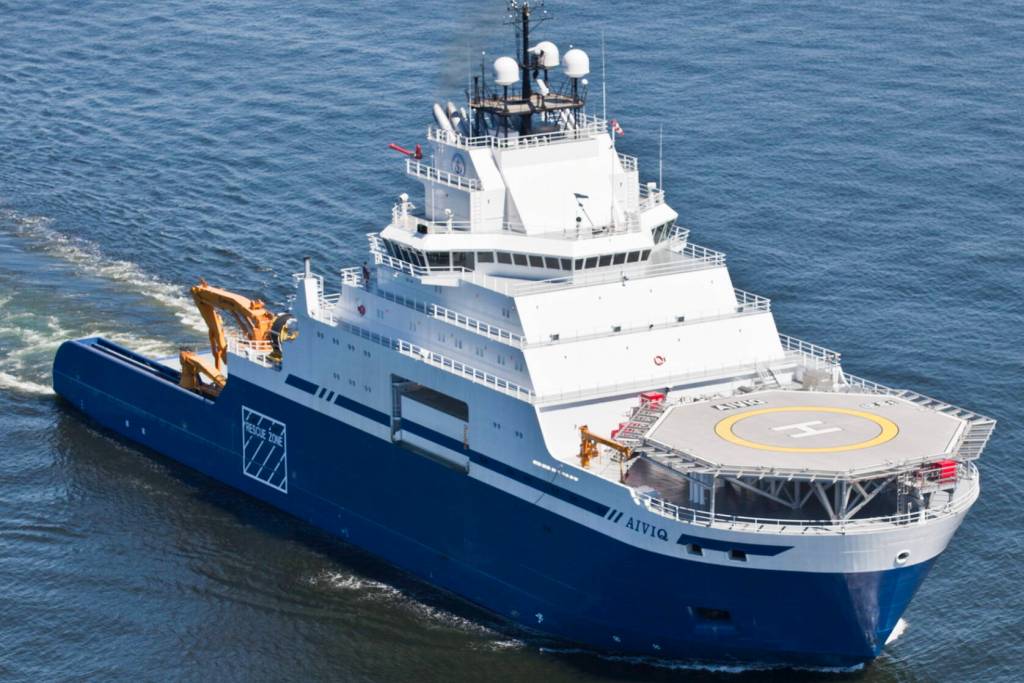
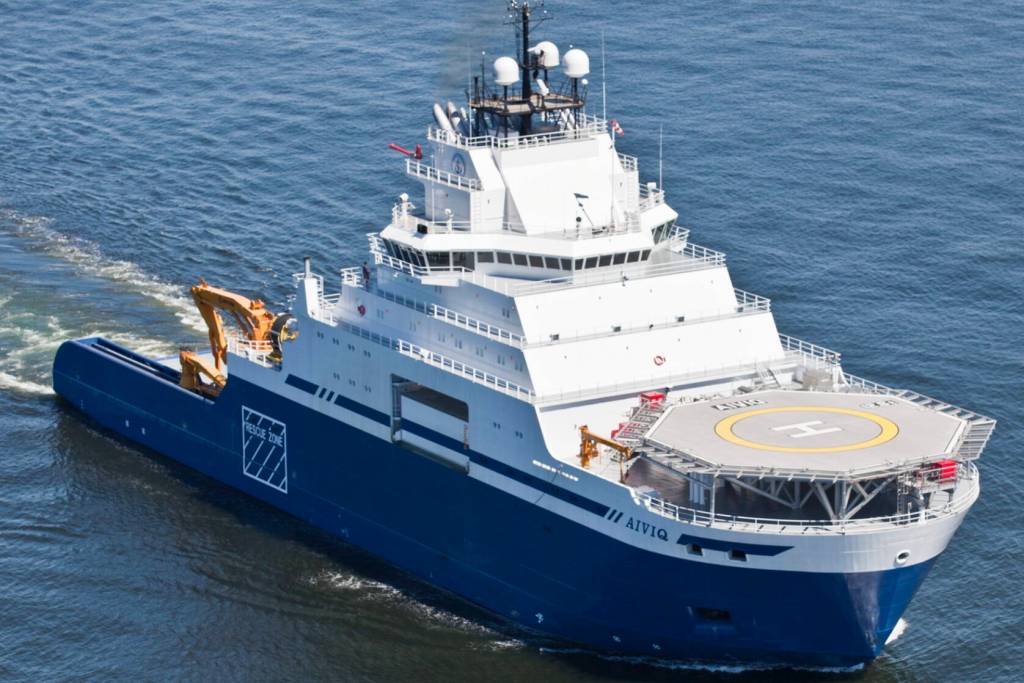
The Coast Guard’s official specifications for a suitable private vessel appear to apply to a single ship targeted for years by a handful of congressional members, including Sullivan: the 10-year-old Aiviq icebreaker from Edison Chouest Offshore, which Coast Guard officials have previously called “not suitable for military service without substantial refit.”
The report published Thursday by the Coast Guard states “a full and open competition for the purchase,” while acknowledging reports and statements by top officials the Aiviq appears to be the only vessel meeting the requirements. Among those requirements are the vessel must be available for purchase in 2023 or 2024, been built in a U.S. shipyard, be able to break at least three feet of ice ahead at a continuous speed of three knots, have 15 years of original design service life remaining, be capable of operations for a minimum of 60 days without resupply and have a landing area for Coast Guard helicopters.
But even if the funding for a private icebreaker is included in next year’s federal budget, that means the process of acquiring one won’t begin until 2024 and it will take up to two years after the purchase to put it into service.
“The commercially available icebreaker that the Coast Guard selects for acquisition would be modified for Coast Guard operations following its acquisition, and the ship would enter service 18 to 24 months after being acquired,” the report states. “The total cost to purchase the ship and then modify it to meet Coast Guard mission needs is uncertain.”
• Contact Mark Sabbatini at mark.sabbatini@juneauempire.com or (907) 957-2306.