Juneau-based Coast Guard icebreaker in final budget bill as Congress tries to avoid shutdown
Published 9:30 pm Wednesday, March 20, 2024
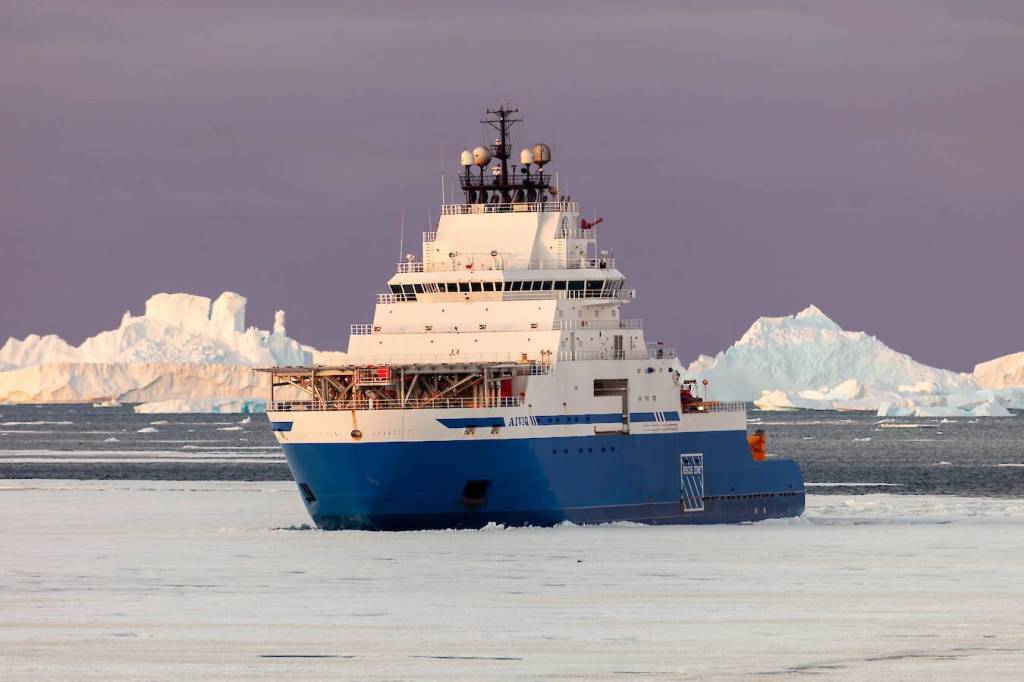


Funding for the U.S. Coast Guard to purchase a commercial icebreaker for Arctic use, with the intent of homeporting it in Juneau, is included in a budget deal reached by Congress on the eve of a federal government shutdown, Alaska’s two U.S. senators said Thursday afternoon.
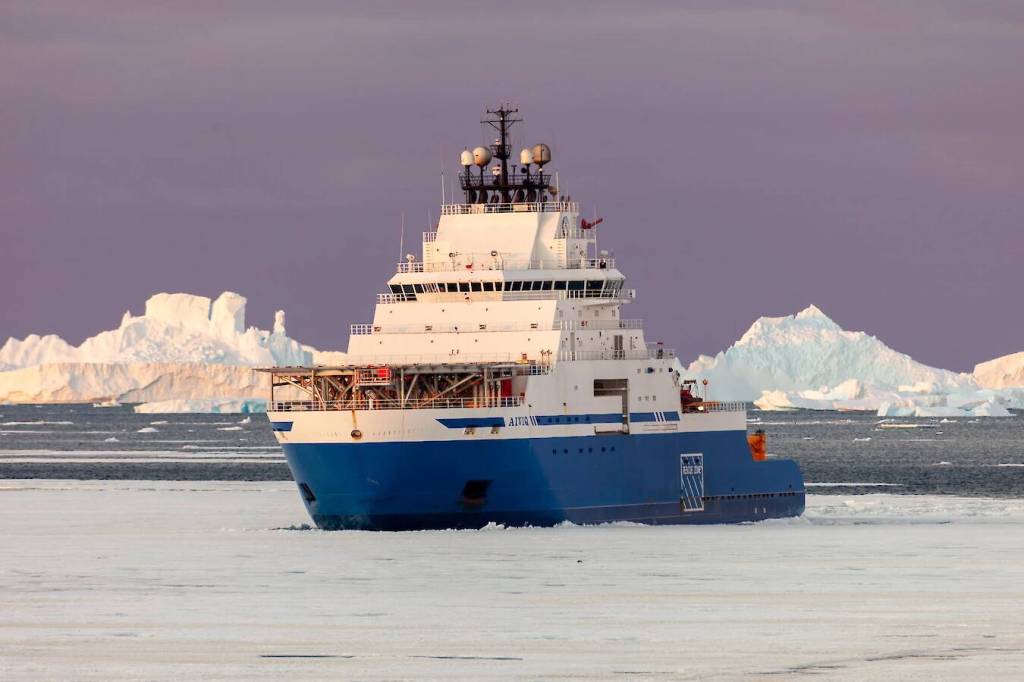
An allocation of $125 million would likely be used to purchase the 12-year-old Aiviq, a 360-foot-long private icebreaker targeted by lawmakers for many years — despite some previous reservations by Coast Guard officials about its suitability — which would then be readied for limited duty within 18 to 24 months.
The deal is not final since the budget bill funding the icebreaker is still subject to floor amendments, but both senators said they do not expect an outcome similar to late 2022 when funding for the icebreaker was stripped during last-moment negotiations.
Sen. Lisa Murkowski, in an interview, said the process may get tumultuous as Congress tries to pass the six bills funding the budget by an 11:59 p.m. Friday deadline in order to prevent a partial federal government shutdown. But she said so far the icebreaker isn’t among “at least two dozen amendments” filed in the Senate, mostly by Republicans, that members are now trying to winnow down.
“So it really depends on when an agreement can be reached on amendments as to when we can actually start voting,” she said. “But I think the good news for everybody is that there is a glide path to passage and to seeing this signed into law. And so that things like the commercially available icebreaker, the (subsequent) Polar Security Cutter line, many of the other strong and important things in the bill will be advanced.”
It’s possible a shutdown will occur starting at midnight Saturday, given the scarce time left for the process to play out, but “it’s going to be a matter of hours and days,” Murkowski said.
“It is quite possible that we will go into a very short-term — like a several-day — shutdown,” she said. “But the fact that it will be over a weekend means it’s not as if any agencies or payments would be impacted.”
The implications for Juneau
Alaska’s congressional delegation has stated homeporting the vessel in Juneau will also ultimately result in about 190 additional Coast Guard personnel assigned to the vessel, accompanied by hundreds of millions of dollars in infrastructure and other investments to support them. The latter will be crucial given Juneau’s crisis-level housing shortage and inability to meet demand for services such as childcare.
“The way that we are looking at this, this has to be kind of an integrated approach,” U.S. Sen. Dan Sullivan said in a conference call with reporters to announce the icebreaker’s inclusion in the budget. “It’s the Coast Guard with housing, but it’s also the private sector, it’s also the city council and the borough, it’s the mayor. And the good news is when I was in Juneau just the last couple of weeks I had meetings pretty much with all the people that I just mentioned. There is a lot of motivation (and) excitement to help provide the necessary support, including housing.”
While the deal to fund the icebreaker in 2022 fell through, language in the same bill also authorized the transfer of 2.4 acres of waterfront property from the National Oceanic and Atmospheric Administration’s operations in Juneau to the Coast Guard to facilitate the icebreaker homeporting in Juneau. Sullivan said the land transfer was completed on Feb. 7 of this year.
In a political move — touted by the senators in a press release Thursday — “Sullivan also put a hold on certain USCG promotions until the Coast Guard produced a long-promised study on the homeporting of an icebreaker in Alaska — which ultimately recommended Juneau as the preferred homeporting location.”
The icebreaker — and potential people that could come with it — has been an ongoing point of referral at various municipal government and business group meetings ever since the possibility of homeporting it in Juneau became prominent a couple of years ago.
Deputy Mayor Michelle Bonnet Hale, for instance, brought it up when discussing future dock power and infrastructure needs during a March 11 meeting of Assembly members, and Assembly member Wade Bryson said during a March 4 Assembly meeting he met with Sullivan “about the Coast Guard icebreaker coming to Juneau and making sure that there’s still plenty of opportunities for young families.”
In addition to concerns about questions about ensuring initial infrastructure and services for the vessel, personnel and family members, the vessel is also mentioned as a possible remedy to an ongoing significant long-term decline in the city’s population. That was referred to in recent weeks during school board meetings as members debated and passed a school consolidation plan that, in addition to being necessary to cope with a massive budget shortfall, was also seen as warranted due the student population dropping by roughly one-third during the past 25 years.
The implications for the Coast Guard
The private vessel purchase was mentioned in the annual State of the Coast Guard Address delivered by Adm. Linda L. Fagan, the Coast Guard’s commandant. She said “this year my top acquisition priority is beginning construction on the polar security cutter,” the first new heavy icebreaker constructed in the U.S. since the 1970s, due to the increasing strategic importance of the Arctic and lack of polar-capable vessels the country has compared to Russia.
Such a vessel would be part of the Polar Security Cutter Program, which would replace three aging vessels with three heavy-duty ships for polar region deployment. But the program has struggled with delays and the first new icebreaker may not be ready for service until about 2030.
“In the near term the purchase of a commercially available icebreaker would increase U.S. presence in the Arctic while we were to build the new class of polar security cutters,” Fagan said. “We must continue to invest today to ensure the Coast Guard fleet of tomorrow is ready. Our future mission success and America’s prosperity depends on it.”
The Aiviq, owned by U.S. shipbuilding company Edison Chouest Offshore, has been targeted for purchase by members of Congress since 2015, although the Coast Guard leaders repeatedly stated the vessel was “not suitable for military service without substantial refit.”
However, since 2022 the Coast Guard’s purchase specifications for a private icebreaker are tailored specifically to the Aiviq and the agency has issued a public notice that it will enter into a sole-source contract to buy the vessel.
The Aiviq, completed in 2012, was originally built to support Royal Dutch Shell’s drilling operations in the Beaufort and Chukchi Seas. But the ship almost immediately made national news when it suffered mechanical failure and lost control of an oil rig it was towing, with the rig running aground off Kodiak Island.
Since then the vessel has been deployed extensively elsewhere, including charters for Australia’s Antarctic research program, and Murkowski said its known capabilities and availability are why lawmakers are targeting it.
“There is an icebreaker that has been tested in Alaska waters, it is available and it is ready for the U.S. Coast Guard to buy it now that we’ve got the $125 million,” she said. “And it will take somewhere between 18 months to two years — we’re going to push them on the 18 months — to get this ship transitioned to where Coast Guard operates it with what they what they need.”
However, Sullivan said it will likely take six to seven years before the Aiviq is fully equipped and has the support mechanisms in place for full service.
“I think right off the bat it is going to be able to do search-and-rescue type operations,” he said. “But what we are looking at in terms of full operational capability that could be, for example, a flight deck with a helicopter…(plus) weapons, there might be communications aspects, there might be satellite aspects, collection aspects. So you want to make this a much more robust military ship.”
The senators’ press release states the U.S. currently has only one operational heavy icebreaker, the Polar Star, and one medium icebreaker, the Healy. Russia, meanwhile, has 55 icebreakers and “China, which has no sovereignty over any Arctic waters, is set to surpass the United States’ icebreaker fleet” by 2025.
• Contact Mark Sabbatini at mark.sabbatini@juneauempire.com or (907) 957-2306.