It’s official: Private icebreaker acquired by Coast Guard will be homeported in Juneau
Published 9:30 pm Tuesday, August 13, 2024
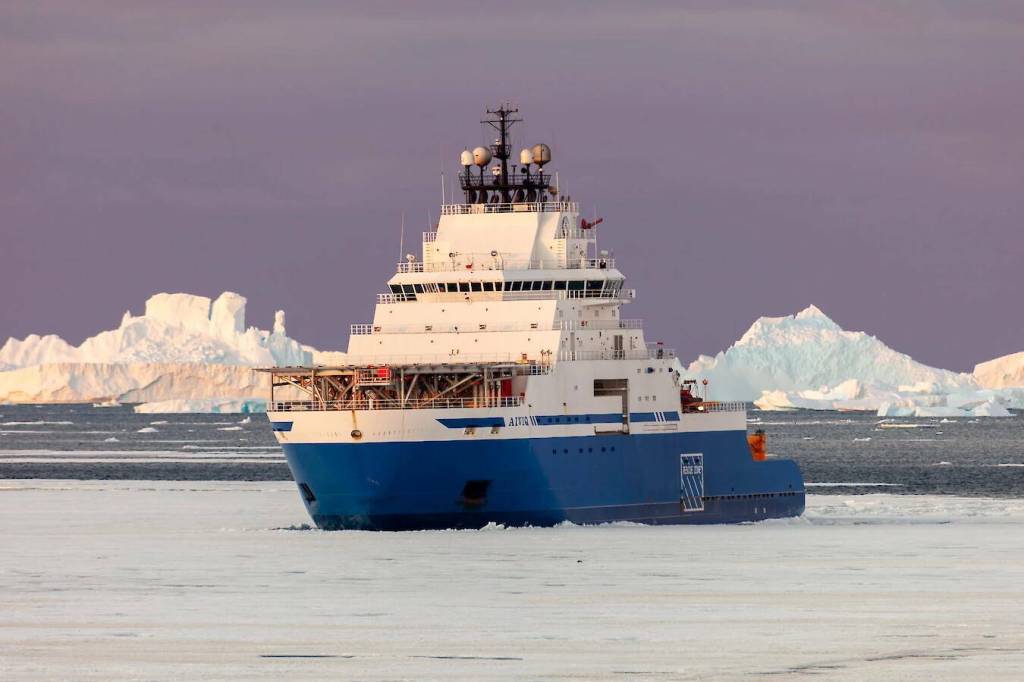
This is a developing story.
A commercial icebreaker being purchased by the U.S. Coast Guard will be officially homeported in Juneau, the culmination of a years-long effort to acquire and locate such a vessel here, officials announced Wednesday.
The Aiviq, a 360-foot-long private U.S.-registered vessel built in 2012 that’s been targeted by lawmakers for many years, is expected to “reach initial operational capability in two years,” according to a press release issued by the Coast Guard. An allocation of $125 million to purchase the vessel was included in the federal budget passed by Congress earlier this year.
Members of Alaska’s congressional delegation who have advocated for the icebreaker say it could result in about 190 additional Coast Guard personnel assigned to the vessel, accompanied by hundreds of millions of dollars in infrastructure and other local investments to support operations, personnel and their families. That prospect has frequently been raised by local leaders during the past couple of years when discussing issues such as future development and other plans.
“This is an exciting day for Juneau, for Alaska, and for America,” U.S. Sen. Dan Sullivan, among those leading efforts in recent years for the vessel, said in a prepared statement.
It was not immediately known when the Aiviq might reach Juneau’s waters, either for a visit or official deployment.
As part of the homeporting in Juneau, a transfer of 2.4 acres of waterfront property to the Coast Guard from the National Oceanic and Atmospheric Administration was completed in February.
Wednesday’s announcement comes days after the 27-year-old Coast Guard cutter Healy, one of the two operational icebreakers in the U.S. military’s fleet, canceled a planned months-long Arctic deployment due to an electrical fire. Sullivan noted the other icebreaker in the fleet, the 50-year-old Polar Star, remains out of commission for its own repairs.
Upgrading the icebreaker fleet has been cited as a top priority by Adm. Linda L. Fagan, the Coast Guard’s commandant, as part of a larger concern about the U.S. military’s strategic readiness in the Arctic, which defense officials have said is lagging behind the efforts of other countries seeking claims to the area, particularly Russia and China.
“Russia has 55 icebreakers and is in the process of building more,” a joint press release issued by Sullivan and U.S. Sen. Lisa Murkowski states. “By 2025, China, which has no sovereignty over any Arctic waters, is set to surpass the United States’ icebreaker fleet.”
The U.S. Coast Guard Polar Security Cutter (PSC) program is seeking to replace three aging vessels with three heavy-duty ships for polar region deployment. But while the original program called for the first such vessel to be completed this year, a multitude of delays means the first new icebreaker may not be ready for service until about 2030. The Coast Guard is also stating it wants at least three and as many as six additional icebreakers (for a total of nine), but those are also many years from being realized.
The Aiviq, while possessing icebreaker capabilities, won’t have the capabilities the Coast Guard is seeking in its heavy-duty ships, even after planned upgrades during the next two years. The ship was originally built to support Royal Dutch Shell’s drilling operations in the Beaufort and Chukchi Seas, but almost immediately made national news when it suffered mechanical failure and lost control of an oil rig it was towing, with the rig running aground off Kodiak Island.
The first attempt to purchase the Aiviq for the Coast Guard was made in 2015 by then-U.S. Rep. Duncan Hunter of California, with longtime Alaska U.S. Rep. Don Young joining the effort a year later. But Coast Guard leaders were reluctant for years to acquire the vessel, declaring in one report it was “not suitable for military service without substantial refit.”
But with the ongoing delays to the Polar Security Cutter program the Coast Guard has endorsed acquiring a private icebreaker under congressionally approved language that make the Aiviq the only vessel meeting the specifications. Among the requirements are being built in a U.S. shipyard, able to break at least three feet of ice ahead at a continuous speed of three knots, have 15 years of original design service life remaining, be capable of operations for a minimum of 60 days without resupply and have a landing area for Coast Guard helicopters.
Sullivan, in March, said it will likely take six to seven years before the Aiviq is fully equipped and has the support mechanisms in place for full service.
“I think right off the bat it is going to be able to do search-and-rescue type operations,” he said at the time. “But what we are looking at in terms of full operational capability that could be, for example, a flight deck with a helicopter…(plus) weapons, there might be communications aspects, there might be satellite aspects, collection aspects. So you want to make this a much more robust military ship.”
Murkowski, in a prepared statement Wednesday, noted the support facilities for the icebreaker are also an ongoing process.
“In addition to outfitting the Aivuq to meet Coast Guard specification, more must be done on shoreside infrastructure, housing, and preparing for more Coast Guard families in Juneau and I stand ready to help facilitate that along with the rest of the delegation,” she said. “As I repeat often, we are an Arctic nation because of Alaska and we require the assets and manpower to fully and competently carry out our mission in the Arctic.”
• Contact Mark Sabbatini at mark.sabbatini@juneauempire.com or (907) 957-2306.