How dry is our rainforest? Southeast’s rare drought could threaten plants, animals, your power bill
Published 3:00 am Friday, June 7, 2019
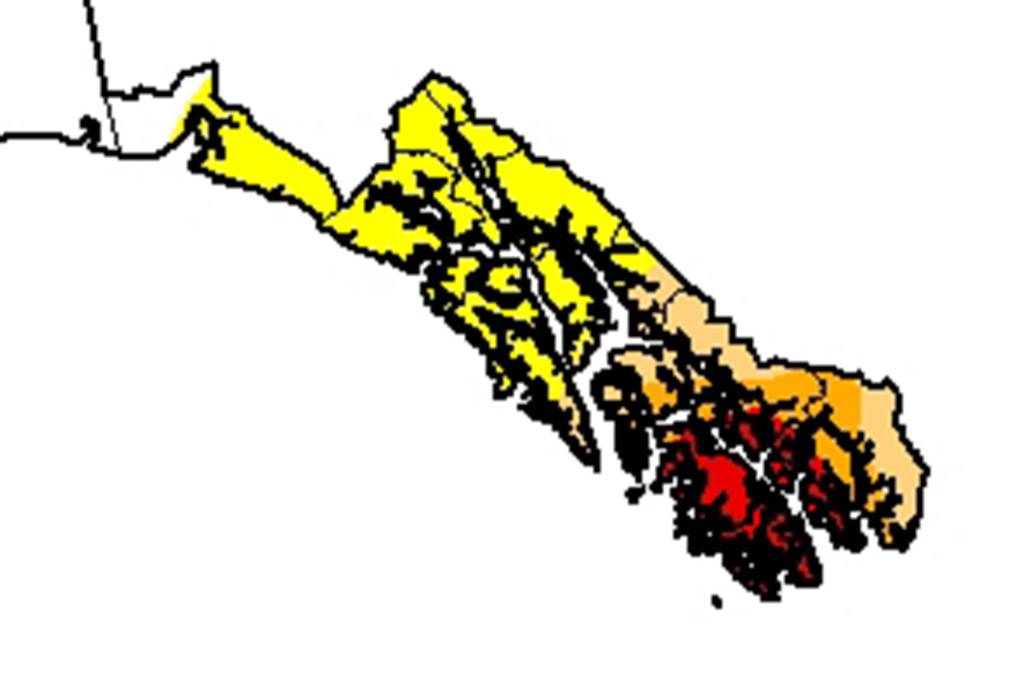
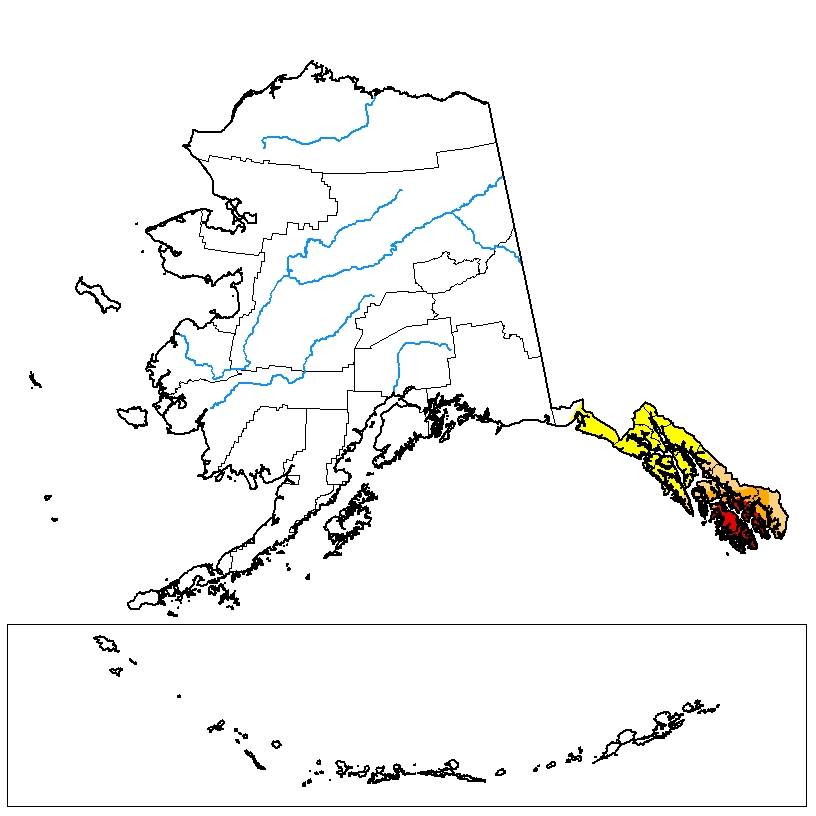
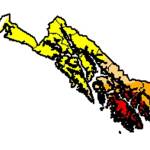
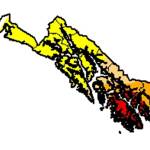

Essentially the entirety of Southeast Alaska is in some state of drought, according to the U.S. Drought Monitor.
That’s the result of less precipitation over the better part of the past two years in what is normally one of the wettest parts of the state. Things are most severe in the southernmost portion of Southeast, including Prince of Wales Island and the Ketchikan area, but even Juneau and Yakutat are considered abnormally dry, according to the monitor.
“This is unusual for us, not unheard of, but unusual,” said Wayne Owen, director of wildlife for the Alaska Region for the USDA Forest Service, in a phone interview with the Empire.
What makes it even more unusual is that big-picture predictions expect Southeast Alaska to be getting wetter in the future.
“The climate models are in good agreement that across Southeast Alaska, over the long term, precipitation overall will increase,” Rick Thoman, Alaska Climate Specialist for Alaska Center for Climate Assessment and Policy, said. “We’re actually seeing that over the last 50 years, but what the ongoing event shows is that even in a wetting world, where precipitation is increasing, there’s going to be these drying times.”
Despite about two years worth of increased dryness so far, Owen said Alaskans shouldn’t expect Tongass National Forest or other areas to suddenly look like barren deserts — even in places under the extreme drought designation.
“Extreme drought to us would be plenty of water to plenty of other people,” Owen said. “It’s kind of a sliding scale. It’s a departure from the normal expected amount of precipitation. It’s not an absolute amount.”
Those “normal” amounts are based on 30-year averages calculated by the National Weather Service, Owen said.
In light of the drought, Owen said Forest Service employees are extra-aware of the risk of forest fires and the possibility that trees may be more susceptible to pests because of dryness, but so far plants and animals are doing OK.
“We are currently not aware of any permanent impact associated with the current drought,” Owen said. “If it starts raining this weekend, things will improve without any long-term harm to vegetation. A lot of the trees have been around for hundreds and hundreds of years, and they’ve survived droughts like this in the past. You wouldn’t want this to last all year, but it’s almost certainly not going to last all year.”
Current developments
The impacts of the drought are more easily seen on power bills.
Alec Mesdag, director of energy services for Alaska Electric Light & Power, said less precipitation meant AEL&P’s lakes were less than full heading into last winter, which translates to a higher price for electricity.
That’s because with less water than normal, AEL&P pressed pause on providing power to some of its interruptible customers — customers who purchase energy when it is available but can use other sources when needed. Mesdag said larger interruptible customers include Greens Creek Mine and the South Franklin Street Dock.
Mesdag said interruptible customers are part of the way AEL&P plans for potential low-water situations. He said saving water over the winter, water levels were sufficient for spring.
Typically, energy sold to those customers helps offset the amount other customers pay for energy, Mesdag said.
However, the 2018 water year — measured from Oct. 1 to Sept. 30 — was about 21 percent below normal, Mesdag said, so that wasn’t possible, and rates reflect that.
Mesdag said from 2013-2018, the average savings from energy sales to interruptible customers for an average residential AEL&P customer was $29.50 per month. Instead, in the first quarter of this year, the price for power rose 1.5 cents per kilowatt hour. In the second quarter it rose 2.4 cents per kilowatt hour for the next three months.
“That was a pretty sizable impact on people’s bills for the first half of this year,” Mesdag said. “The total impact actually has a little more value than that in some sense because prior to that we had a negative adjustment.”
Thoman said in other Southeast Alaska communities, some power companies have had to resort to burning diesel, but that is not the case for AEL&P.
Mesdag said while the drought continues, water levels are actually rising. Whether that means energy sales to interruptible customers will resume this winter depends on the weather.
“Right now, where we’re at is it’s warm and snow is melting, and we’ve had some rain, our loads are down, and our inflows are up, so lake levels are rising,” Mesdag said, “but we will need to have at least normal precipitation through spring, summer and fall to enter winter with full lakes.”
Weathering the drought
Thoman said the ongoing and regionwide drought can be chalked up to variation in weather rather than a symptom of climate change or warming.
“There’s no reason to think we won’t get this year-to-year or even several-year variability,” he said.
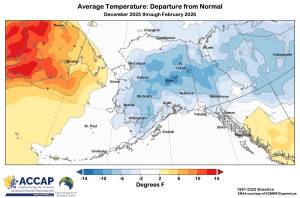
The drought has been accompanied by some increasing temperatures but nothing drastic that would exacerbate its effects, Thoman said.
“In this dry spell here over the last two years, it has been warmer in Southeast, but not drastically so,” he said. “Overall, it’s been warmer than normal, over the life of this drought, but that’s not the big news.”
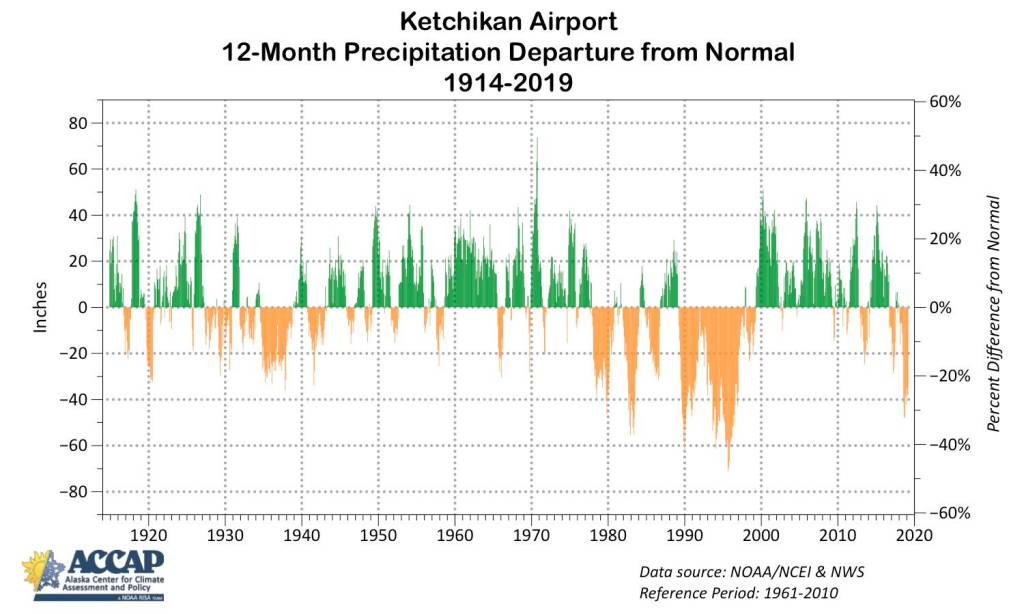
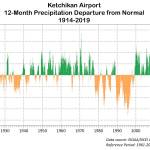
Also, while Southeast Alaska is drier than it’s been in years, these conditions aren’t unheard of. For example, Thoman said the current dry stretch is less pronounced based on rainfall than most of the 1990s.
“It’s not like we’ve never seen this kind of thing before,” Thoman said.
While the drought and its impacts on utility cost and nature are recoverable, Thoman, Mesdag and Owen said it’s going to take prolonged normal or greater than normal amounts of precipitation to get out of the drought.
“Probably the key message is that because this has been going on for the better part of two years, it is going to take a while to work out of this,” Thoman said. “What we really need is sustained wet weather in the wet time of year. April, for example, was quite wet this year, but that’s a comparatively dry time of year. What southern Southeast really needs is a wet fall. ”
• Contact reporter Ben Hohenstatt at (907)523-2243 or bhohenstatt@juneauempire.com. Follow him on Twitter at @BenHohenstatt.