Gov announces $215M in vetoes —lawmakers’ per diem payments, PFD are among cuts
Published 10:30 pm Wednesday, June 30, 2021
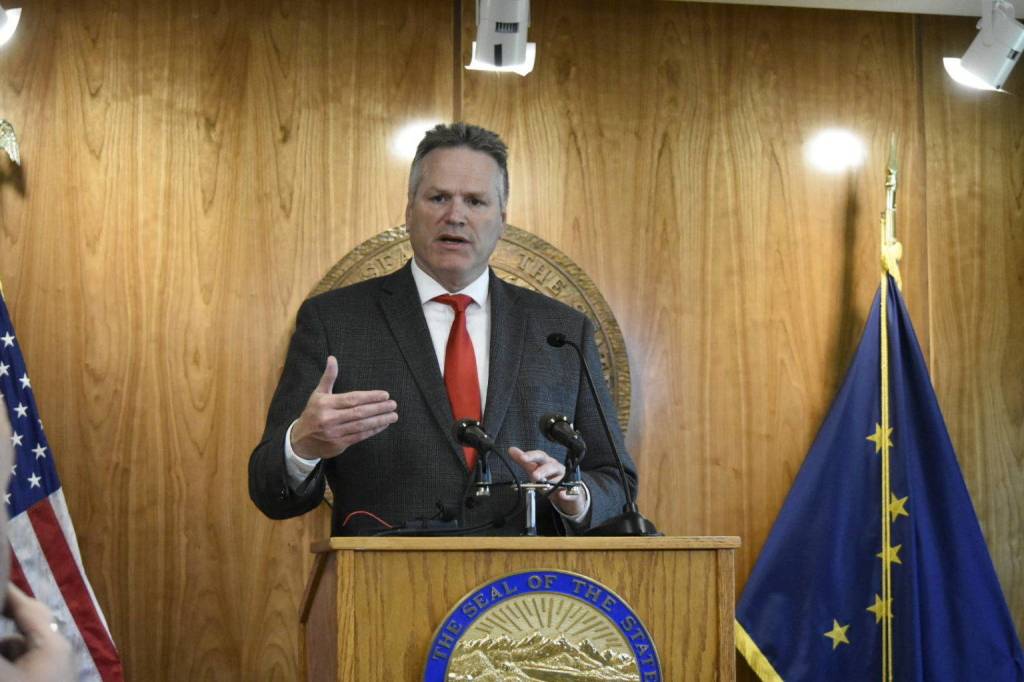
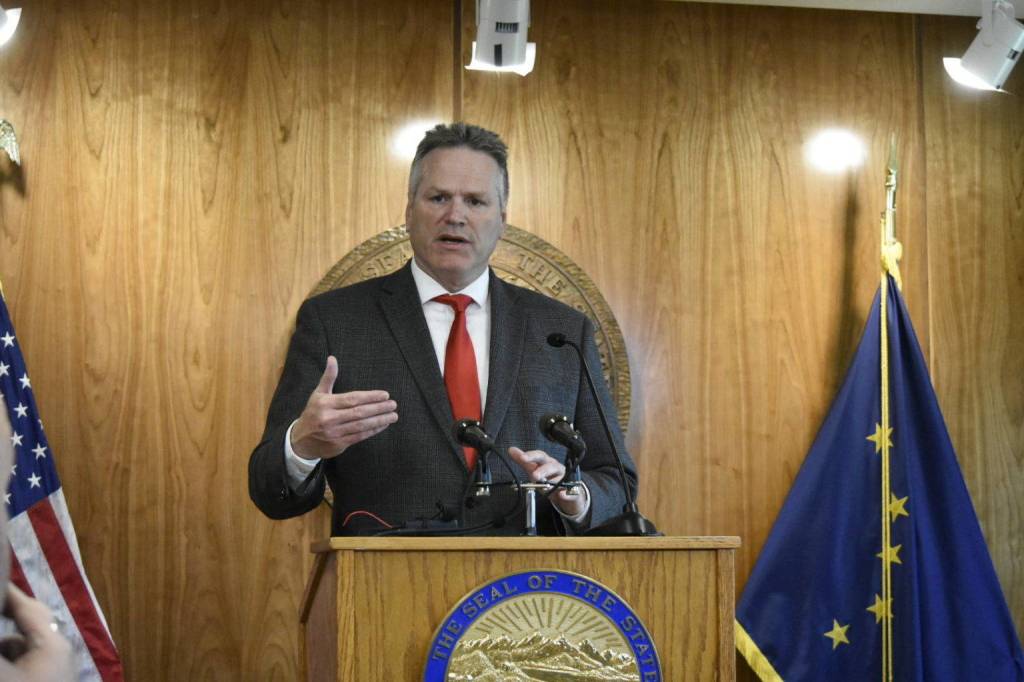
Gov. Mike Dunleavy announced $215 million in vetoes to the state budget, including per diem payments for lawmakers and the Permanent Fund Dividend approved by the Legislature.
Speaking at a news conference Thursday in Anchorage Dunleavy said his final budget reflected his administration’s goal of downsizing state government. The budget bill, which was signed the day before Dunleavy publicly unveiled his line-item vetoes, avoids a government shutdown, the governor said, but it was still incomplete and required lawmakers find a resolution to the state’s fiscal deficit.
“There aren’t going to be massive reductions but there are reductions that continue to put downward pressure on the size of agency spending,” Dunleavy said.
A third special session of the Legislature is scheduled to begin Aug. 2, and Dunleavy has called on lawmakers to find a resolution to the state’s spending deficit, a task that has dogged lawmakers for years. Dunleavy noted he had put forward three proposed constitutional amendments but said lawmakers had not given them adequate attention.
Dunleavy was highly critical of the Legislature and accused lawmakers generally of partisanship and putting their own interests above Alaskans’.
The governor was also extremely critical of the $525 dividend passed by the Legislature, accusing lawmakers of prioritizing government services over the people of Alaska.
“The people should come first, we shouldn’t be throwing crumbs at the people of Alaska,” Dunleavy said, calling the $500 amount “a slap in the face” to some Alaskans.
[Gov reignites fight over judicial picks]
Lawmakers planned for a PFD of more than $1,000, but split the fund sources so that the larger amount required the three-quarter vote necessary to reserve a fund sweep into the Constitutional Budget Reserve. Minority caucus lawmakers balked at the maneuver saying they were being coerced and neither body of the Legislature was able to get enough votes for a reverse sweep.
The governor repeatedly said lawmakers should prioritize the people of Alaska over the government. Dunleavy said it does not makes sense to him, or many Alaskans, to take money from the people of Alaska to spend on a state service. He said lawmakers need to choose between government and the people of the state.
There was an increase in spending on public safety, Dunleavy said Thursday, including programs to reduce domestic violence and sexual assault. Dunleavy has increased spending on public safety several times and has said there will likely be a need for increased spending in that area.
There were more than $8 million in cuts to the Alaska Marine Highway System which the governor said were made in anticipation of recommendations from a working group that released its report in October. Dunleavy said his office was still processing the other bills sent by the Legislature and it was his understanding there was legislation regarding the AMHS within those bills.
The budget also creates a new 18-month schedule for AMHS, according to a release from the governor’s office.
Among other vetoes shown in a summary provided by the Office of Management and Budget that drew strong reactions were $3.4 million from front line social workers for Alaska Tribal Child Welfare Compact; $1.25 million for public health nursing; $17.5 million in reduced Medicaid spending.
In a release, the governor’s office noted in some instances, vetoes were due to unfilled positions or funding being available from other sources. During the news conference, Dunleavy noted in some instances he expected federal relief funds to fill in cuts.
In a letter, the Alaska Municipal League said it was disappointed by the governor’s vetoes, citing cuts to community assistance grants, municipal harbor grants and school construction and major maintenance grants.
“At some point the State’s Constitutional obligation to public education will have to mean something, and failure to meet it result in consequences,” AML said.
Dunleavy said school districts and local municipalities had received federal relief funding for the past two years and the state’s schools were in good shape in terms of funding.
Though critical of the Legislature, Dunleavy called on lawmakers to come together and find compromise solutions that benefited all Alaskans. The governor said his amendments sent to the Legislature were an attempt to begin conversations about how to resolve Alaska’s fiscal deficit and that his office was committed to aiding in those discussions.
In the past lawmakers were critical some of Dunleavy’s proposals and questioned the underlying financial assumptions in the projections presented by the administration. New projections were being produced, the governor said Thursday, which will help lawmakers craft proposals for the August session.
Following the governor’s vetoes announcement, Senate Democrats released statements accusing the governor of partisanship and divisive tactics.
Senate Minority Leader Tom Begich, D-Anchorage, said he was deeply disappointed by the vetoes, saying many of the items that were cut had bipartisan support in the Legislature.
“Alaskans deserve both: a dependable PFD and safe, educated kids living in a prosperous state. Too bad this governor seems to think it’s one or the other,” said Sen. Jesse Kiehl, D-Juneau.
In a statement, House Speaker Louise Stutes, R-Kodiak, said a $1,000 had bipartisan support and the governor’s vetoes created fiscal uncertainty as the state was trying to recover from the pandemic.
“We must protect the fund from overspending that mortgages our future by paying large dividends today at the expense of essential services, our economy, and our children’s future opportunities,” Stutes said.
High stock prices, a rising price of oil and the end of pension payments meant the state would be in a stronger position financially, Dunleavy said, and may not need a broad-based tax for additional revenue.
• Contact reporter Peter Segall at psegall@juneauempire.com. Follow him on Twitter at @SegallJnuEmpire.
See a summary of the vetoes below: