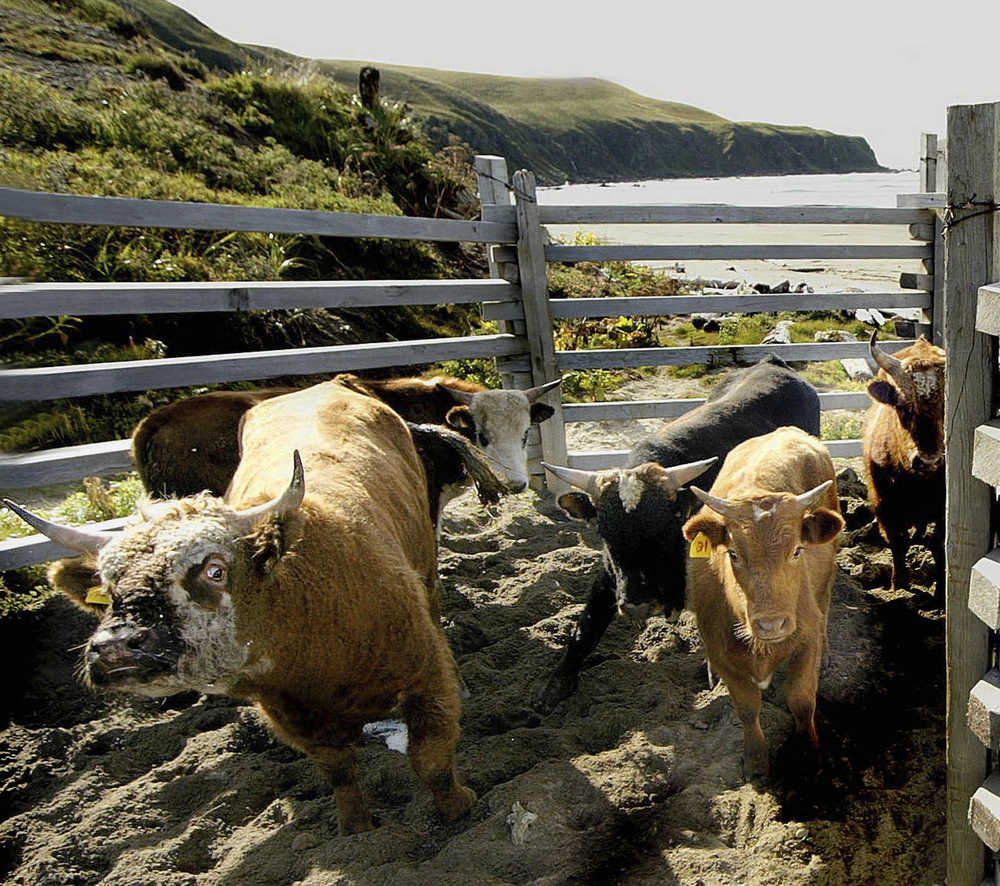
FILE--In this Sept. 13, 2003, file photo, cattle wait in the chute leading to a beach on Chirikof Island, in Alaska. Federal wildlife managers say funding continues to be shut off for their longstanding efforts to remove more than 2,000 feral cattle from Alaska's Chirikof Island. (AP Photo/Al Grillo, file)

FILE--In this Sept. 13, 2003, file photo, cattle wait in the chute leading to a beach on Chirikof Island, in Alaska. Federal wildlife managers say funding continues to be shut off for their longstanding efforts to remove more than 2,000 feral cattle from Alaska's Chirikof Island. (AP Photo/Al Grillo, file)

Funding remains cut-off for removing Alaska feral cattle

ANCHORAGE — U.S. government funding for the possible removal of more than 2,000 feral cattle from Alaska’s Chirikof Island has been suspended for the second time, meaning no money will be available for the long-delayed project until at least April, wildlife managers said Monday.

The Chirikof herd is descended from cattle first introduced to the 29,000-acre island in the late 1880s to provide meat for whaling crews and fox traders. The animals have long gone without caretakers on the remote, uninhabited island.

The prohibition on cattle removal spending was initially imposed in the 2016 federal budget, which ran between Oct. 1, 2015 and ended Sept. 30.

The federal government is currently funded by a continuing resolution through early April 2017 that retains directives embedded in the 2016 spending, so no money can be spent on removing the cattle, said Steve Delehanty, manager of the Alaska Maritime National Wildlife Refuge, which oversees more than 2,000 islands including Chirikof Island.

Also on hold are efforts to remove a smaller cattle heard on Alaska’s Wosnesenski Island.

The refuge has been trying for years to remove the non-native herd from the island because the cattle damage the habitat of native wildlife such as seabirds and salmon.

The refuge was working on environmental impact statements to explore different options for both islands.

“I was pretty proud of the amount of public outreach, you know, really trying to listen to people and their points of view to figure out a reasonable approach to take,” Delehanty said. “That is all ceased.”

If spending is restored to deal with the Chirikof cattle, the refuge will “dust off” the impact statement and release it for public review and comment, he said.

Ideas on what to do about the cattle from the public have included leaving them or some cattle on the island, killing them and taking the meat, removing or sterilizing the animals and introducing predators like bears and wolves to cull the herd. Some people also urged officials to make the meat or genetic material from the unique herd available to the public.

The island could more reasonably accommodate 500 cattle under the current conditions of the island’s land, a range specialist with the USDA’s Natural Resources Conservation Service said in a report following a July 2014 visit to Chirikof, which is about 400 miles from Anchorage.

Designating 30 percent of the island’s available forage area to a smaller number of cows would allow the environment to recover, the specialist’s report said.

Over the years, adventuresome entrepreneurs have added a variety of beef and dairy breeds to Chirikof, resulting in a sturdy hybrid today.

The last rancher to try to make money off cattle on the island was Tim Jacobson, who more than a decade ago attempted to sell the range-fed cows as superior breeding stock.

But his plan did not work because it was difficult to get the cows off the island, which has no natural harbors and is constantly buffeted by unpredictable winds and harsh weather.

More in News

The Alaska Department of Transportation and Public Facilities drops explosives via helicopter to trigger controlled avalanches above Thane Road in February 2023. (Clarise Larson / Juneau Empire file photo)
DOT&PF reduces avalanche hazard over Thane, Mount Juneau remains a risk

They flew over the snowpack above Thane in a helicopter Thursday to test for controlled avalanche.

A whale tale sculpture on the downtown docks glows on New Year’s Day 2026. (Mari Kanagy / Juneau Empire)
January’s First Friday: Here’s what to see

Juneau Arts Humanities Council announced a preview of community events on First Friday.

Mendenhall Glacier, Governor Mike Dunleavy, and glacial outburst flooding are pictures in this collage of news stories from 2025. (Juneau Empire file photos, credits left to right: Jasz Garrett, Jasz Garrett, Chloe Anderson)
Juneau’s 2025 year in review

The Empire revisited eight major topics as their headlines progressed.

The Alaska Department of Transportation and Public Facilities, contracting with Coastal Helicopters, works to reduce avalanche risk on Thane Road by setting off avalanches in a controlled fashion on Feb. 5, 2021.(Michael S. Lockett / Juneau Empire file photo)
DOT&PF has a plan to reduce avalanche hazard near Juneau amid record snowfall

They’re set to fly over the snowpack above Thane in a helicopter at about noon to trigger a controlled avalanche.

A truck with a snowplow drives along Douglas Highway on Dec. 31, 2025. (Mari Kanagy / Juneau Empire)
Warnings pile up under record-breaking snowfall in Juneau

December 2025 is the snowiest December in the city’s history.

Alaska's Department of Transportation and Public Facilities issue a warning of increased avalanche hazard along Thane Road. (Juneau Empire file photo)
Avalanche advisory in effect for Thane, Downtown

The alert is not an evacuation notice, but officials urge residents to stay informed.

Emergency lights flash on top of a police car. (Ben Hohenstatt / Juneau Empire file photo)
Child dies in car accident on Christmas Eve, Juneau community collects donations

Flying Squirrel will serve as a collection point for donations for the child’s family.

Dense, wet snowpack piles up beneath a stop sign on Great Western street. (Mari Kanagy / Juneau Empire)
More heavy, wet snow forecast for the Juneau area this week

Capital City Fire and Rescue cautioned residents without four wheel drive from taking on the roads.

Photo by James Brooks / Alaska Beacon
Alaska Gov. Mike Dunleavy greets a child during the governor’s annual holiday open house on Tuesday, Dec. 12, 2022 at the Governor’s Mansion in Juneau.
Pipeline deal and disasters were highlight and low point of 2025, Alaska governor says

Alaska’s traditional industries got a boost from the Trump administration, but more drilling and mining are likely years away

Most Read