Education funding bill unexpectedly advances again, nears House floor vote amid affordability concerns
Published 9:30 pm Wednesday, February 19, 2025
A key House panel unexpectedly advanced a major rewrite of Alaska’s per-student funding formula for public schools on Thursday.
Without objection, the House Finance Committee advanced House Bill 69 to a vote of the full House without discussing amendments or hearing public testimony. If HB 69 were to become law, the state would be expected to provide $325 million more next year for public schools, with additional increases in 2027 and 2028.
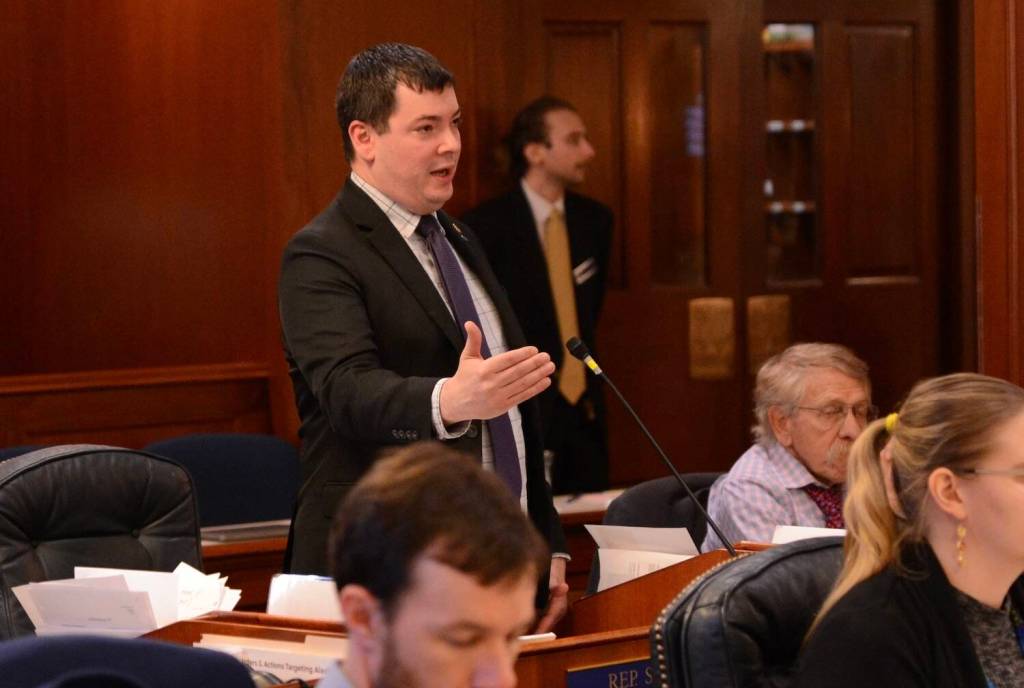
Rep. Will Stapp, R-Fairbanks, made the motion to advance the bill, saying that there’s no point in debating it when there’s no money to pay for it.
“There is no way that the state can make that type of promise to pay for a service without ending the PFD program and imposing new taxes,” he said afterward, referring to the Permanent Fund dividend.
The bill would phase in the increase over three years, with an estimated $644 million per year in additional public school funding by the 2027-2028 school year, according to figures from the Legislative Finance Division, which analyzes the budget for lawmakers.
Even without that increase, current state revenue and expense forecasts predict a significant deficit in the coming years.
“I don’t have the money. I don’t see how I can support the bill without having the money. I’m interested to hear what the majority’s proposals are to be able to fund the bill, but I will absolutely bite,” Stapp said during Thursday’s finance committee meeting. “I know this is a big priority for you guys. So Mr. Co-Chair, with the permission of the committee, I’m going to go ahead and see if I can move the bill.”
The action came after a brief discussion of HB 69 but before any public testimony, breaking the Legislature’s usual precedent.
After the vote, Speaker of the House Bryce Edgmon, I-Dillingham, said there are always questions in the Legislature about how to pay for priorities.
“I think in this fiscal year, we’re looking at a lot of things with that same question. We always, in the end, make it work right, just to all come together,” he said. “I always posit the cost of doing nothing — what’s that cost?”
Asked how the state intends to pay for HB 69, Rep. Andy Josephson, D-Anchorage and co-chair of the House Finance Committee, said he believes it’s possible to afford a public school funding increase if the Permanent Fund dividend is cut to $1,000 and if legislators pass some small tax bills, like one proposed by Sen. Robert Yundt, R-Wasilla.
Rep. Rebecca Himschoot, I-Sitka and the author of HB 69, said school districts have been asked for years to balance their books despite inflation and no increases in funding from the state.
“We have some hard decisions to make,” she said when asked how the state would pay for her bill. “We have a more flexible budget than school districts have. We also have the ability to raise money. So collectively, we have hard decisions. But we can’t lose sight of the fact that we owe our children the best education they can get, in our constitution.”
Over the last several weeks, the House Education Committee has heard emotional testimony from students and school officials grappling with budget shortfalls and school closures around the state, and urging a boost to school funding.
The Alaska House is closely divided between a 19-member Republican minority, including Stapp, and a 21-member multipartisan majority that includes two Republicans, five independents and 14 Democrats.
Changes to the state’s public school funding formula have been the No. 1 priority of the majority since its creation after last year’s elections.
On Wednesday, members of the Republican minority caucus voted against sending HB 69 to the finance committee via a procedural motion. At the time, they said more discussion was needed and that members of the House majority were acting too hastily.
“I wish we’d had some more debate about the merits of the bill and expectations and outcomes. That was my only concern. We didn’t have more opportunity to talk about expectations and outcomes of such a bill passing, and that really didn’t happen,” said Rep. Rebecca Schwanke, R-Glennallen.
Twenty-four hours later, it was the minority’s turn to act quickly as Stapp urged the bill forward.
He said afterward that the proposal is so unrealistic that it’s not worth talking about.
“I honestly don’t know how this bill is even remotely going to be funded, because no tax proposals have been coming out by the folks who want to pay for the bill,” he said. “So I’m interested to see how they’re going to tell the voters of the state and really the educators and the teachers, how they’re going to fund it. They didn’t do that on the committee.”
Rep. Jeremy Bynum, R-Ketchikan and a member of the finance committee, said he was surprised by Stapp’s move, but he wanted to see policy changes, and at the end of the day, HB 69 was about funding, not policy.
Members of the minority could have fought the majority in an attempt to include policy items, but “it’s better to send it over to the Senate, and they can fix it,” Bynum said.
Shortly before Stapp’s action, Gov. Mike Dunleavy said on social media that he does not support the bill in its present form but does support separate, ongoing negotiations between his office and members of the Legislature.
“This fast-track standalone bill does not have my support. The education negotiations between the two bodies and my office do,” he said.
Josephson voiced support during the committee meeting for those ongoing negotiations,
“so that we can get to a yes, and it’s a win-win,” he said.
Scheduling the bill for a floor vote will be in the hands of Rep. Louise Stutes, R-Kodiak and chair of the House Rules Committee.
Twenty-one votes are needed to pass a bill in the House, and the House majority has 21 members, but Rep. Maxine Dibert, D-Fairbanks, has been hospitalized with a respiratory illness and has not been cleared for a return to work.
Outside her office on Thursday afternoon, reporters asked Stutes whether she could say when it will come up for a vote.
“No, no,” she said — then walked away. Later, she provided a written statement.
“I’m happy to see House Bill 69 pass the House Finance Committee. Education funding is a critical issue to Alaskans, the House Majority Coalition, and educators across the state. It is a priority to get this legislation on the House floor,” she said.
• This article originally appeared online at alaskabeacon.com. Alaska Beacon, an affiliate of States Newsroom, is an independent, nonpartisan news organization focused on connecting Alaskans to their state government.