Dunleavy vetoes bill containing Kiehl’s ban on PFAS chemicals for most firefighting
Published 9:30 pm Monday, August 28, 2023
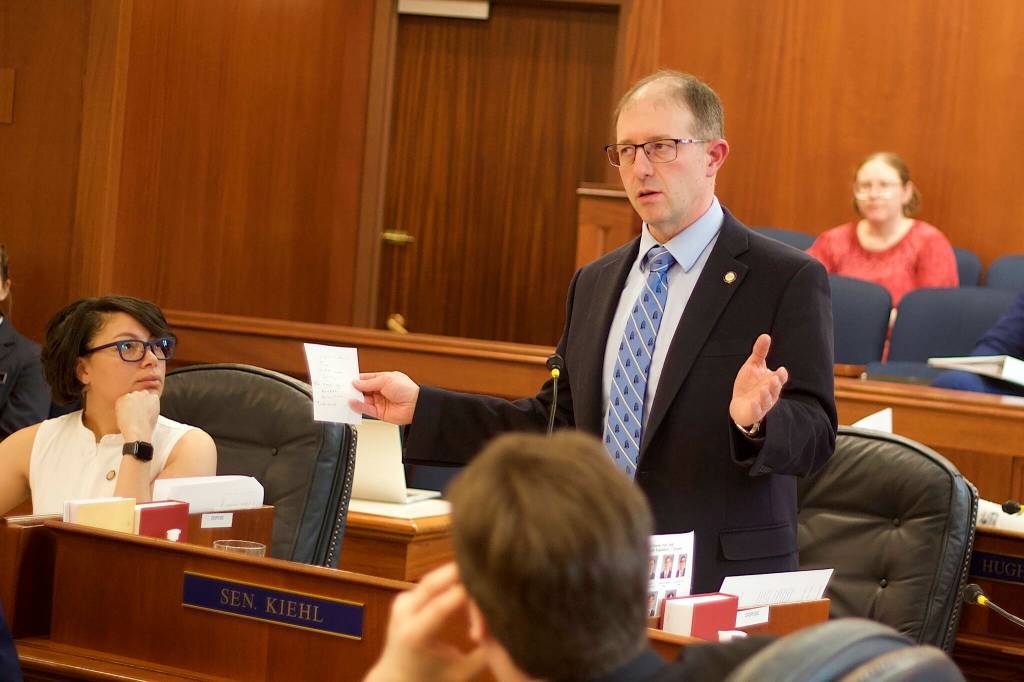
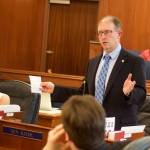
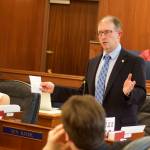
Gov. Mike Dunleavy has vetoed a bill that would ban PFAS chemicals for most firefighting purposes in Alaska, which passed the Legislature by a near-unanimous vote this session after Democratic Juneau state Sen. Jesse Kiehl reached a deal to include its provisions in a bill sponsored by Republican Rep. Stanley Wright of Anchorage.
The veto also means the rejection of Wright’s attempt to reduce the use of hydrofluorocarbons (HFCs), a greenhouse gas chemical commonly used in air conditioning and refrigeration, in newly constructed buildings.
Dunleavy, a Republican, stated in a veto letter Saturday he welcomed the reintroduction of Wright’s bill without the provisions authored by Kiehl. But the governor said he vetoed the bill because it did not provide alternatives for a firefighting substance used by many remote villages known as aqueous film forming foam (AFFF) that contains PFAS chemicals.
“If AFFF is removed from a community, residents will have no capabilities to fight a large-scale fire,” Dunleavy wrote. “When balancing the environment and life and safety of Alaska, this bill falls short by removing a lifesaving tool from the toolbox.”
Kiehl, in an interview Tuesday, disputed the claims — saying original provisions of the legislation were altered to address state agency concerns — and said the governor twice rejected requests to discuss any remaining issues between Aug. 18 and when the bill was vetoed.
The PFAS provisions were originally in a different bill sponsored by Kiehl that banned the substances except when used for oil- and gas-related fires until a substitute chemical able to handle large such incidents is available. The legislation also allowed the state to accept up to 40 gallons of a firefighting substance containing PFAS chemicals from about 130 small, remote communities that use state-provided “code red carts” to store AFFF chemicals.
The senator said that, according to administration data, more than 85% of the rural firefighting systems using such carts are currently non-functional. He said villages with functional systems had the option to keep them — although a voluntary recall effort would be made — and could use them if necessary for purposes exempted in the legislation such as oil- and gas-related fires.
“Passing this bill does literally nothing to reduce public safety,” he said.
Kiehl also argued the cost of cleaning up a PFAS spill in a village would far exceed the cost of recalling its firefighting cart and replacing it with a system using non-toxic substances.
PFAS chemicals — known by their full name as per- and polyfluoroalkyl substances, or commonly as “forever chemicals,” are considered known to cause cancer, maternal health problems and other ailments. They exist in hundreds of locations statewide, including in Juneau near the airport and Hagevig fire training center.
Kiehl successfully got the provisions of his bill passed by the Legislature in the final days of the regular session — by a 38-2 vote in the House and 20-0 vote in the Senate — by having them included in Wright’s bill (House Bill 51).
Kelly Rawalt, a spokesperson for the state Department of Environmental Conservation, issued a prepared statement calling the legislation “well-intentioned,” but insufficient to address all of the department’s concerns.
“We believed we had additional time to work through these concerns through the legislative process,” her statement noted. “The sponsor unfortunately added the bill as an amendment on the last day of session, which prevented us from fully understanding the effects of this legislation as well as communicating additional concerns to the sponsor. In the end, the way this was approached prevented DEC from completing our due diligence on this legislation.”
While Dunleavy praised the intent of Wright’s original HFCs legislation and a press release quoted Kiehl as stating the governor “felt the need to hide” from a discussion before the veto, both subsequently distanced themselves from it being a matter of party politics.
“Your questions are political when the reasons for the veto are about protecting rural communities,” wrote Jeff Turner, a spokesperson for Dunleavy, in an email when asked by the Empire if a bill that passed the Legislature by a combined 58-2 vote was vetoed because it contained provisions authored by a Democrat.
Kiehl said he strived to get his bill enacted into law in a way that avoided party politics — and didn’t speculate on the governor’s motives for rejecting it.
“I didn’t work this bill by party, or even by caucus, and I think the vote reflects that,” Kiehl said. “Legislators from every corner of the state supported it because it was the right thing to do. And it did it in ways that answered every issue that every department had raised. So the governor came up with something different, didn’t talk to anybody about it — or at least he didn’t talk to me — despite my requests.”
The senator has previously criticized the Dunleavy administration for lack of action against PFAS chemicals and the press released issued Tuesday noted the DEC “declared some PFAS chemicals to be hazardous substances several years ago, but set excessively high levels.” While the department agreed in February to stricter standards, Kiehl said in the release additional measures are needed.
“When those new rules surface, we’ll get alternate drinking water to more Alaskans who have PFAS poison in their wells today,” he said. “But without the bill, there will be more spills and more poisoned water in the future.”
• Contact Mark Sabbatini at mark.sabbatini@juneauempire.com or (907) 957-2306.