Dunleavy paints optimistic picture in State of the State address
Published 10:30 pm Monday, January 24, 2022

Correction: An earlier version of this article misstated the amount awarded by the U.S. Department of Agriculture for a mariculture facility on Prince of Wales Island. The amount is $500,000, not $500 million. The Empire regrets the error.
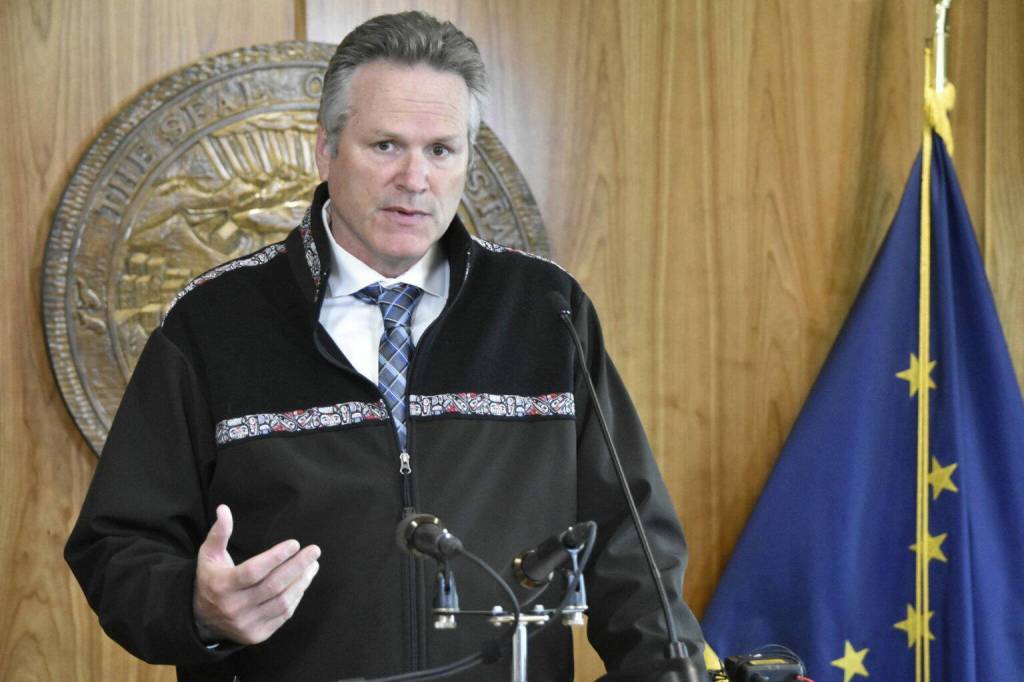
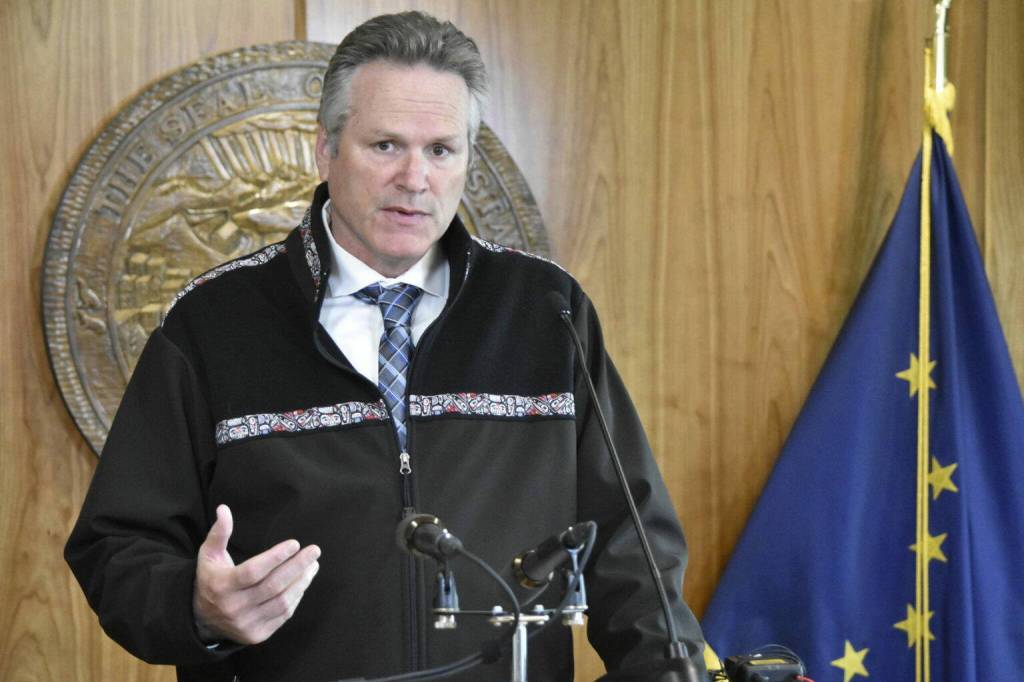
Gov. Mike Dunleavy on Tuesday gave his longest State of the State address as governor, focusing on familiar themes of reducing the state’s deficit, public safety and paying a sizable Permanent Fund Dividend.
“Our motto is ‘North to the Future,’” Dunleavy said. “What does that future look like to you?”
In his address before a joint meeting of the Alaska State Legislature, the governor highlighted positive aspects of the state despite noting it’s still grappling with the COVID-19 pandemic and its effects on the economy.
“Thanks in part to our fiscal restraint over the past three years, we’re on track for a budget surplus in the current fiscal year for the first time in a decade,” Dunleavy said.
Dunleavy said in his address the high price of oil in the state could lead to an even larger surplus in future years. But the governor also took aim at the Biden administration for orders limiting resource development in the state. The Biden administration last year ordered the end to leasing in the Arctic Northwest Wildlife Refuge and reversed the Trump administration’s decision to exempt the Tongass National Forest from the Clinton-era Roadless Rule.
“At every turn and since day one of the Biden Administration, this hostility has been perfectly clear. They don’t care about Alaska, and they don’t care about you,” Dunleavy said.
However, the governor’s proposed budget this year uses funds from the federal relief bill passed under the Biden administration the American Rescue Plan Act. Similarly, and in large part thanks to the work of Sen. Lisa Murkowski, R-Alaska, the state will receive a substantial amount of money from the bipartisan infrastructure bill passed last year.
The Biden administration also announced the Southeast Alaska Sustainability Strategy, a program through the U.S. Department of Agriculture meant to develop sustainable industries in Southeast Alaska. USDA recently announced a grant of $500,000 to develop a mariculture processing facility on Prince of Wales Island where several aquaculture farms are located.
The governor said in his speech developing the state’s agriculture, including mariculture, was a priority for his administration. Dunleavy said his administration would work to develop more state lands for the purposes of agricultural development.
“The key component of a modern state is the ability to produce what it needs to ensure its survival, and that means we must build our own supply chain,” Dunleavy said. “That is where our Alaska-grown businesses have a huge part to play.”
The pandemic had revealed the fragility of Alaska’s supply chains, Dunleavy said, and his administration would soon be creating a Food Security Task Force.
“Through our Pioneer Homes, our Department of Corrections, our schools, and more, the State of Alaska can be the biggest supporter of our Alaska Grown products,” Dunleavy said.
The governor touted his administration’s emphasis on public security, and said during his tenure the state had added 20 fully funded Alaska State Trooper positions. He also promoted his People First Initiative, which was announced late last year. That initiative, Dunleavy said, will emphasize greater collaboration between the Department of Public Safety and the Department of Health and Social Services in combating domestic abuse, foster care, homelessness and Missing and Murdered Indigenous Women.
“The People First Initiative is a mix of statutory changes, additional personnel, administrative orders, technology, and increased resources to tackle these longstanding, serious problems,” Dunleavy said.
The governor made multiple references to the positive impacts of programs his administration once sought to cut. In reference to the state’s work in combating the COVID-19 pandemic, Dunleavy noted this year’s budget proposal includes a 50% increase to the number of students the state’s doctor training program, the Washington, Wyoming, Alaska, Montana and Idaho program at the University of Washington School of Medicine.
In 2019, Dunleavy sought to cut funding for that program but was blocked by the Legislature. That same year Dunleavy made significant reductions to the University of Alaska system. Tuesday night, Dunleavy said the university system is integral to his vision of Alaska’s future.
“I envision an Alaska that is a worldwide leader in technology, in unmanned aircraft systems, and in the critical minerals needed to power the technology of today and tomorrow,” Dunleavy said. “The University of Alaska is central to this future in my proposed budget.”
Also in 2019, Dunleavy said his administration would seek to pay Permanent Fund Dividends based on the formula in statute. A 2016 Alaska Supreme Court Case said the PFD was subject to appropriation by the Legislature. The governor also previously said his administration would seek back payments for PFDs not paid to the statutory amount.
On Tuesday, the governor criticized the Legislature for not following the statutory formula, and called on lawmakers to change the law. He also called on lawmakers to pass his proposed constitutional amendment enshrining a PFD that uses 50% of the state’s annual draw from the Alaska Permanent Fund.
“Everyday Alaskans who play by the rules and follow the law are wondering how the people they’ve given the power to make laws can excuse themselves from following those very laws when it appears to be inconvenient,” Dunleavy said. “They’re wondering how we’ve come to a place where the PFD is nothing more than what’s left over after government takes the lion’s share.”
During his speech, Dunleavy gave nods to several notable Alaskans including Olympic star Lydia Jacoby, who was not in the audience. However, the first Miss Alaska and the first Korean American to win the Miss America competition, Emma Boyles was in attendance. Boyles used her platform to discuss her experiences with attention deficit hyperactivity disorder, Dunleavy said.
Others recognized by the governor were at-risk and homeless youth advocate Carley Rose Kelley, who is also in recovery from addiction; Alaska Army National Guard officer Captain Andrew Viray; senior officer with the Department of Corrections Sergeant Ken Noland and 18-year Alaska State Trooper veteran in Bethel Sgt. Elondre Johnson.
• Contact reporter Peter Segall at psegall@juneauempire.com. Follow him on Twitter at @SegallJnuEmpire.