Site Logo

Ceremony celebrates Chilkat blanket’s return

Published 9:06 am Wednesday, December 2, 2015

David Katzeek, second from right, speaks during a public ceremony at the Walter Soboleff Center Tuesday for the return of a Chilkat robe recently acquired on eBay. Sealaska Heritage Institute purchased the robe in November from eBay seller George Blucker of Texas who willingly took a loss on the sale so the piece could be repatriated to the Tlingit, Haida and Tsimshian.
1/2
David Katzeek, second from right, speaks during a public ceremony at the Walter Soboleff Center Tuesday for the return of a Chilkat robe recently acquired on eBay. Sealaska Heritage Institute purchased the robe in November from eBay seller George Blucker of Texas who willingly took a loss on the sale so the piece could be repatriated to the Tlingit, Haida and Tsimshian.
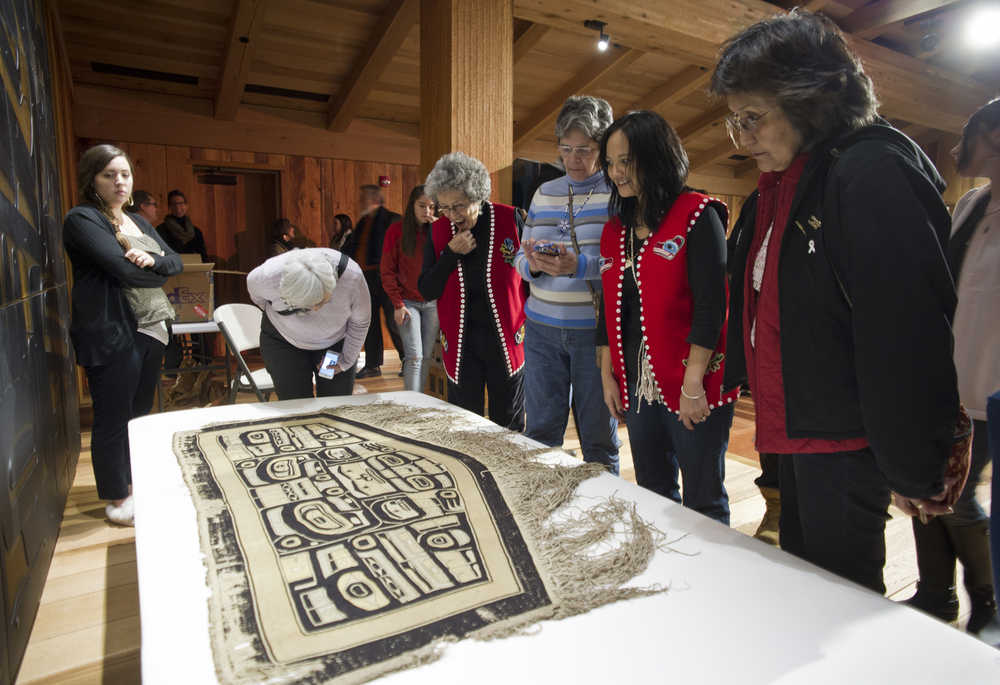
People attending a public ceremony Tuesday at the Walter Soboleff Center get a close up view of a Chilkat robe recently acquired on eBay by the Sealaska Heritage Institute.

They were there to see an ancestor.

On Tuesday afternoon, more than 50 Southeast residents gathered at the clan house in the Walter Soboleff Building to celebrate the Southeast Alaska return of a Chilkat blanket sent by a collector in Texas.

Rosita Worl, president of Sealaska Heritage Institute, said the return was a moment of sorrow and joy — sorrow because it had been absent for so long and joy because it had returned.

In the 19th century, disease and the deliberate suppression of Native culture disrupted Alaska Native communities, ending the teacher-learner chain that led to the production of Alaska Native items.

Collectors bought or stole surviving items, leaving Alaska Native clans and tribes with few ways to connect to their heritage.

In recent years, organizations including SHI have attempted to return items to tribes across Alaska. Once returned, they can be used in ceremonies or reverse-engineered to learn the unique techniques employed in their construction.

In many cases, those techniques were the product of individual weavers who each took different approaches to their work.