Buddy Tabor’s folk music hits global streaming platforms
Published 9:30 pm Tuesday, April 9, 2024
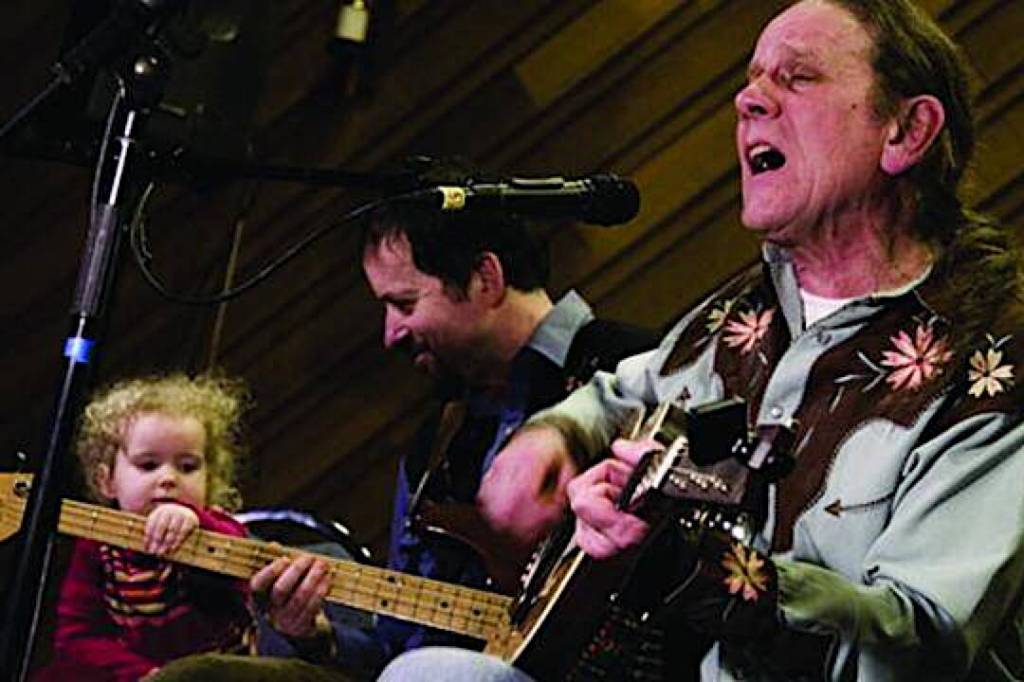
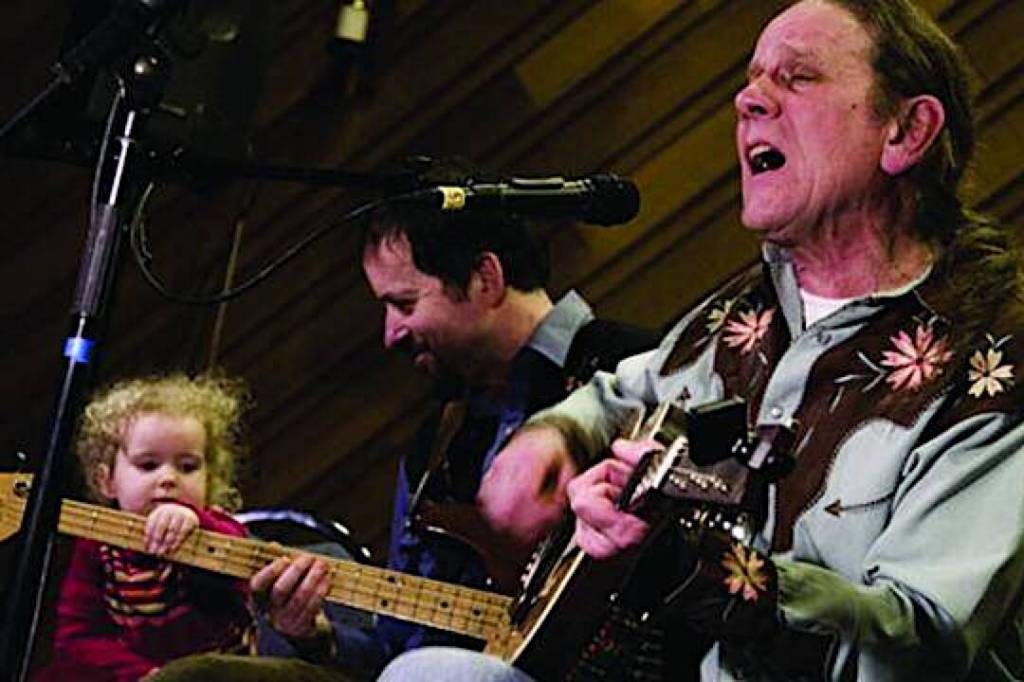
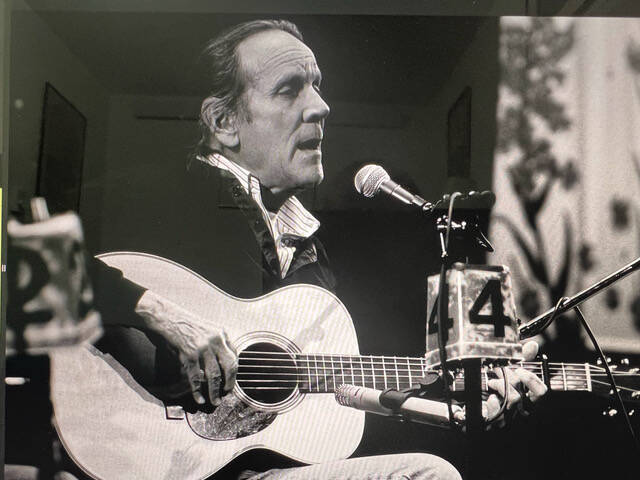


Friends and fans of a late Juneau singer-songwriter are on a mission to make his music more accessible to people with a love for poetic songwriting and a voice from a mold that may no longer exist. And to inspire young artists to cover his songs.
The Buddy Tabor Project kicks off with the re-release of his 1998 album “Blinding Flash of Light” on Spotify and all streaming services. The single “Texas Blue Radio” was released March 28 and the full record available April 11, during the 49th Alaska Folk Festival. Subsequent plans include a release of a live album recorded in 2011.
“We’re doing it because we love his music and we don’t want it to fade away,” said Gustavus musician and producer Justin Smith, who performed with and played on Tabor’s records.
For at least four decades, Guy “Buddy” Tabor was an accomplished stalwart of the local music scene and the Folk Festival held annually in Juneau, with many devoted listeners and fans. He was a prolific musician who created songs in the vein of John Prine and Bob Dylan, influenced by Hank Williams and Woody Guthrie. His spirit animal was Johnny Cash.
Between 1996 and his death in 2012, Tabor released at least nine records of original music, along with the odd Dylan cover. A three-CD set anthology of his recordings was released in 2007.
But his music was hard pressed to be heard much beyond Alaska and the Yukon. Buddy didn’t necessarily help the situation. He refused to play in “bars or pizza places, because no one’s listening.” And to say his self-deprecation did not lend itself to self-promotion is an understatement.
Buddy Tabor is still a household name in his adopted hometown, where he is missed. He gained some statewide recognition when his song “Get Up Dogs,” was used for ABC’s Wide World of Sports Iditarod coverage. But if you are from anywhere outside the region, you likely haven’t heard of Buddy Tabor.
A dozen years after his passing from lung cancer at the age of 63, Smith is one of a group of friends and musicians from Southeast Alaska determined to change that.
“It’s high art. Beautiful stuff,” notes Smith. “The fact that it is not world famous is no reflection on the strength of the songwriting and his voice.”
Buddy sang with a deep smoker’s voice and played guitar with a deft picking hand.
But it’s his lyrics that drew in lifelong devotees, like guitarist Jason Caputo, who accompanied Buddy for some performances and recordings. The song that got Caputo was “Wait for Me.”
“A glorious shiver of emotion ran through my body, and I’ve been a die-hard fan ever since,” he wrote in response to a 2010 blog post. The lyrics invoke a common theme for Buddy, that life is short, but there’s always the afterlife:
“Wait for me when the darkness has fallen, and the night takes the light from the day/Wait for me when I’ve stumbled and fallen/Wait for me if I lose my way.”
In the music of Buddy Tabor, the next existential crisis is always around the corner.
“Happy songs depress me,” he often quipped.
In truth, his catalog is more varied, including funny songs, love ballads, and political polemics. Songs like “Corporate Domination” and “Brand New Jesus” still speak to current and expanding societal divisions.
A rendition of one of his songs is already getting positive attention on a national level.
Josh Fortenberry’s cover of “New Fallen Snow” (which Buddy wrote for Townes Van Zandt) is on his acclaimed debut album “No Such Thing as Forever.” In a review in the online publication Americana Byways, Andrew Gulden deemed it the song he’d most love to hear live, for its “amazing fiddle, mandolin, and slide guitar as Fortenbery honors the late singer-songwriter.”
The record was co-produced, recorded and mixed by Smith who also plays slide guitar on the album. He suggested Fortenbery cover a Buddy Tabor song and sent him all his albums.
“I was working through his discography and totally blown away,” recalls Fortenbery.
“His songs are up there with any singer-songwriter I’ve heard from anywhere. He’s 100% a poet. Just stories of everyday people. My favorite kind of singer-songwriter is a John Prine or Townes Van Zandt. They’re not using twenty-dollar words. They are writing songs in a language that anyone can understand, but they’ve never heard it before. That is such a skill. And Buddy had that in spades for sure.”
Buddy made little money from his music in his lifetime. But he did receive payment in the form of appreciation, especially from his community, and the incarcerated people he performed for and worked. A 2004 interview I did with him for KTOO public radio was aired by California volunteer DJ Cheri Snook. A doctor who worked at Folsom State Prison heard it and thought Buddy would be a good fit for an Arts in Corrections program.
Johnny Cash famously played once for at Folsom. Between 2005 and 2011, Buddy Tabor made an annual pilgrimage to the notorious facility.
Another artist who participated in the Folsom Prison program during that time frame is Michael Franti. His Aug. 6 Juneau debut concert at Centennial Hall includes a tribute to Buddy Tabor.
Guy Tabor hitchhiked to Alaska from Roanoke, Virginia, in 1967. According to his obituary, at first working for the Post Office, the Alaska Railroad and the TransAlaska oil pipeline.
In Juneau he painted houses for a living.
Three decades after he arrived in Alaska, Buddy put out his first album, “Meadowlark.” Hyperaware of his mortality, he released a new CD every 18 months or so over the next 15 years. On the cold full moon night of Feb. 5, 2012, accompanied by his immediate and musical family, Buddy Tabor passed onto the other side.
In the end he’d written more than 100 songs, about two-thirds of them produced and recorded. In an interview about six weeks before his death, Buddy was asked what kind of musical legacy he’d like to leave behind.
“That’ll be up to you guys to decide what survives and what doesn’t,” he said.
If the opening night of the 2024 folk festival is any indication, The Buddy Tabor Project is off to a powerful start. Juneau born and raised Max Blust closed his set with a cover of “Earth and the Sky,” the title track of Buddy’s 2002 album in memory of a young man taken too soon. The audience gave Max a standing ovation.
• An earlier version of this story appeared in The Alaska Current.