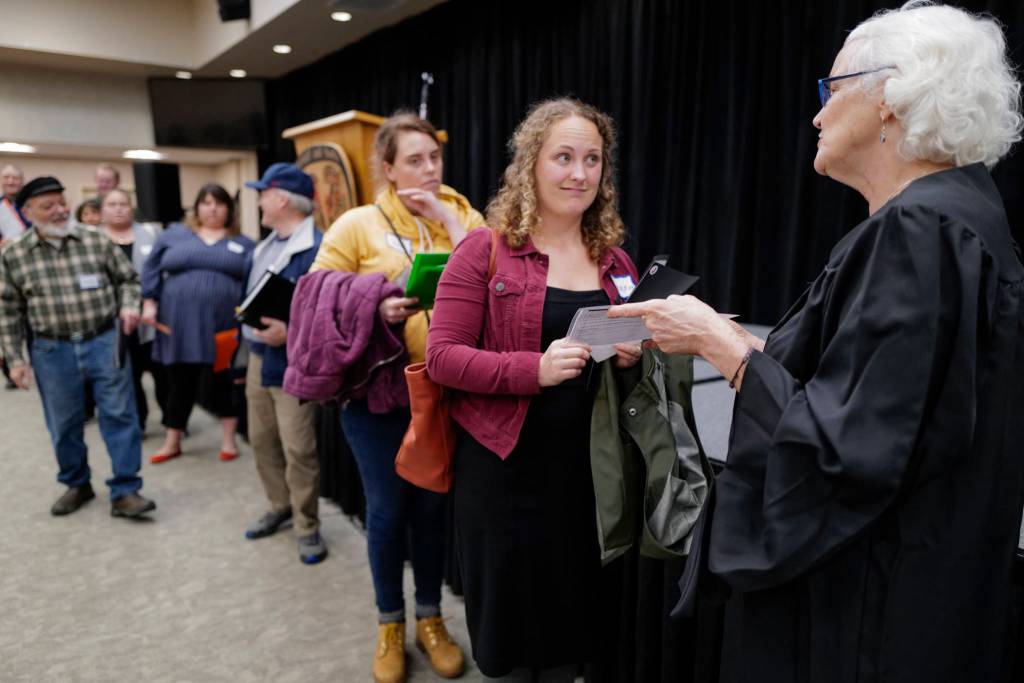
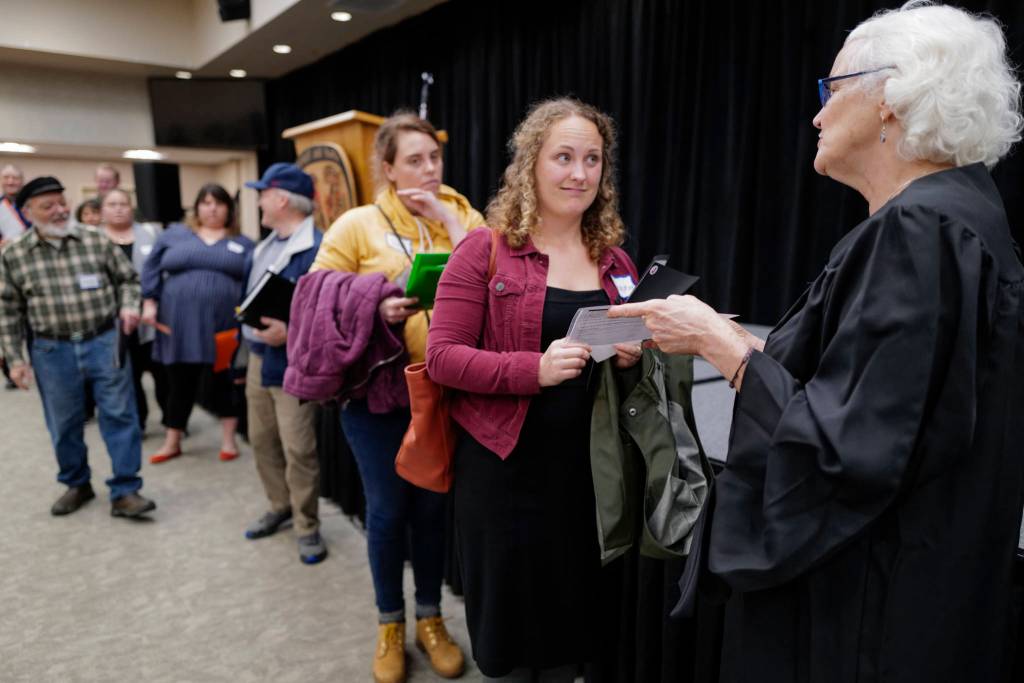
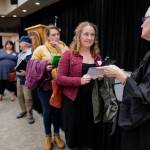
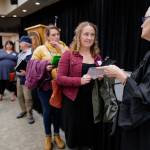
Selina Finley, center, reluctantly listens to a judgment by the Judge, played by Teri Tibbett, right, during a Reentry Simulation event at the Elizabeth Peratrovich Hall on Tuesday, Oct. 29, 2019. The event was sponsored by Central Council of the Tlingit & Haida Indian Tribes of Alaska in partnership with the Juneau Reentry Coalition and Alaska Mental Health Trust. (Michael Penn | Juneau Empire)

Selina Finley, center, reluctantly listens to a judgment by the Judge, played by Teri Tibbett, right, during a Reentry Simulation event at the Elizabeth Peratrovich Hall on Tuesday, Oct. 29, 2019. The event was sponsored by Central Council of the Tlingit & Haida Indian Tribes of Alaska in partnership with the Juneau Reentry Coalition and Alaska Mental Health Trust. (Michael Penn | Juneau Empire)

Breaking the cycle: Community leaders roleplay a rough reentry to society

Event aims to simulate barriers to life after incarceration

Bus fare. Rent. Food money. “Seth” didn’t have any of it. Plus, he missed his meeting with his probation officer, and it was looking like “Seth,” fresh out of a stint in prison for breaking and entering, was headed right back.

“Seth” was entirely fictional — created to show community members just how hard it can be to reenter society after incarceration — but the struggles real reentrants face are not.

“People are stealing to succeed,” Talia Eames said, observing some of the 52 community members who participated in reentry simulation event at Elizabeth Peratrovich Hall Tuesday. “They are doing things that they would not normally do.”

Eames is the manager of Central Council of Tlingit and Haida Indian Tribes of Alaska’s reentry and recovery department, and she was one of the architects of the event. It’s the first of its kind in Juneau.

Hosts CCTHITA, the Juneau Reentry Coalition and the Alaska Mental Health Trust Authority invited community leaders, elected representatives and lawmakers, and officials who may deal with people reentering society after incarceration to the roleplaying exercise. They invited everyone from pastors to police officers to Assembly members and representatives with the Alaska state government.

“We invited community members, people we recognized as having interactions with people when they get out,” Eames said.

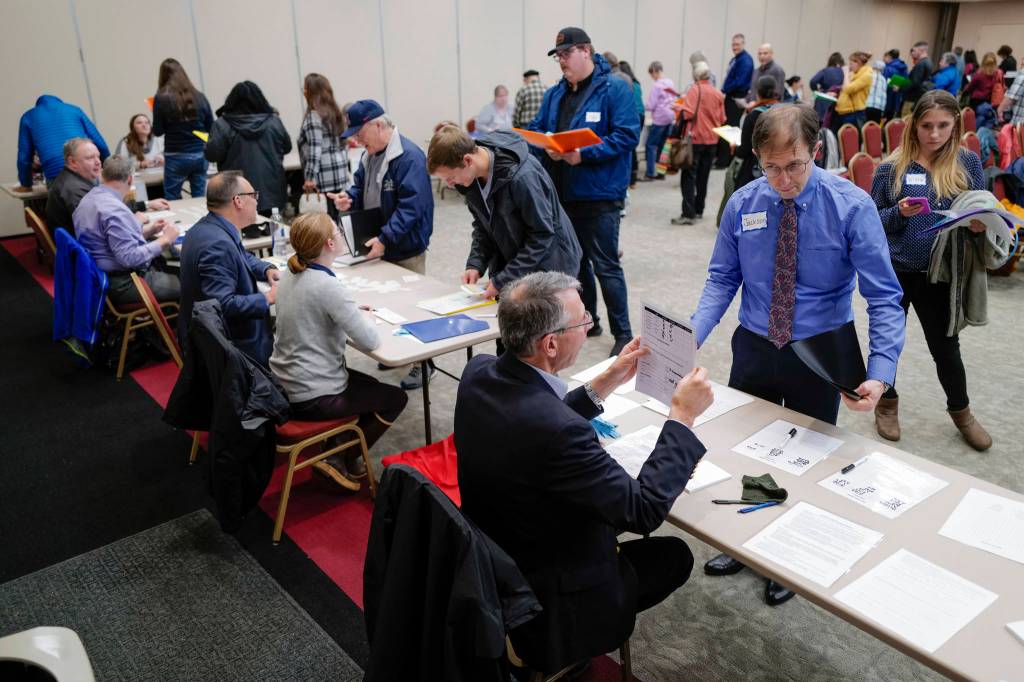
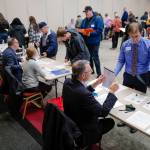
Sen. Jesse Kiehl, D-Juneau, right, visits the employer table manned by Don Habeger as he participates in a Reentry Simulation event at the Elizabeth Peratrovich Hall on Tuesday, Oct. 29, 2019. The event was sponsored by Central Council of the Tlingit & Haida Indian Tribes of Alaska in partnership with the Juneau Reentry Coalition and Alaska Mental Health Trust. (Michael Penn | Juneau Empire)

Sen. Jesse Kiehl, D-Juneau, right, visits the employer table manned by Don Habeger as he participates in a Reentry Simulation event at the Elizabeth Peratrovich Hall on Tuesday, Oct. 29, 2019. The event was sponsored by Central Council of the Tlingit & Haida Indian Tribes of Alaska in partnership with the Juneau Reentry Coalition and Alaska Mental Health Trust. (Michael Penn | Juneau Empire)

The simulation is intended to show participants stumbling blocks for reentrants and to spark conversation about ways to fix some of those, said Sara Gray, executive assistant to the U.S. Attorney for the District of Alaska.

Recidivism rates across the United States are high, Gray said, with a 44 percent recidivism rate within one year of release, 68 percent within three years, 79 percent within five years, and 83 percent within nine years of being released, according to the Bureau Justice Statistics. In Alaska, Gray said, those rates are even higher, with an overall recidivism rate of more than 66 percent, two thirds of which occur within the first six months.

“When they stay employed, the rates drop,” Gray said. Other factors, such as family, a stable place to live, and access to social services also lower that rate.

[Bipartisan group of Alaska lawmakers urge DOC to keep prisoners in state]

Participants in Tuesday’s event were assigned names and profiles like Seth’s — the crime they did time for, disabilities, dependants and other factors that could affect their ability to survive upon being released.

The simulation was broken into quarters, each a week in notional time. In that time, participants had to do things like pay rent, attend meetings with probation officers, go to drug treatment appointments, and a variety of other requirements based on their particular character in the scenario. Oftentimes, going to someplace to check a box meant going to somewhere else before, which participants often did not know.

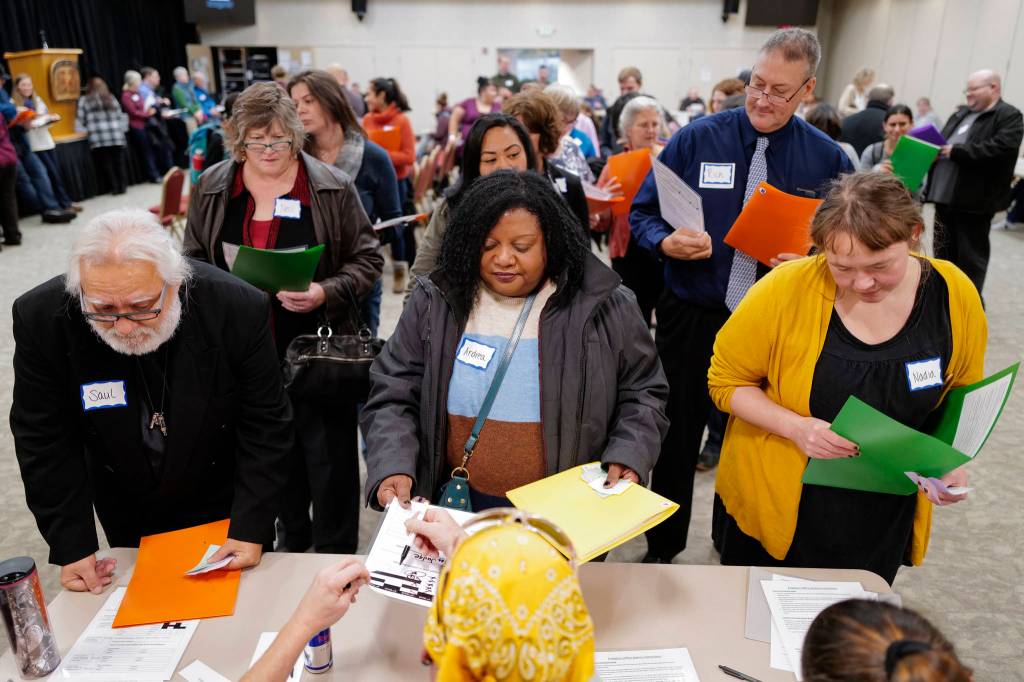
Juneau residents stand in line to check in with probation officers as they participate in a Reentry Simulation event at the Elizabeth Peratrovich Hall on Tuesday, Oct. 29, 2019. The event was sponsored by Central Council of the Tlingit & Haida Indian Tribes of Alaska in partnership with the Juneau Reentry Coalition and Alaska Mental Health Trust. (Michael Penn | Juneau Empire)

Juneau residents stand in line to check in with probation officers as they participate in a Reentry Simulation event at the Elizabeth Peratrovich Hall on Tuesday, Oct. 29, 2019. The event was sponsored by Central Council of the Tlingit & Haida Indian Tribes of Alaska in partnership with the Juneau Reentry Coalition and Alaska Mental Health Trust. (Michael Penn | Juneau Empire)

“It really does hammer it home,” said Alicia Hughes-Skandijs, Assembly member of the City and Borough of Juneau and participant in the exercise. “The level of frustration of going around town trying to get everything done is high.”

“It gives us an idea of what people face when they try to turn their life back around,” said Deputy Chief David Campbell of the Juneau Police Department, who participated in the exercise. “It’s fairly realistic. There’s lots of stuff to do and not enough time to do it.”

The tables at the event were run by 28 people who are successful reentrants in Juneau.

[Alaska prisoners to be sent out of state]

This simulation and other programs fall under the auspices of Project Safe Neighborhoods (PSN), said Yulonda Candelario, the Law Enforcement, Community Outreach and Reentry Coordinator for the U.S. Attorney’s Office. PSN is a national program the seeks to bring together tribal, local, state and federal law enforce officials with community leaders to identify and treat violent crime problems through community-based solutions, Candelario said. They have a number of outreach programs aimed at making safer communities and protecting children and young adults from making major mistakes, often while partnered with organizations like the ATF, FBI and DEA.

Things like helping reentrants to get drivers licenses or other identification cards before they exit the correctional system could make a huge difference in their ability to function back in society, to find jobs and to turn their lives around, Gray said.

Eames said that they would be holding another exercise like this one when the Alaska Legislature is in session coming up.

“With this, we’ll tailor it even closer to what our community needs,” Eames said.


• Contact reporter Michael S. Lockett at 757-621-1197 or mlockett@juneauempire.com.

More in News

The northern lights are seen from the North Douglas launch ramp late Monday, Jan. 19. A magnetic storm caused unusually bright northern lights Monday evening and into Tuesday morning. (Chloe Anderson/Juneau Empire)
Rare geomagnetic storm causes powerful aurora display in Juneau

The northern lights were on full display Monday evening.

A tsunami is not expected after a 4.4-magnitude earthquake northwest of Anchorage Wednesday, Feb. 4, 2026. (U.S. Geological Survey)
No tsunami expected after 4.4-magnitude earthquake in Alaska

U.S. Geological Survey says 179 people reported feeling the earthquake.

ORCA Adaptive Snowsports Program staff member Izzy Barnwell shows a man how to use the bi-ski. (SAIL courtesy photo)
Adaptive snow sports demo slides to Eaglecrest

Southeast Alaska Independent Living will be hosting Learn to Adapt Day on Feb. 21.

Cars drive aboard the Alaska Marine Highway System ferry Hubbard on June 25, 2023, in Haines. (Photo by James Brooks)
Alaska’s ferry system could run out of funding this summer due to ‘federal chaos problem’

A shift in state funding could help, but a big gap likely remains unless a key federal grant is issued.

Photo by James Brooks/Alaska Beacon
U.S. Sen. Dan Sullivan stands with acting Coast Guard Commandant Adm. Kevin Lunday during the after the commissioning ceremony for the Coast Guard icebreaker Storis on Sunday, Aug. 10, 2025, in Juneau, Alaska.
Coast Guard’s new Juneau base may not be complete until 2029, commandant says

Top Coast Guard officer says he is considering whether to base four new icebreakers in Alaska.

Students from the Tlingit Culture Language and Literacy program at Harborview Elementary School dance in front of elders during a program meeting in 2023. (Clarise Larson / Juneau Empire file photo)
Sealaska adds more free Tlingit language courses

The new course is one of many Tlingit language courses offered for free throughout the community.

teaser
New Juneau exhibition explores art as a function of cultural continuity

“Gestures of Our Rebel Bodies” will remain on display at Aan Hít through May.

teaser
Juneau protestors urge lawmakers to defund Homeland Security after Minneapolis killings

Hundreds gathered hours before congressional delegation voted on whether to extend ICE funding.

Kyle Khaayák'w Worl competes in the two-foot high kick at the 2020 Traditional Games. (Courtesy Photo / Sealaska Heritage Institute)
Registration opens for 2026 Traditional Games in Juneau

The ninth annual event will feature a college and career fair and international guest athletes.

Most Read