Avalanches impact mountain goat populations
Published 9:30 pm Wednesday, June 11, 2025
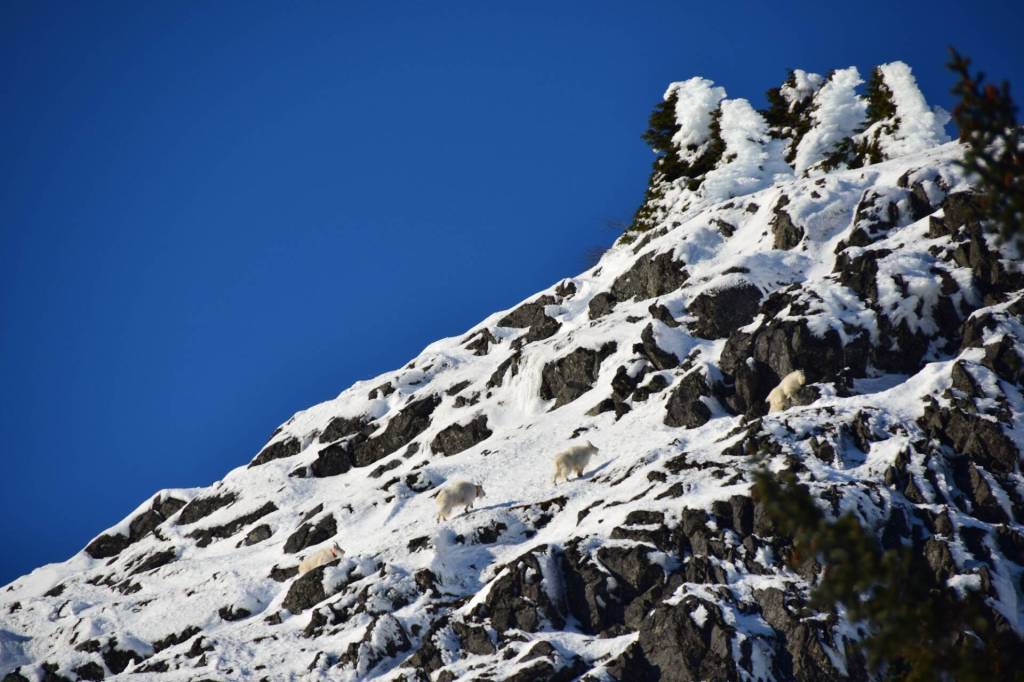
Dotted across the mountains of Southeast Alaska, white mountain goats move deftly through rugged snowscapes. Though climbing high into the mountains leaves predators below, an avalanche could pose a threat from above.
“That’s just sort of the cost of doing business in these extreme mountain environments,” said Kevin White, a wildlife ecologist who spent 17 years collecting data on alpine ungulates while working for the Alaska Department of Fish and Game.
White and his colleagues used radio collars with GPS units to track more than 400 goats in four study areas in Southeast Alaska. They monitored the goats from a helicopter and the ground, learning whether they gave birth to offspring, and when and how they died.
White identified the need to study the impact of avalanches on mountain goat populations while doing research for the ADFG.
“We’ve always known that some animals died in avalanches, but we didn’t ever have an understanding of exactly how important of a source of mortality (it) was,” White said.
In 2022, White began analyzing this data at the University of Alaska Southeast. This year, White received his PhD from the University of Victoria, British Columbia. His dissertation focused on the impacts of avalanches on mountain goat populations, working in collaboration with climate, snow, and mountain goat experts from the U.S., Canada and Switzerland.
The analysis determined avalanches caused 36% of all mountain goat mortalities on average. This percentage increased to 60% in more avalanche-prone areas. An average of 8% of individuals in a population of mountain goats died annually in avalanches.
Avalanches kill at random, extending to goats in their reproductive prime. This is especially impactful for mountain goats, as they have low reproductive rates and are slow-growing. In a worst-case scenario, more than 15% of a mountain goat population might die in an avalanche. White predicts that it would take 11 years – one and a half mountain goat generations – for a population to recover from such a loss. However, in a year with average avalanche conditions, mountain goat populations can maintain 1.5% population growth.
“Mountain goats have been persisting in these environments for tens of thousands of years and there’s always been avalanches,” White said.
Beyond the threats avalanches cause, they may also provide nourishment to mountain goats.
“These places that slide oftentimes are the places that green-up soonest in the spring, and as a result of that avalanches may be indirectly increasing the plant growing season and enabling mountain goats to gain access to higher quality or more abundant forage during times of the year when that can be really important,” White said.
Climate change may impact the way avalanches are triggered. White explained that while changing avalanche conditions cannot be controlled, knowledge about how avalanches impact species can be utilized to mitigate adverse impacts.
“One of the things that we do have control over is the rate at which mountain goats are harvested,” he said. “And so it’s useful for a manager, if they can know if there’s a bad avalanche year, then they could adjust the rate that they harvest the population appropriately.”
In addition to land management applications, White advises backcountry recreationists and hunters to be aware of the risk that avalanches pose. Mountain goats typically react to disturbances by going to steep areas, putting themselves at higher risk from avalanches.
“They’re just making trade-offs and balancing these different risks that they must contend with in their environment,” White said. “I think that our work with avalanches is sort of unique because people haven’t ever really explored that before, and so it provides kind of a new perspective on the species and mountain species ecology in general.”
• Contact Natalie Buttner at natalie.buttner@juneauempire.com.