Assembly moves forward with influencing this year’s election, ranked choice voting in next year’s
Published 9:30 pm Monday, June 2, 2025
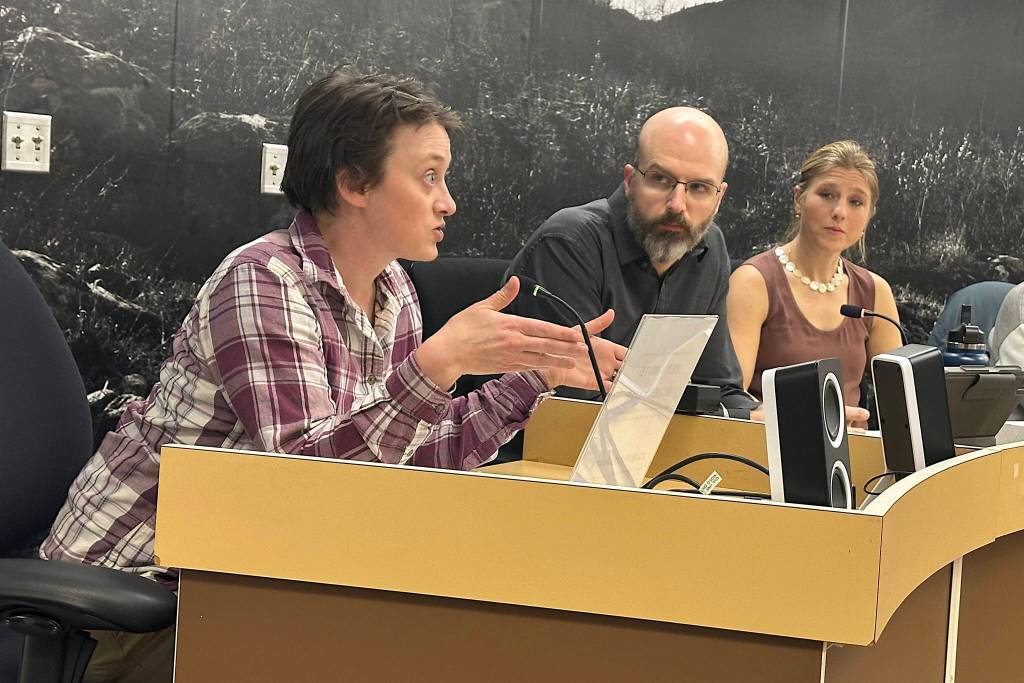
Juneau Assembly members are looking to influence voters about tax matters in this fall’s municipal election and implement ranked choice voting beginning next year, while acknowledging there is likely to be considerable public concern about both.
Having city staff draft an ordinance authorizing up to $50,000 on voter information efforts this fall was unanimously approved by the Assembly’s Committee of the Whole on Monday night. Some members favoring the measure said a seasonal sales tax the Assembly is considering putting on the ballot is a primary factor, due to the complexity of the issue and other citizen-initiated tax proposals that may also be on the ballot.
The ordinance is scheduled to be presented to the Assembly for introduction during its next meeting on Monday, June 9.
Assembly members also unanimously approved introducing an ordinance implementing ranked choice voting in local elections at its meeting next Monday. The ordinance would then be subject to further review and public comment during at least one future Assembly meeting — and some members suggested a special public meeting focusing solely on that issue and/or further review by city leaders may be prudent.
“I wish there was something better than moving this to the full Assembly, just because I feel like for people who aren’t geeking out on our process then it brings up these strong emotions in them if they’re not sure if they want this or not,” Assembly member Alicia Hughes-Skandijs said. “It feels (to them) like ‘You’re just a step away from making a law and you don’t really want my opinion. You already decided on this.’”
City officials have stated it is not feasible for the Assembly to move quickly enough to implement ranked choice voting for the October municipal election, so the soonest it would be implemented is 2026.
Ranked choice voting was approved by Alaska voters in 2020, first used in statewide elections in 2022 and narrowly survived a repeal effort in 2024. Support in Juneau for the methodology is higher than statewide.
“Data from the Division of Elections show that Juneau voters overwhelmingly supported ranked choice voting,” a Feb. 3, 2025, memo from the City and Borough of Juneau’s Law Department states. While the statewide repeal was defeated 49.88% to 50.12%, in Juneau the tallies were 39%-61% in District 3 and 25.7%-74.3% in District 4.
Ranked choice voting involves candidates being ranked by voters in order of preference. If no candidate gets a majority of first-choice votes in the initial tally the candidate with the fewest first-choice votes is eliminated and the second-choice votes for that person are distributed among the remaining candidates. The process is repeated until a candidate has a majority.
A complication is local Assembly and school board races are decided by different voting methods. Assembly candidates participate in races for a designated seat (District 1, District 2, areawide and mayor), while school board candidates all participate in a single race where the top vote-getters fill the number of vacant seats available (six candidates competed for three seats in last fall’s election).
However, city officials have been advised by Dominion Voting Systems that ranked choice voting is possible via either means of selecting candidates, and some races can use ranked choice while others don’t, Assembly member Ella Adkison told the Juneau Board of Education at a meeting last Friday. At the same time “I think that in general the consensus is it’s better to have people vote on the ballot the same way the whole time.”
Switching to ranked choice voting got general support as a concept from school board members. But the board unanimously agreed to postpone any official endorsement for or against the city’s proposed change until more specifics and public input are received.
“I guess I’m just feeling a little cart before the horse for me,” Elizabeth Siddon, the board’s vice president, said. “I don’t want to say ‘We, the school board, think this is a good thing to do’ before I’ve heard from any members of the community whether they think it’s a good thing to do.”
An effort at providing information to local voters, rather than collecting it, is the goal of the proposal to spend up to $50,000 for information/advocacy efforts leading up to this fall’s election.
The city has engaged in similar efforts during recent elections, with two options available — providing neutral information in its role as a municipal government, or engaging in advocacy on an issue which requires registering as a campaign entity with the Alaska Public Offices Commission. The Assembly approved $50,000 to advocate in favor of a new City Hall in the 2023 election and opted for a purportedly neutral information effort last year on a ballot measure banning large cruise ships on Saturdays.
This year the Assembly is considering asking voters to approve a seasonal sales tax that would be higher from April through September, to maximize revenue from tourists, which would thus allow an exemption on sales tax for essential food items and utilities. Several other tax and bond items may also appear on the ballot, including citizen initiatives to lowering the mill rate cap and imposing the tax exemptions on food/utilities — although signature gathering for those is still in progress.
The seasonal sales tax in particular is why Assembly member Christine Woll proposed having city staff draft an ordinance to “provide up to $50,000 to provide public information that may influence the outcome of future ballot propositions.”
“We’ve got a bold proposal to transform the way that we’re collecting sales tax in Juneau before us,” she said. “It is going to take some work to make sure people understand why we are proposing this and the information around that. I think it is complex and I know that if we don’t get ahead of the message a lot of misinformation will be put out there about the proposal.”
While the measure was advanced by the committee without opposition, Adkison said she has reservations because “it sends a bad message to be using public dollars to advocate for anything on the ballot.”
“I don’t think we should be taking a position on any of those potential ballot measures because I don’t feel that’s our place as the city to be doing that and to be advocating for one or the other,” she said. “Providing unbiased information is one thing and advocating for a particular side is another.”
Adkison said she will vote against a proposal that spends public money allowing the city to weigh in on citizen-initiated ballot measures.
Assembly member Wade Bryson said he had some of the same reservations in past years, but this year is concerned about some of the claims already being made by residents and activists about tax measures that may appear on the fall ballot.
“If we don’t give city staff the funding and ability to deal with this we’re going to be dealing with a misinformation campaign that negatively harms the community in the long run,” he said.
• Contact Mark Sabbatini at mark.sabbatini@juneauempire.com or (907) 957-2306.