Alaskans across the state rally to save Medicaid: their ‘lifeline’
Published 9:30 pm Wednesday, March 12, 2025
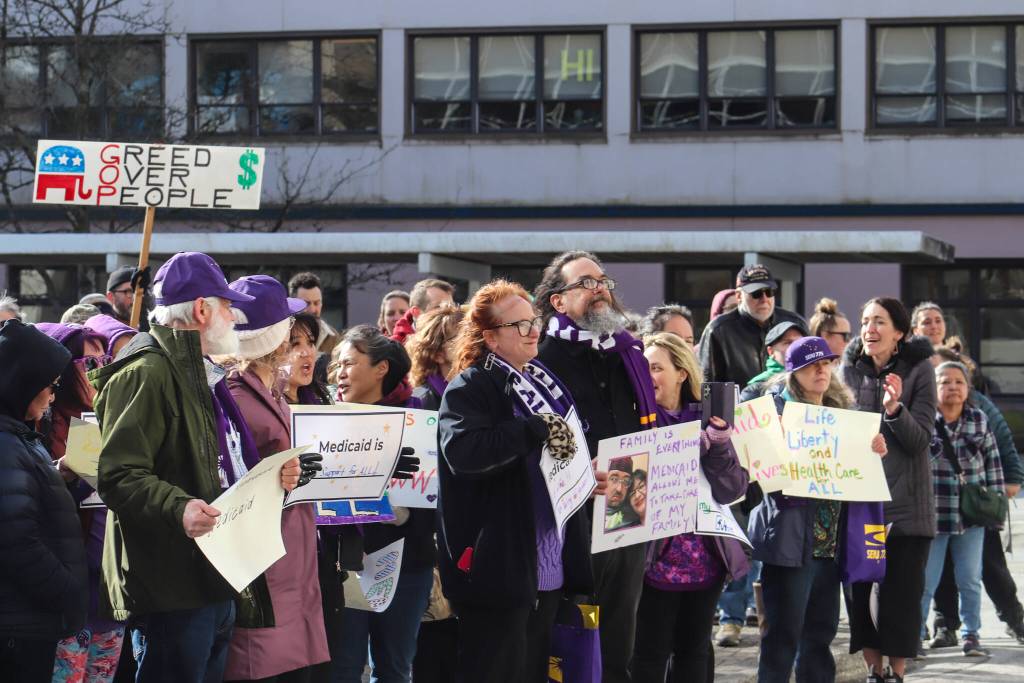
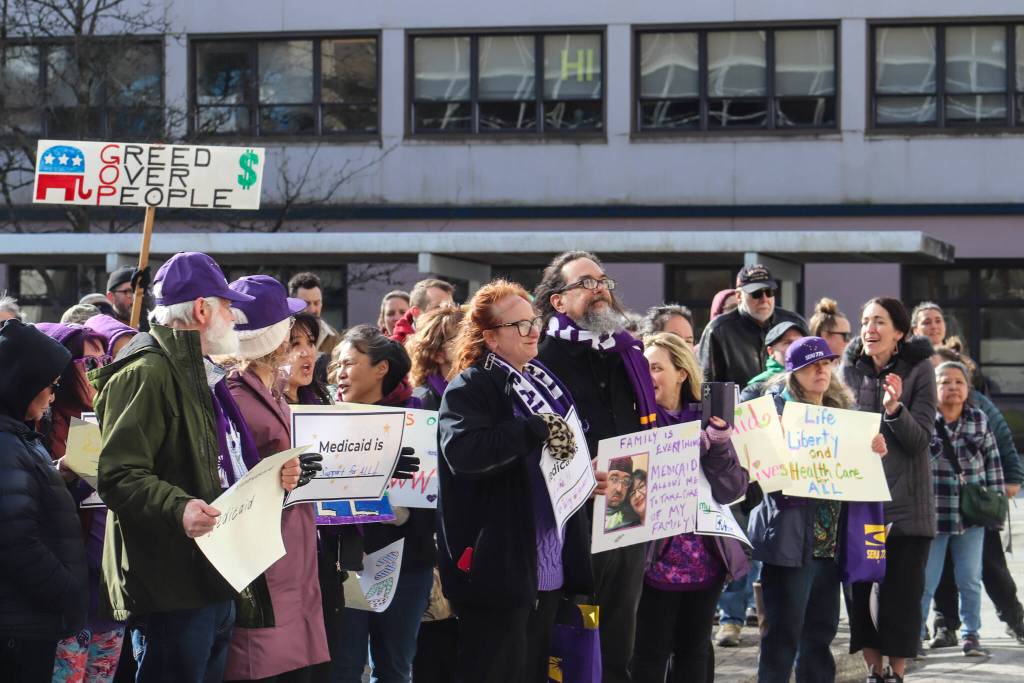

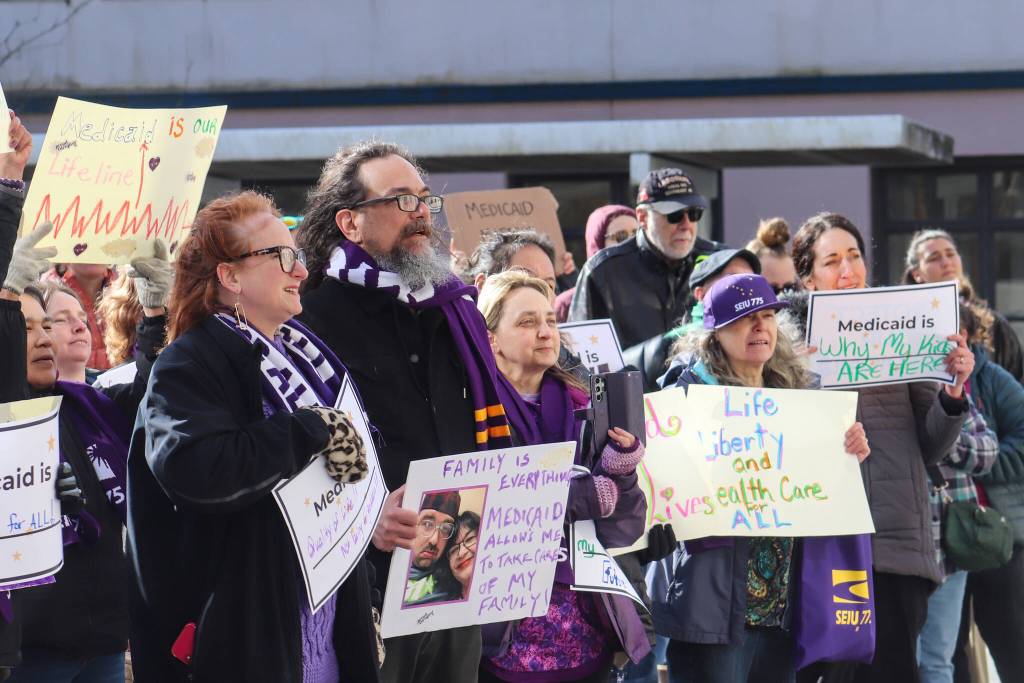









About 60 people rallied in Juneau on Wednesday afternoon, carrying the voices of thousands of Alaskans who are at risk of losing their health care under a federal budget plan being advanced by Republicans in Washington, D.C.
Half of the protesters in front of the Alaska State Capitol were caregivers whose work is funded by Medicaid. They’ve been visiting state lawmakers in recent weeks about the potential cut to the joint state-federal program that provides low-income health coverage for one-third of Alaskans.
About 100,000 residents could lose health insurance under the budget plan supported by President Donald Trump and Republicans who control the U.S. House, according to health officials. While the plan to cut $2 trillion during the next decade doesn’t specifically target Medicaid, federal budget analysts have said Medicaid cuts would have to make up nearly half of the reduction if Republicans stand by their vow not to touch Medicare (a federal program for people 65 and older).
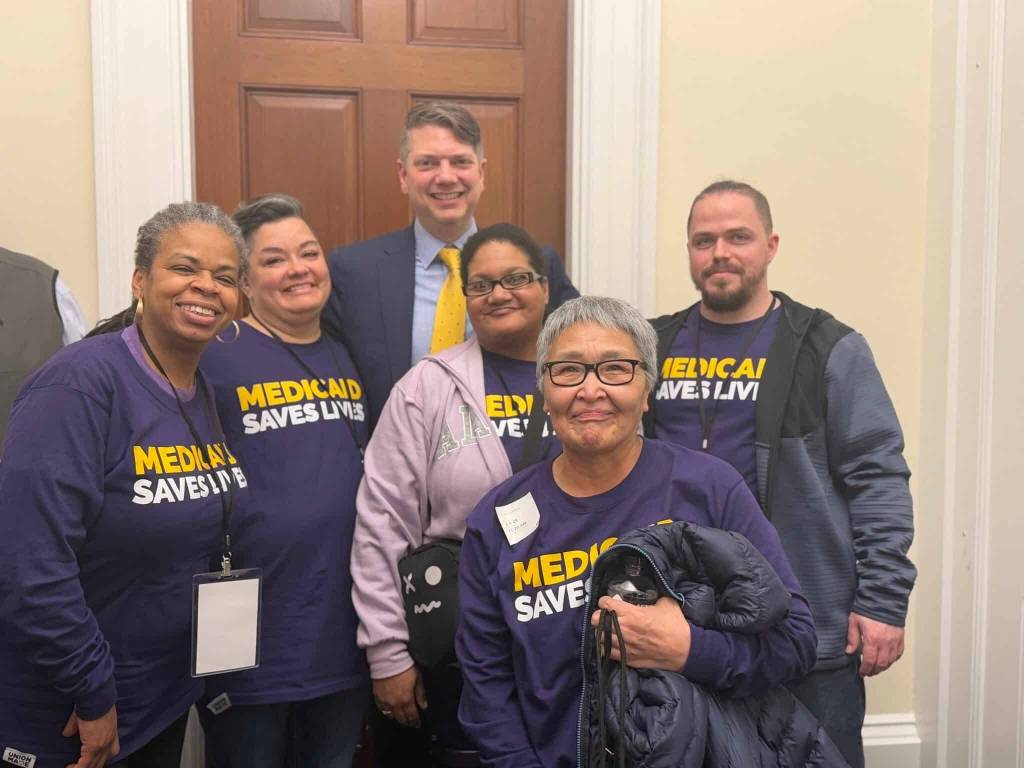
Eek caretaker Edna Beebe traveled to Washington, D.C., in February with four other Alaska caregivers to speak with Alaska’s congressional delegation.
She said she asked Rep. Nick Begich III (R-Alaska) to support Alaskans and instead, he chose to back the spending plan that potentially cuts Medicaid by up to $880 billion during the next decade. The budget resolution passed 217-215 on Feb. 25.
For rural Alaskans, it would be devastating, Beebe said. She said there is no road system in Eek so they rely on Medicaid to cover travel and lodging costs for her mother’s appointments every two months. In the case of a medical emergency, her family also relies on Medicaid.
“Our elders’ and children’s lives matter,” Beebe said. “They depend on Medicaid.”
If Republicans cut Medicaid expansion, rural hospitals across the country will be at risk. Nearly 14 million Medicaid enrollees reside in rural areas. Medicaid helps fund rural hospitals, which employ 6% of all employees in rural counties that report having any hospital employment.
Betty Redd-Mendez, a Mat-Su caregiver, flew with Beebe to Washington, D.C., and she spoke on the Capitol steps on Wednesday.
“This is our lifeline,” she told the Juneau Empire after the protest. Her father has prostate cancer.
“For a lot of families this is not a joke,” she said. “If they take it away I don’t think my dad’s going to be here. I added onto my home so he and my brother can stay with me, and it saves the state and the federal government a lot of money by me doing that instead of them being put in a home.”
Shaine Truscot is the vice president of the union SEIU 775, which represents 55,000 caregivers in Alaska, Montana and Washington. She said she came to Juneau from Tacoma, Washington, and called on Alaska’s congressional delegation to stand up for Medicaid.
“(Begich) looked them in the eye and he said he would not vote for cuts to Medicaid,” Truscot said. “When the vote happened a couple of weeks ago our members were extremely disappointed in his actions and they feel like they’ve been lied to.”
Truscot said it’s not too late for Congress to change course. The Senate still must agree to the resolution, and Congress will have to draft and pass legislation to implement it.
The Senate passed a separate budget resolution last month without the level of cuts sought by the House. Sen. Dan Sullivan (R-Alaska) told the Anchorage Daily News in late February “it’s premature to make any kind of blanket statements on what will happen to Medicaid so early in the process” since discussions with the House are ongoing. Sen. Lisa Murkowski (R-Alaska) has said the cuts “could be devastating to Alaska” and she is “getting good, solid numbers” about potential impacts.
Jamie Liston held a sign with a photo of his family on it at the protest. He said Medicaid “is everything” and he can’t imagine sending his family to a nursing home if the cuts occur.
“I have a disabled stepson and a brother that have high care needs, and without this I am unable to take care of them,” he said. “Medicaid has given us life and enabled us to be able to be a family, and to take care of the ones that we truly care about.”
The House’s spending cuts are part of a budget plan that includes $4.5 trillion in tax cuts, with about half of the benefits going to people making over $320,000 a year, according to the Center on Budget and Policy Priorities. Sen. Forrest Dunbar (D-Anchorage) said the slashing of Medicaid is “not just a question of economics, it’s also a moral question.”
“They’re not doing this so that they can lower the debt, they’re not doing this so they can fund other programs, they’re doing this to fund a tax cut for billionaires,” he said. “And that is morally wrong. So we’re here today to tell our congressional delegation, the state Legislature wants you to protect Medicaid.”
Sen. Bill Wielechowski (D-Anchorage) could hear the chants from his window during a meeting. Afterward, he joined the caregivers at the Pottery Jungle to listen to their stories. He said it’s difficult at the state level to fill federal gaps.
“We’re potentially looking at a billion dollars in cuts from the federal government on Medicaid, which would be devastating for huge numbers of Alaskans,” he said. “A third of the Alaskan population uses Medicaid and so it would be absolutely devastating to have significant cuts there. As far as the state situation, we have a $600 million deficit that we’re grappling with right now, so it’s hard for us to step in and provide funding for things that the federal government might be taking away funding for because we just don’t have the money right now.”
On Wednesday, SCR 2 was introduced to support an all-payer crisis continuum of care and Medicaid reform.
In the Pottery Jungle, surrounded by plants and protest signs, Olena Slepets sat with her interpreter. She said as a caretaker, she can “really hear and see people.” Now, she wants Trump and Alaska’s congressional delegation to hear her story.
She has been a caretaker in Wasilla for the last three years. She originally came to the U.S. from Ukraine and lived in Washington, D.C., before moving to Alaska. She was a social worker in her home country.
“It’s not just my patients,” Slepets said through her interpreter when asked about what losing hours at work would mean. “This is our life too because my husband is disabled and cannot work. I’m the person who works and supports us, and to me it’s really important what job I do. I have family in Ukraine and everything that we can put aside goes to support them.”
She said she was the only caregiver assigned to an elderly woman in Wasilla who had no family. Slepets was not allowed to work on weekends because of the limited hours caregivers are already allotted and, because of this, her client would lie alone until Monday when Slepets would clean and help her rise out of bed.
“A lot of people think, ‘What a gross situation,’” she said. “It was my choice to be a caregiver because I love to help people.”
Slepets took a caregiving job with a higher-paying company and her former client moved to a nursing home. She said it was a hard decision to make and she worries about what the cuts to Medicaid could mean for her patients.
Now she works for a family that has Medicaid for their disabled children. Slepets said the client she takes care of requires special care and would benefit from staying at home. But this may not be possible if she no longer has the health care that allows Slepets to work for the family. Slepets said “staying with parents is so much better compared to an institution and I’m really worried about them.”
She said the family had previously tried to place the client into an institution, but it could not provide enough care for her needs, which led to her being hospitalized.
Delta Junction caretakers Alexander Antoshin and Olga Zolofov, siblings who came to Alaska from Kyrgyzstan, said they are unpaid while driving hours to Fairbanks to pick up medical products.
Antoshin said “my personal feeling of justice tells me I have to do it.” His sister, Zolofov, said if her client doesn’t have access to medication, she might have seizures.
“If she won’t have access to Medicaid, it would be a life-threatening situation,” Zolofov said.
Amber Lee, state director for Protect Our Care Alaska, said along with the caregiver’s union and her own organization, Mat-Su United for Progress, Stand Up Alaska and The 907 Initiative helped plan Wednesday’s protest. She said they are continuing to raise awareness about the importance of Medicaid in Alaska by planning an Anchorage town hall and writing more letters to lawmakers. She said the impacts of the cuts would affect Indian Health Service programs too.
“They could shut hospitals down,” Lee said.
• Contact Jasz Garrett at jasz.garrett@juneauempire.com or (907) 723-9356.