Alaska Science Forum: Remembering a gift of observation
Published 3:30 am Friday, November 20, 2020




By Ned Rozell
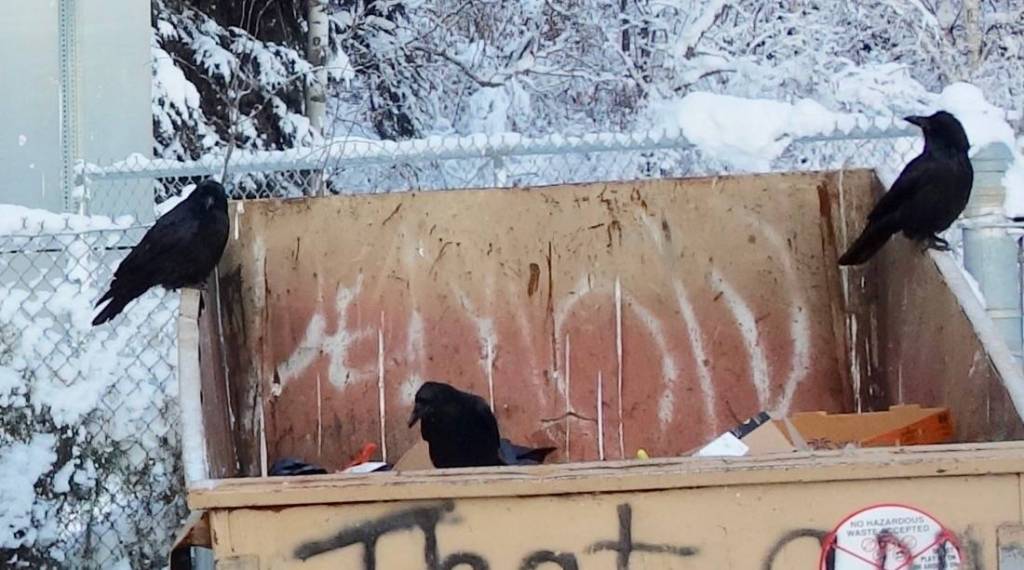
“On winter mornings, just as the sun’s uncertain light slopes across the Tanana Flats, ravens fly over my log cabin on their daily commute to town. Perhaps, like me, they would prefer to remain here in the hills above Fairbanks, where temperatures are usually ten or twenty degrees warmer. But town is where the day’s work lies, where ravens and people earn their daily victuals. Dozens of the birds crest the ridges alone, in pairs, strung out in groups that punctuate the sky like ellipses. They sail over slopes covered with spare aspen and birch trees and descend on the city wedged between the frozen Tanana and Chena Rivers. Across other ridges, from other directions, hundreds of ravens are flying through the thin light to pick at the carcass of civilization.”
I wish I had written that. I did not.
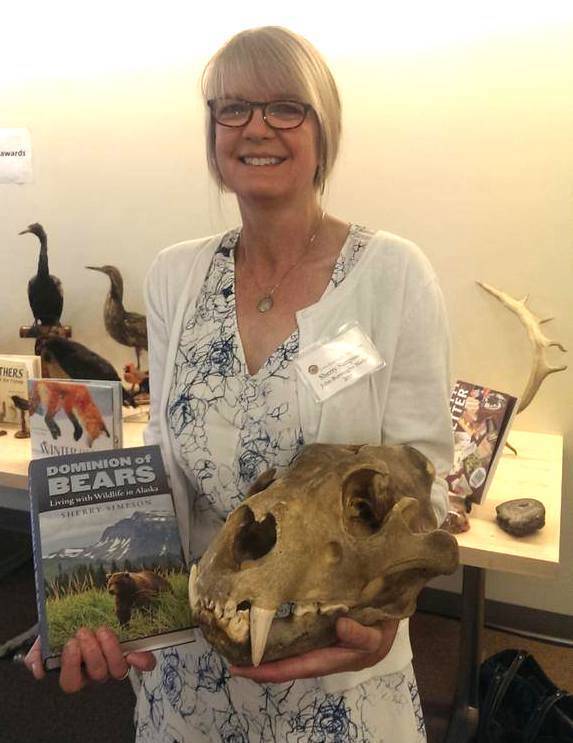
Sherry Simpson did. One day, or more likely a series of days, she tapped into her keyboard one of the clearest descriptions of both ravens and the city of Fairbanks in winter.
Sherry died at age 60 a few weeks ago, in New Mexico.
[Much-loved writer and educator dies at 60]
She passed away from a brain tumor just a few days after doctors discovered it.
My former boss here at the Geophysical Institute once told me that Sherry was interested in this job when it came open in 1994. For some reason, Sherry ended up not applying. If she had, I would have been doing something else.
As a writing teacher at the University of Alaska Anchorage and elsewhere, Sherry gently shoved many writers to their best work. In my experience, writers improve most when challenged by good editors.
Sherry was one of those for me. We shared an office a lifetime ago, at the Fairbanks Daily News-Miner. The newsroom was an expansive space, with tiny horizontal windows near the ceiling; only the tallest could see anything but sky through them. In the air was the machine-gun fire of reporters typing on deadline.
Sherry had one of the only private offices, somewhat out of the hum. In there, she was smiley and helpful, and she found funniness in many things. And, man, could she write.
Writing is a hard thing to teach. There is structure and formula to it, and I guess some people think of those elements as they write. But Sherry advised me to just let ‘er fly. And then rewrite, rewrite, rewrite.
Though I had not seen her in years, she is sometimes part of my routine. Once in a while, before starting a column, I read an essay of Sherry’s, to warm up my neurons. After a few paragraphs, I hear her slow, sure cadence. I try to duplicate that beat. As Bono said, every poet is a thief.
Sherry once told writer Andromeda Romano-Lax that she wrote guided more by her intuition than her intellect.
“Muddling through seems to be my time-tested strategy,” Sherry said.
After Sherry’s muddle was complete, the reader was left with a writer’s most-effective gift — images painted on our mind-screens:
“When daylight eases from the sky several hours later, the ravens return the same way they came, like arrows loosed toward the twilight gathering at the northern edge of the world.”
I have watched those black arrows arc out of town. And I have written about them. But when I sit at the computer for those sessions, I avoid reading Sherry’s take on the same subject. That would be like picking up the guitar and trying to play an Eddie Van Halen riff.
In addition to her skill at planting pictures in readers’ heads, the Sherry Difference included never settling for a lazy verb:
“At forty below and colder, when the rest of us are feeling pretty damn sorry for ourselves, the ravens are still out there on the mean streets, hunched atop light poles, poking through garbage bags, fluffing out feathers until they look like cranky old men in down parkas.”
Her raven story, which first appeared in Alaska magazine and endures in her book of essays “The Way Winter Comes,” is one of my favorite examples of science writing. The word science makes readers expect something hard, but Sherry entertained us into learning something.
Consider this passage, a closing tribute to a modest superstar:
“Until I moved to this small cabin on the ridge, I had somehow missed the most intriguing and mysterious thing about ravens — that daily passage from darkness into daylight and back again. The raven re-enacts the physical and metaphorical journey every northerner makes from fall into spring. Winter is literally a turning-away from the light, a tilt of the globe that spins us into the spacious territory of night. The night offers its own solace — the hard, familiar stars, the oceanic incandescence of the aurora borealis. But we measure our pilgrimage through winter in increments of sun: minutes of light lost or gained, the shifting balance between day and night.
“This much is known: At twilight the ravens are bound for roosts far beyond the city, where they settle companionably among the branches of spruce trees for the night. Think of them out there, scraps of living night rustling and shifting under a sky less black than they are.”
• Since the late 1970s, the University of Alaska Fairbanks’ Geophysical Institute has provided this column free in cooperation with the UAF research community. Ned Rozell ned.rozell@alaska.edu is a science writer for the Geophysical Institute.