Alaska lawmakers grapple with test-score performance gap between charters and other public schools
Published 9:30 pm Tuesday, February 20, 2024


When Alaska’s charter schools topped the nation in an analysis of student test scores, even the Harvard researchers who authored the study were stunned.
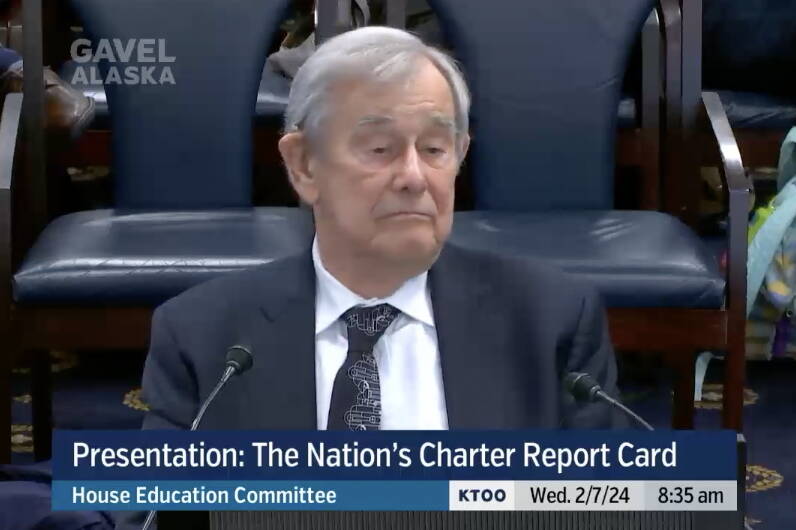
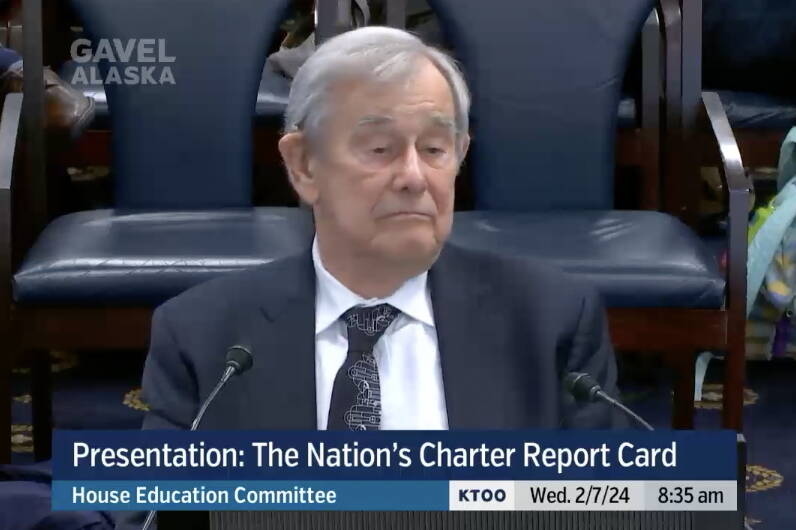
Paul Peterson, director of Harvard’s education policy and governance program, said he was not expecting Alaska, whose public schools consistently rank among the lowest-performing schools in the nation, to be No. 1.
“Alaska has higher-performing charter school students than Colorado and Massachusetts, who are well known to be strong in this sector,” he told the Senate Education Committee last week.
“New York, New Jersey, Florida are all states that are well known to be high-performing states — but Alaska outranks them all,” he said.
Peterson said the disparity was remarkable.
The news also surprised Gov. Mike Dunleavy, who has subsequently said he would like to prioritize charter schools and replicate their success.
The study has drawn scrutiny from lawmakers as they attempt to distill which lessons they may draw from charters and if the conditions that led to success are replicable in the state’s regular public schools.
Some lawmakers and education advocates say they aren’t surprised by the study because they say charter school students tend to be high performers.
Sen. Jesse Bjorkman, a Nikiski Republican and school teacher, is among them.
“Charter school students in Alaska are the cream of the crop, the “top gun,” of all Alaskan students,” he said by email.
He added that charters often require parents to volunteer, a time commitment that is not possible for all families.
There are some other potential barriers to access for all students to charter schools. Charter schools receive state funding, but operate independently of the established school system. As such, they are not bound by all the same rules and do not have to provide all of the same services as regular public schools, like transportation and free and reduced lunch, for example — although some do.
Lon Garrison, executive director of Alaska Association of School Boards, said the group is supportive of charter schools, but he thinks the study had gaps. “This was just an observational study,” he said, but added that lawmakers have gone straight to causation. He said some differences he sees are that charters often have more engaged parents and smaller class sizes.
Charters operate differently from other public schools, but the study’s author could not say what makes them stand out academically. That is in part because the study was not designed to compare charters with regular district schools.
In a House Education Committee meeting, Rep. Jamie Allard, R-Eagle River, asked Peterson if he could distill what Alaska’s charters are doing right. He said he could only speculate. Rep. Rebecca Himschoot, I-Sitka, asked what the state would need to find that information.
“If the data were there to reach causal conclusions, I would jump at it because I’m always looking for opportunities to make causal statements about what would work in education,” Peterson said.
He said he could not tell the state how best to expand charters while maintaining the current quality.
The study
The Harvard study that documented Alaska’s charter schools preeminence is the first of its kind. It drew its conclusions from national standardized assessment scores. The National Assessment of Educational Progress, or NAEP, is a test administered only in 4th and 8th grade.
The study used a sample of nearly 2,500 Alaska charter school student test scores from 2009 to 2019. It adjusted for income and geographic location, among other factors. Without the adjustment, Alaska’s charters rank 7th.
The study compares Alaska charter schools to those in other states, but does not compare its charter schools to regular public schools.
Peterson said that more research is needed, but his study was an attempt to fill a need for information about the nation’s charter schools and their performance.
• Claire Stremple is a reporter based in Juneau who got her start in public radio at KHNS in Haines, and then on the health and environment beat at KTOO in Juneau. This article originally appeared online at alaskabeacon.com. Alaska Beacon, an affiliate of States Newsroom, is an independent, nonpartisan news organization focused on connecting Alaskans to their state government.