Being a fly on the wall for complicated life cycles
Published 6:27 am Tuesday, July 14, 2020


The life cycle of a bird or mammal is relatively simple. Once it is born, or hatched, development proceeds directly to an adult form. All along the way, although there are developmental changes, you can easily tell that the animal is a bird or a mammal.
But for most animals, the life cycle is more complex. An individual makes one or more major transformations during its lifetime; this is called metamorphosis.
For example, think of a toad tadpole, living in water and eating vegetation, versus an adult toad, living on land and eating insects. Think of a caterpillar, worm-shaped and crawling and chewing vegetation vs. a butterfly, flitting about and sipping nectar. Or a mussel larva, drifting on the sea currents vs. an adult, inside a shell and stuck onto a rock.
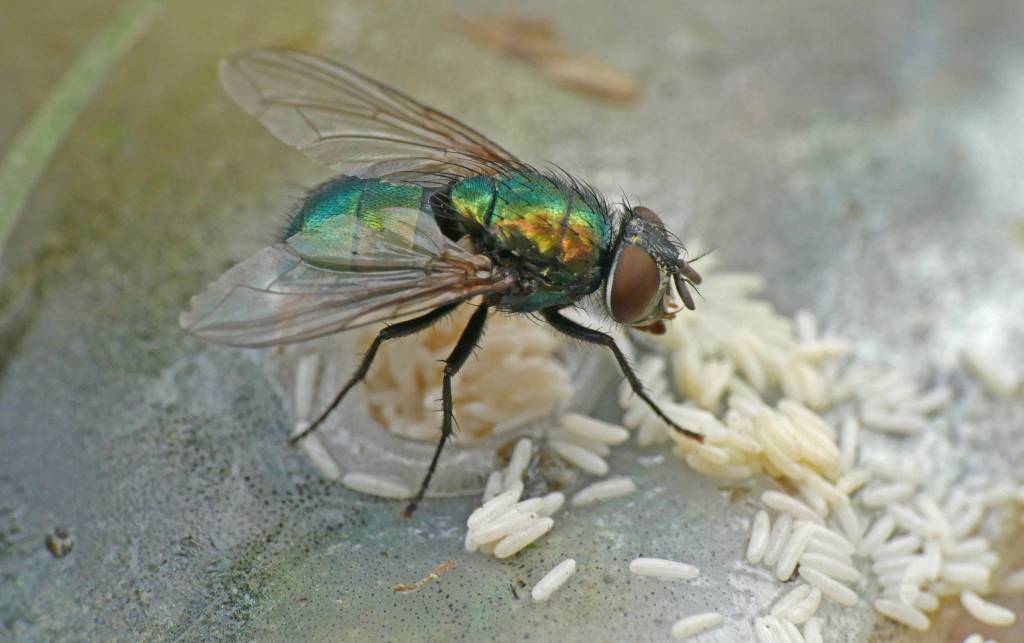
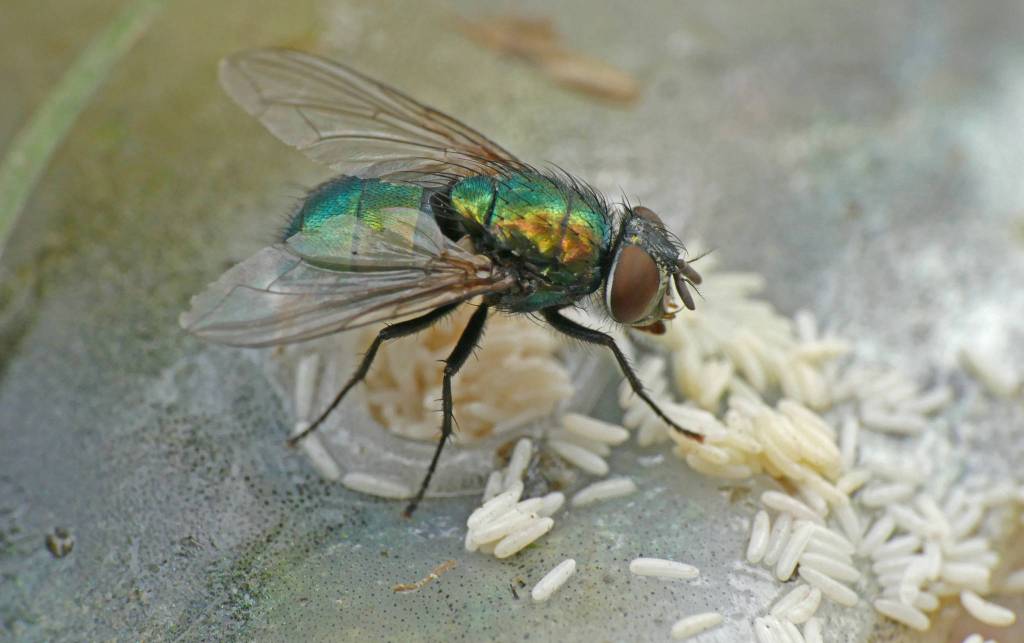
The different phases of such life cycles are so different as to be quite unrecognizable. Indeed, it took Europeans a long time to realize that flies were not spontaneously generated from rotting meat but that the little white maggots ultimately gave rise to flies. Careful observation of maggots over a time period and meticulous dissections eventually revealed this secret in the 1600s, but even in the 1800s the idea was still controversial.
How is metamorphosis accomplished? It is regulated by hormones. Across much of the animal kingdom, metamorphosis is orchestrated by thyroid hormones. From mussels and flatworms to toads and fishes, thyroid hormones are the primary controllers of reorganizing the body and its physiology, although each kind of animal has its own variety of thyroid hormone.
However, the arthropods, such as insects and crustaceans, and their distant relatives called nematodes (round worms), do it differently. These groups diverged from the rest of the animal kingdom around 500 million years ago. Both arthropods and nematodes have hard body coverings that have to be molted so that the soft-bodied animal inside can grow. For these animals, metamorphosis is typically controlled by a balance of two hormones: one regulates the molting process and the other controls the transformation of the body.
Scientists generally agree that the first insects, roughly 500 million years ago, hatched from eggs directly to adult forms and did not undergo metamorphosis. Silverfish still don’t, but other insects typically do. Somehow, a separate juvenile phase was “invented.” There are two basic patterns. The first to evolve was a partial metamorphosis (technically hemimetabolic), in which the juvenile form bears some resemblance to the adult, with articulated legs and sometimes similar body shape. This is the pattern used by dragonflies, grasshoppers, aphids, and their relatives. Much later, perhaps almost 300 million years ago, a more radical form of metamorphosis evolved, technically called holometabolic, in which the juvenile looks and behaves totally unlike the adult form. This is the life cycle pattern used by beetles, flies, butterflies and their relatives.
The holometabolic life cycle presumably evolved from the hemimetabolic cycle, but the steps involved are still being discussed by scientists. In any case, the holometabolic life cycle has been wildly successful in terms of numbers of species that exhibit it. Holometabolic insects comprise as much as sixty percent of all animals on earth and maybe about eighty percent of all insect species.
Different phases of a complex life cycle commonly have different ecological roles, and the combination of roles varies among types of critters. In most cases, all the life stages feed, although the diet may vary. For insects and toads, the larval phase is generally devoted to accomplishing growth by feeding on an abundant resource, while the other phase, typically an adult, accomplishes reproduction and dispersal. For many aquatic invertebrates, such as mussels and anemones, the larval phase disperses and the settled adult phase reproduces. Some life cycles have more than two distinct phases. For example, barnacles have one larval stage that disperses, a second one that does not feed but is in charge of settling on a substrate, and the adult phase, which reproduces. A salamander in eastern North America has an elaborate arrangement: the larva grows in water, the pre-adult phase grows on land and disperses, and the adult phase reproduces in water.
[Twice told tales —Juneau style]
What might be the advantages of having separate juvenile and adult forms in a life cycle? Not surprisingly, this too is a matter for discussion. For one thing, separate forms can exploit different environments and evolve specializations for those environments, becoming ever better at using the resources there. Furthermore, juveniles and adults are not competing for the same resources. It also becomes easy to partition the costly activities of living, for example, separating the energetic costs of growing from those of reproducing.
With such advantages, that leaves open the question of why don’t more animals do this? Perhaps the right mutations didn’t happen or, if they did, a suitable niche was unavailable. Or perhaps for some animals there are constraints imposed by other aspects of their life history, such as perhaps a necessity of both nurturing and teaching offspring? As usual, the whys are harder to answer than the hows.
• Mary F. Willson is a retired professor of ecology. “On The Trails” is a weekly column that appears every Wednesday.