Off the Beaten Path: Caribou spoons and the struggle every animal shares
Published 6:12 am Friday, February 3, 2017

Once in the Brooks Range, I carved spoons from a caribou antler to give to my three nieces. Any spoon bought at a store would do a better job of getting food into their mouths, but I wanted them to have something of caribou and wilderness, and to know there were other worlds out there in case they ever felt trapped.
Ten days or so before, I followed the fresh tracks of a large grizzly up a gorge towards a mountain pass. The wind was hard on my face and the roar of a cascading stream blotted out all but my loudest warning calls. Hours wore on and my nerves became increasingly frayed — at any moment I expected to run into the bear.
The tracks of two wolves appeared and, then, strewn across the ground, lay a caribou calf. Blood and offal blackened the sand and gravel. Between the wolves and the bear little flesh remained. I knelt, cupped the calf’s face with my hand and studied the black scree mountain slopes rising into dark clouds. A short while later the bear appeared above the gorge, lumbering through rain and mist.
The next day herds of caribou swirled over mountains and moved across valleys, leaving behind networks of trails. In creek and river bottoms, where dense deciduous brush offered good vantages for grizzlies and wolves to ambush, lay caribou bones and mostly eaten carcasses. One distressed cow ran towards me and then ran circles, as if it was looking for its calf.
When I returned home I forgot to give my nieces those spoons. They disappeared until two of them seemingly miraculously appeared on my book shelf last summer. I have four nieces now, so I think I’ll hang onto the spoons. Besides, they’re getting to the point where they’re going on adventures where they can carve their own funny-looking eating utensils.
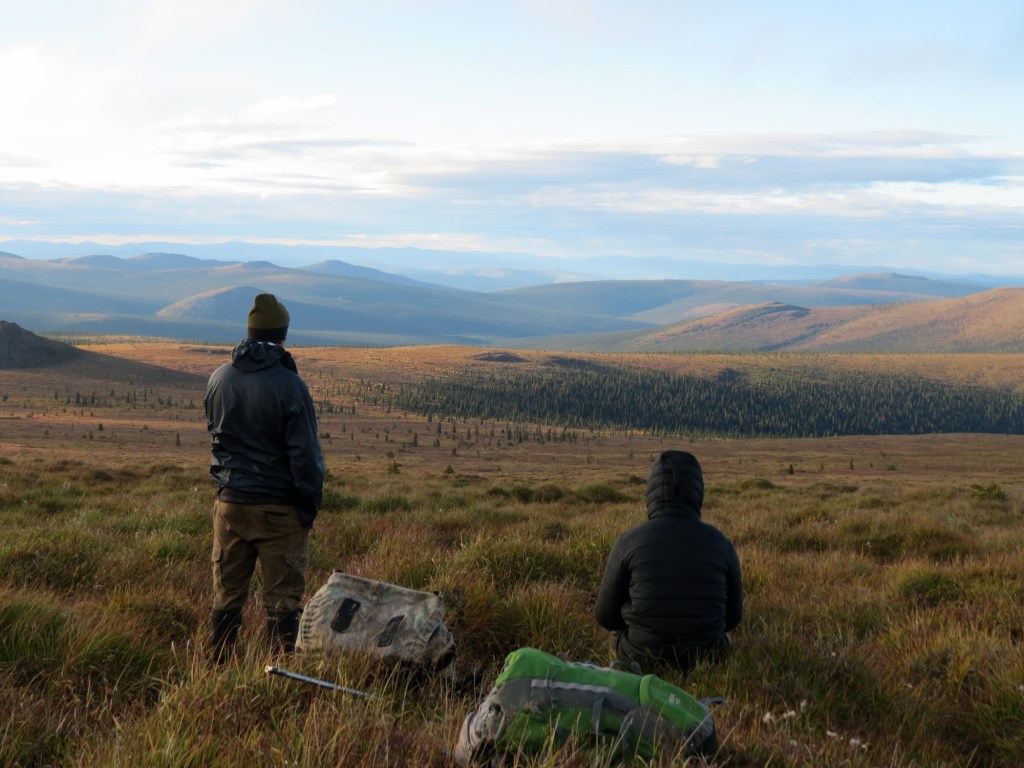
Not long after I found those spoons, my older brother Luke and his 12-year-old daughter Kiah were nice enough to invite me along on a caribou hunt. It was Kiah’s first journey into caribou country. Acting as a meat packer, I followed the two along alpine ridges and across tussocks. At the end of each day we made dinner, laughed and then sat quietly watching the sun set on ancient mountains. We lucked out and ran into three young bulls.
I forgot to bring plastic bags and my pack became saturated with blood from the meat from the two Luke and Kiah shot. After getting the meat close to the road I said goodbye. I planned to try to walk to the headwaters of the Yukon Charley River and then pack-raft to Circle. Kiah guilt tripped me.
“Just come home with us,” she said and shook her head in disbelief over how foolish I was being. I trudged away, looking back as my brother and his daughter hiked the opposite direction.
Two days later, smelling like a movable bear feast, I hiked over a knoll and saw the backsides of a sow grizzly and her big cub. I sat, hoping the wind wouldn’t swirl my scent their way, and waited impatiently for them to move on. They followed caribou trails along the same ridge I needed to travel.
When they were about 400 yards away I began trailing until I lost sight of them. Near dark I jumped a cow caribou and her calf in a band of scrub willows near a creek. They ran anxiously in circles as the last of the sunset reddened the mountains.
A blizzard rolled in that night. I wasn’t prepared for deep snow, so I hiked out to the Taylor Highway. There, I walked for hours on the dirt road toward Eagle. A few moose hunters drove by and gave me apprehensive glances as I stood there with my thumb up. I didn’t blame them for not stopping. I looked and smelled pretty terrifying.
Near dusk, while I was eyeing the woods for a decent camping spot, a truck pulled over and a man offered a ride. He was a carpenter from Fairbanks who’d wanted to show his family Dawson City and Eagle during a three-day weekend.
“I should ride in the back,” I said, telling them about smelling like a rotten caribou.
“Nonsense, hop in the cab,” he said after introducing me to his wife and his three young daughters.
In about five minutes the girls went from being silent to excitedly telling me of the two lynxes they’d seen that day. The man and wife looked back, told stories about their adventure and gently teased each other.
The next morning I floated down the Yukon River toward Circle — there was no mail plane out of Eagle for a few days and I had a bit of time before I needed to go back to work. Snow covered the mountains and the yellow leaves fluttered in the wind as I drifted with the current. I thought of those caribou antler spoons, the struggles every animal shares, and how there could be no gift more wonderful or terrifying than trying to raise a young one.
• Bjorn Dihle is a Juneau writer. Check out the preview of his first book, “Haunted Inside Passage,” and follow him at www.facebook.com/BjornDihleauthor.