Site Logo

Firefighters on ice: CCFR goes for a chilly dip as part of annual training

Published 10:30 pm Tuesday, April 6, 2021
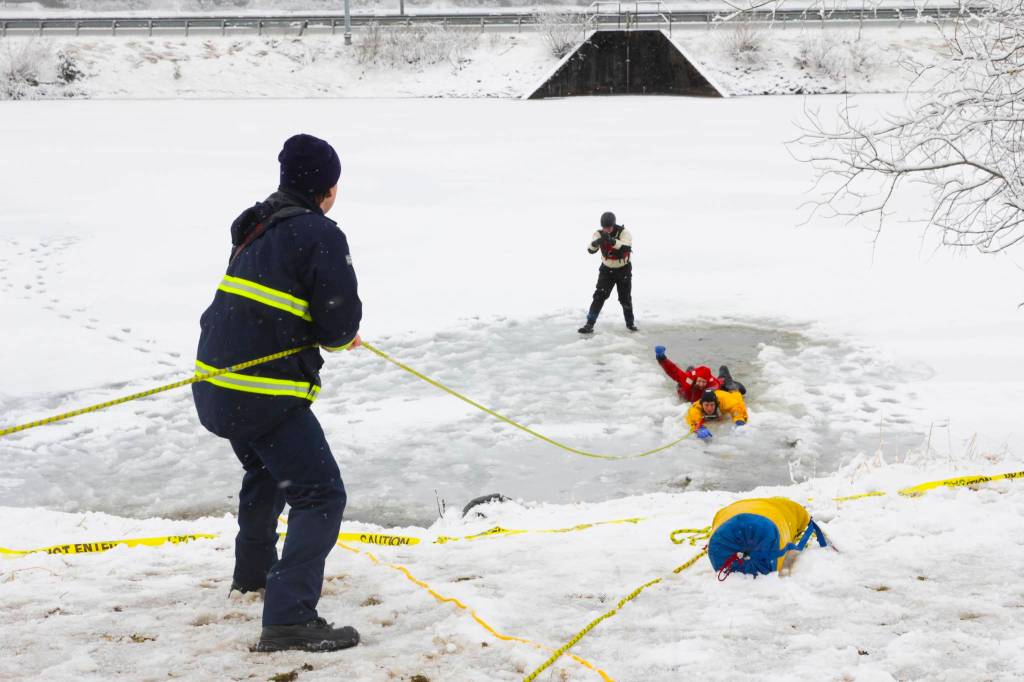
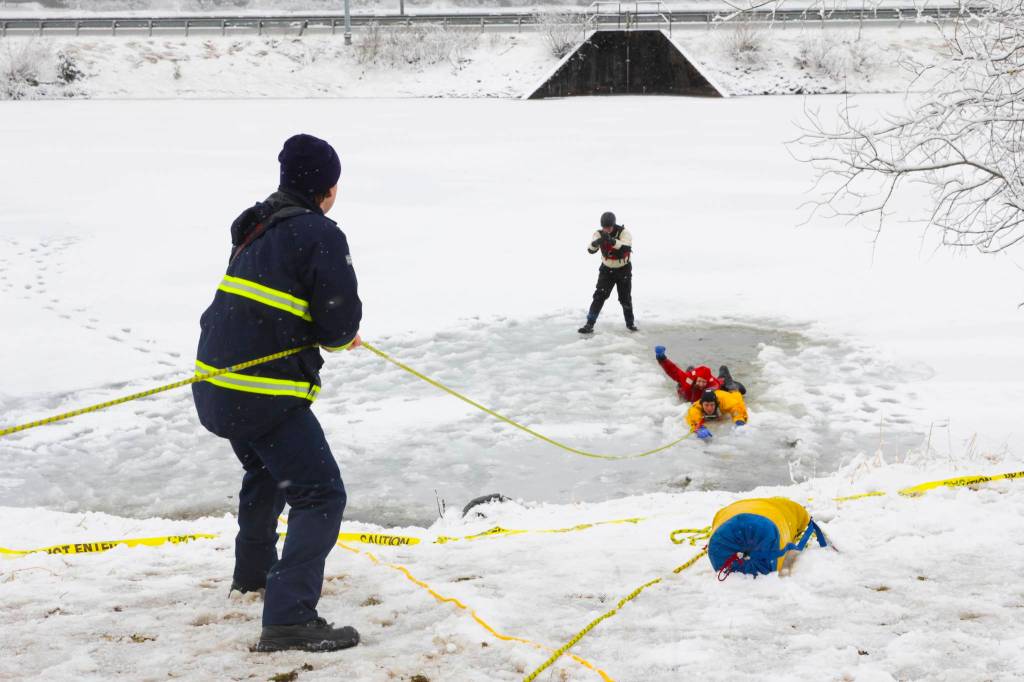
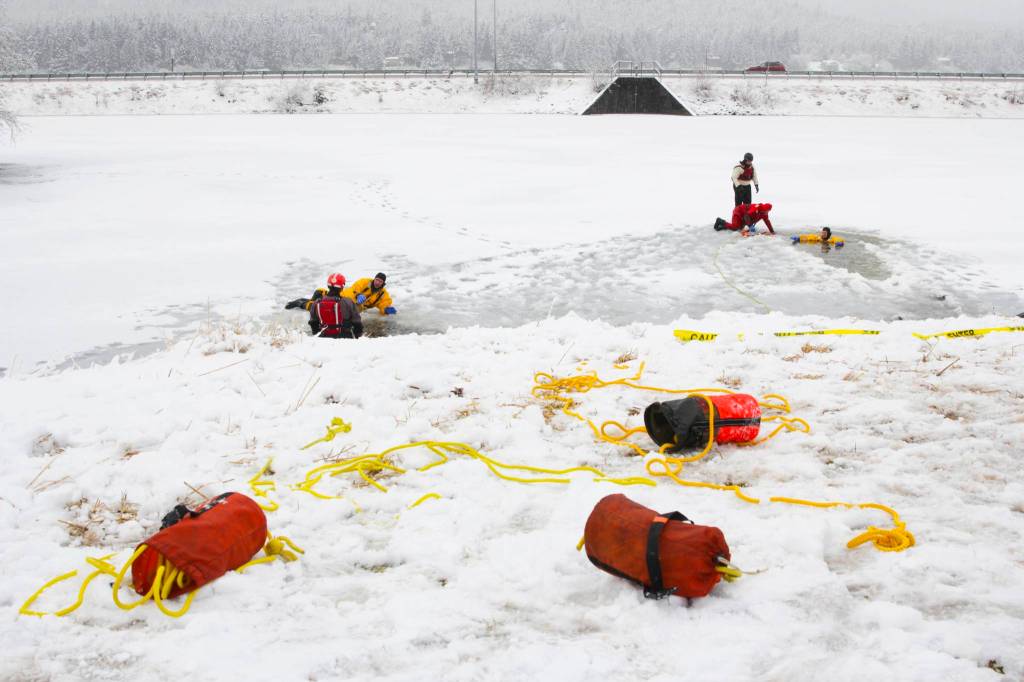
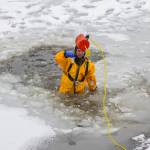
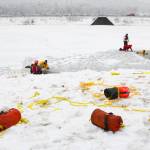
Capital City Fire/Rescue personnel underwent annual ice rescue training at Twin Lakes on April 7, 2021. The training occurs in the spring, when the ice is rotted and most dangerous. (Michael S. Lockett / Juneau Empire)
1/6

Capital City Fire/Rescue personnel underwent annual ice rescue training at Twin Lakes on April 7, 2021. The training occurs in the spring, when the ice is rotted and most dangerous. (Michael S. Lockett / Juneau Empire)

Capital City Fire/Rescue personnel underwent annual ice rescue training at Twin Lakes on April 7, 2021. The training occurs in the spring, when the ice is rotted and most dangerous. (Michael S. Lockett / Juneau Empire)
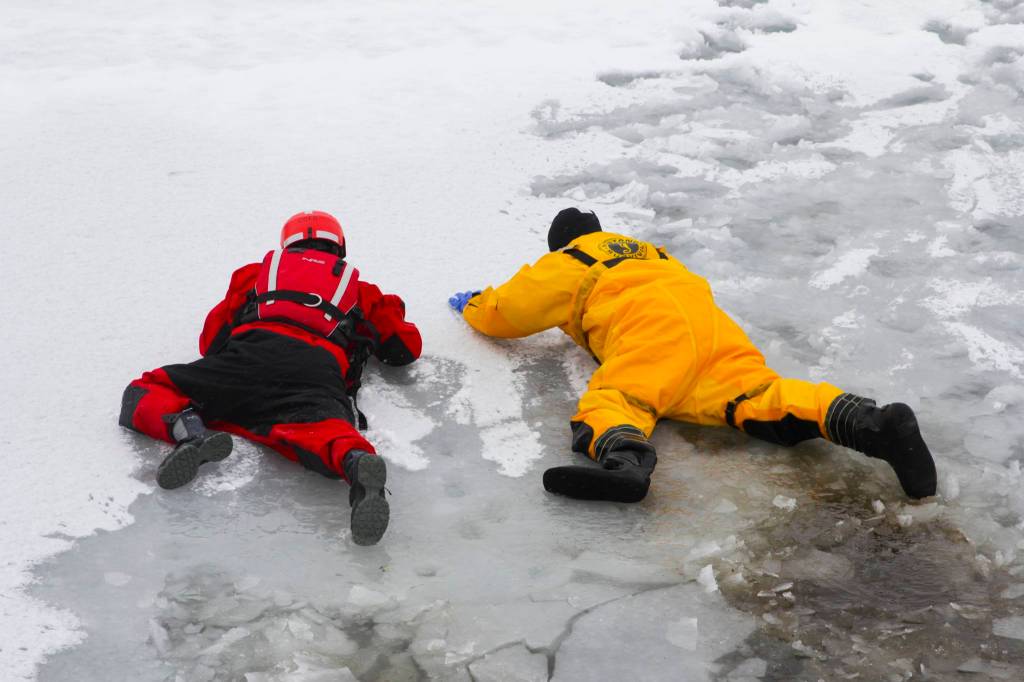
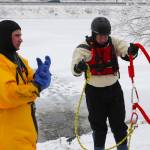
Capt. Jayme Johns, in yellow, head of the Capital City Fire/Rescue’s water rescue team, shows firefighter Liam Van Sickle, left, how to safely cross treacherous ice during CCFR’s annual ice rescue training at Twin Lakes on April 7, 2021. (Michael S. Lockett / Juneau Empire)
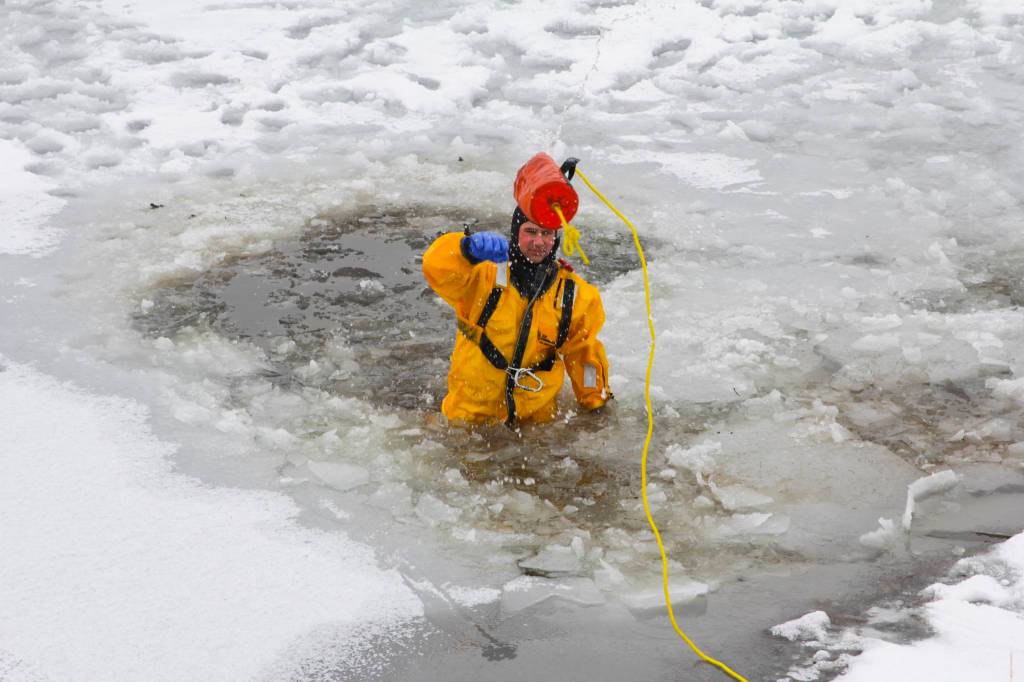
Capt. Jayme Johns, head of the Capital City Fire/Rescue’s water rescue team, chucks a rope bag back to shore during CCFR’s annual ice rescue training at Twin Lakes on April 7, 2021. (Michael S. Lockett / Juneau Empire)
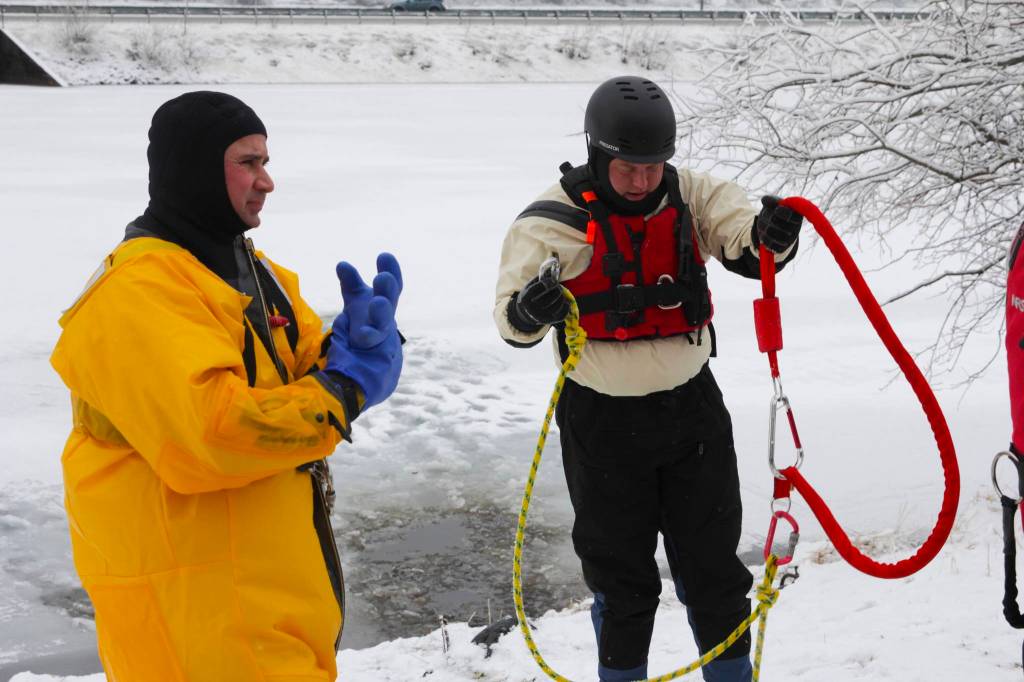
Capt. Jayme Johns, in yellow, head of the Capital City Fire/Rescue’s water rescue team, and Brady Fink, one of the trainers, get kitted up during CCFR’s annual ice rescue training at Twin Lakes on April 7, 2021. (Michael S. Lockett / Juneau Empire)
Capital City Fire/Rescue personnel underwent annual ice rescue training at Twin Lakes April 7, 2021. The training occurs in the spring, when the ice is rotted and most dangerous. (Michael S. Lockett / Juneau Empire)

Capital City Fire/Rescue gathered at Twin Lakes on Wednesday morning for a refreshing dip with some colleagues as personnel underwent their annual ice rescue training.

“We do this every spring as the ice starters to degrade,” said assistant chief Travis Mead in an interview. “It’s a good opportunity to get out and practice some skills.”

CCFR will be rotating all its staff through the training in the weeks to come, Mead said.

“It’s when the ice starts to get a little rotten,” Mead said. “We consider it one of the more dangerous times.”

Twin Lakes provided a convenient place to hold the training between the downtown and airport stations, Mead said. The thawing ice made a good training environment for the circumstances frequently encountered when people go through the ice, Mead said.

CCFR typically performs two to three ice rescues a year, usually near the Mendenhall Glacier, Mead said. More people fall through but are able to self-recover.

“We encourage people to call 911 early,” Mead said. “One of the leading causes of this is dogs that go through the ice and humans that go to rescue them.”

Calling 911 early allows CCFR to get rescuers in position quickly, improving the odds of a good outcome, said assistant chief Ed Quinto.

The trainers, led by Capt. Jayme Johns, head of CCFR’s water rescue team, will get training in the Lower 48 for the specialized rescues, before coming back to the department and training the personnel and volunteers, Quinto said.

• Contact reporter Michael S. Lockett at 757-621-1197 or mlockett@juneauempire.com.