Alaska’s 1st Bitcoin conference held in Juneau
Published 9:30 pm Sunday, July 6, 2025



The state’s first Bitcoin conference took place this weekend at Centennial Hall, bringing Bitcoin enthusiasts from around the country to Juneau.
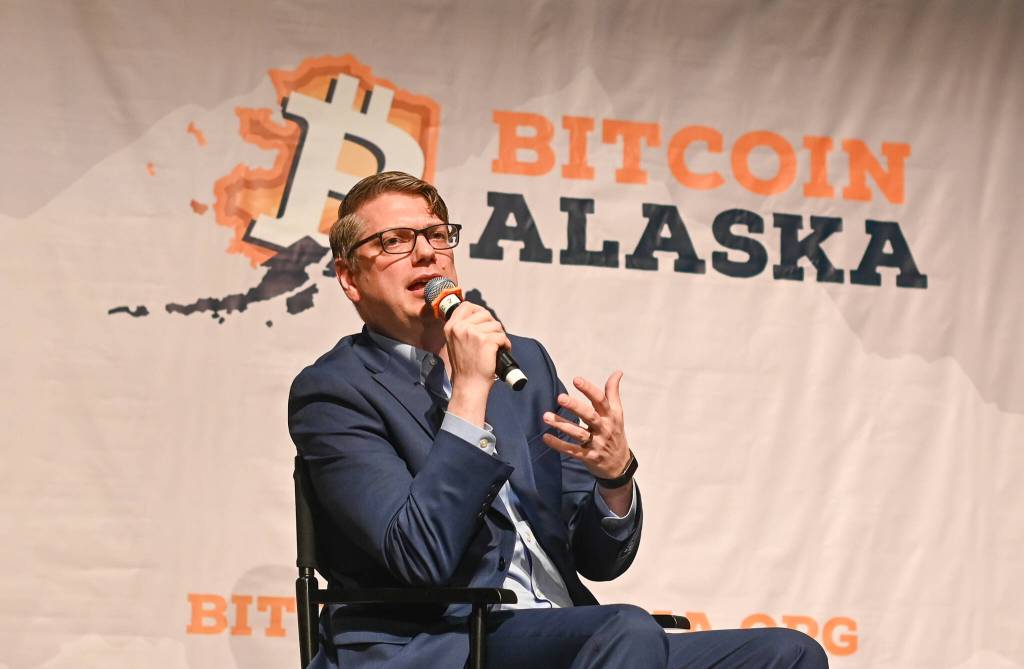
The conference was a networking opportunity for Bitcoin supporters. Among the Alaska speakers were Rep. Nick Begich III, R-Alaska, and Department of Revenue Commissioner Adam Crum. Begich owns bitcoin and recently co-sponsored a bill establishing a federal strategic bitcoin reserve.
Bitcoin is a digital currency with no physical backing. For many, it is appealing because it is not governed by people, but rather by a decentralized network of computers and complex formulas. Another bitcoin selling point is its scarcity.
“Bitcoin’s value to me, predominantly, is not in our ability to transact with it,” Begich told conference attendees on Sunday. “It’s that it’s a scarce asset.”
Currently priced at over $100,000 per coin, Bitcoin is the most highly valued cryptocurrency of the many that have proliferated since the late 2000s.
The event was organized by Juneau resident Wade Hoek. General admission for the conference was $150. The “whale pass,” which included a reception cruise, was $800. According to Hoek, the tickets were “virtually all” whale passes.
He estimated that 120 people bought tickets for the two-day conference and that 10-15% of the attendees were from Juneau. Hoek said local attendees included legislative staff for Rep. DeLena Johnson, R-Palmer, Sen. Mike Shower, R-Wasilla, and Rep. Jamie Allard, R-Eagle River.
Sen. Jesse Kiehl, D-Juneau, was also spotted in attendance. During the 2025 legislative session, Kiehl sponsored Senate Bill 86, which adds regulations on money services businesses dealing in cryptocurrency, with the goal of protecting consumers. SB 86 passed in the State Senate and has moved to the House Finance Committee.
The conference was preceded by several public events, including a veterans’ run, a picnic, karaoke, and a self-defense course taught by the Christian Tennessee-based group Paladin Tower Tactics. Hoek said he would have liked more local involvement in the pre-conference events, but he sees growth potential for next year’s conference.
A recurring theme in the conference addressed a lack of education and understanding surrounding cryptocurrencies. Hoek emphasized that he wanted the conference to encompass a wide range of aspects of Bitcoin, rather than focusing on a single topic. Out-of-state Bitcoin influencers, Alaska Bitcoiners, and leaders discussed how the digital currency could impact the state in various ways.
Circular economy
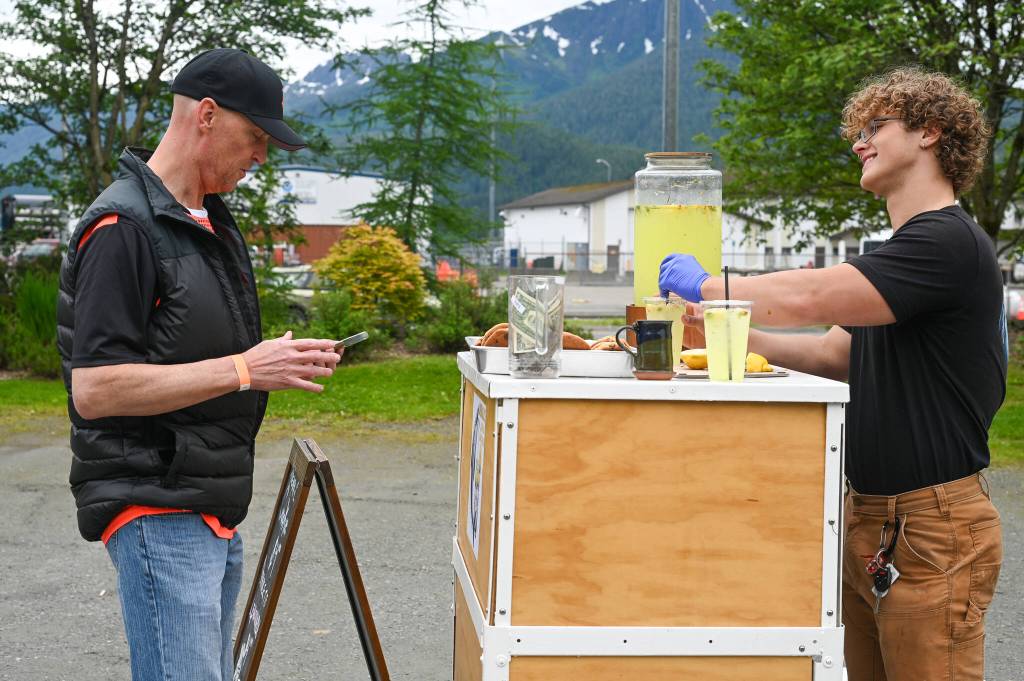
Among the locals present were Andy and Brick Engstrom. Andy Engstrom purchased lemonade and cookies in bitcoin from Denali’s Juneau Lemonade, one of the few businesses in town accepting the currency.
Andy Engstrom, former owner of Capital City Windows, has passed the business on to his son, Brick. The business started accepting bitcoin about a year ago, but has yet to receive payment for a service in the currency.
Brick Engstrom said the advantage of using bitcoin in daily transactions is development. After listening to a panel on circular economy, he said he sees potential for it in Juneau. A circular economy would involve enough people and businesses using bitcoin in a community that the digital currency could be used exclusively for daily life.
As of right now, Brick Engstrom said there isn’t enough awareness.
“The more people that use it, the more people get involved, the stronger it becomes, and pushes it towards its next level of development,” he said.
Mining and energy
Only 21 million bitcoins can exist, and most of them have already been mined. New bitcoins are acquired through mining, which requires significant energy.
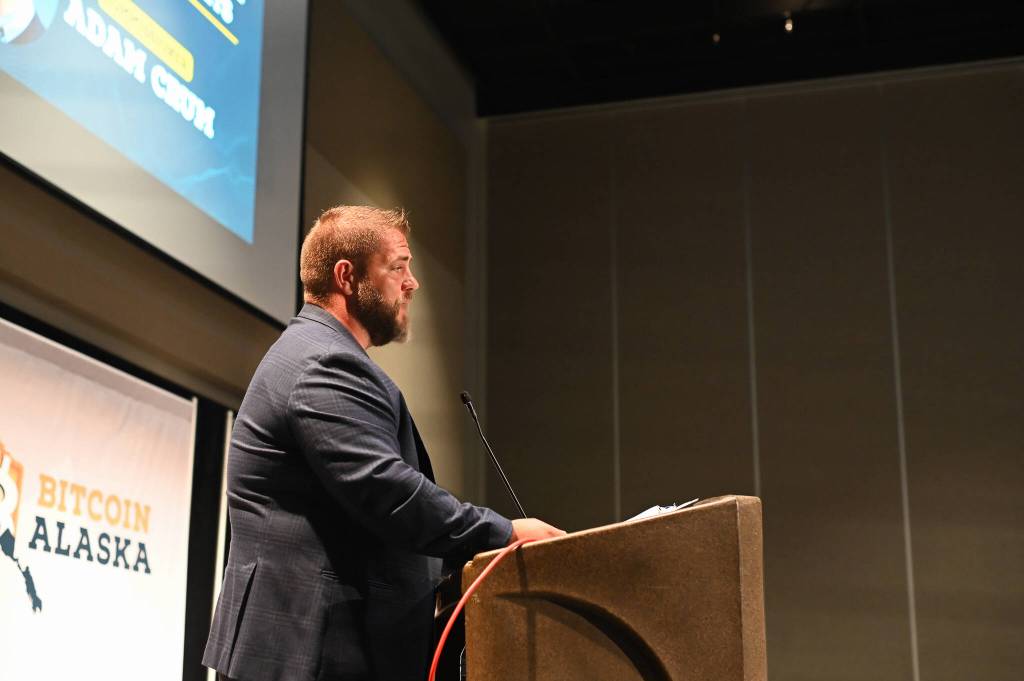
“So what is Alaska’s potential in the cryptocurrency landscape?” Crum asked during his keynote address. “Our energy resources are a globally recognized topic as of late, with good reason. We have something that Bitcoin miners around the world are desperately seeking: the conditions for abundant and affordable energy.”
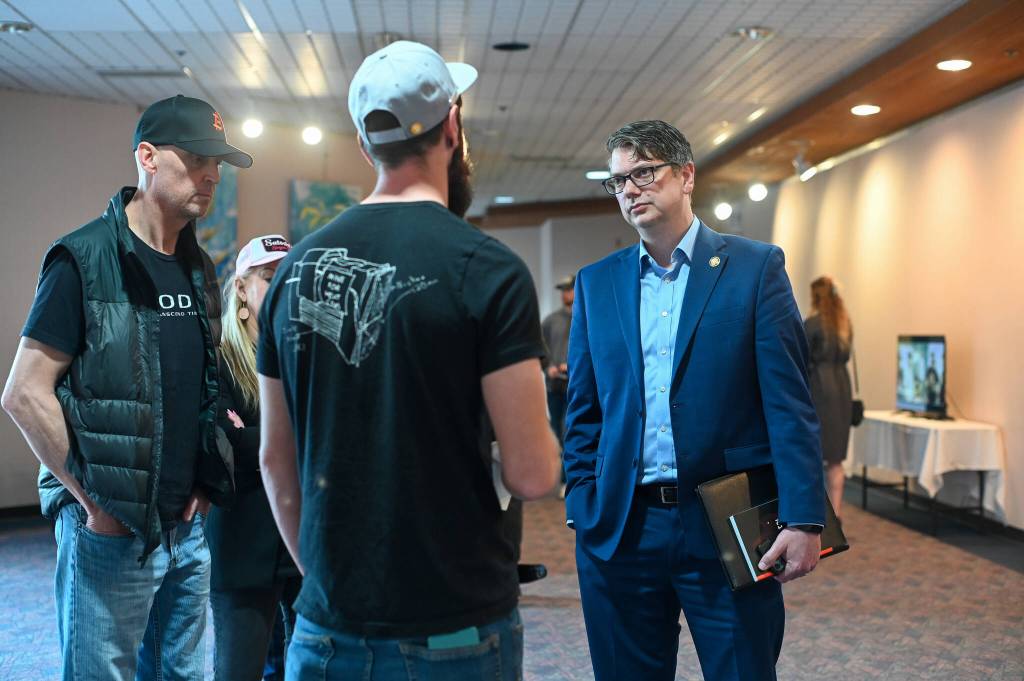
Begich discussed the possibility of using Alaska’s abundant energy resources to support Bitcoin mining operations during an interview with Empire reporters Sunday afternoon.
“What’s interesting about bitcoin for large capital energy projects, if they have a bitcoin mining component attached to them, the Bitcoin mines themselves can actually use the excess energy that comes off of the base load power,” he said. “For example, hydro, the water runs 24 hours a day, 365 days a year, but the demand on the energy grid is usually higher during the day and lower at night. And so when it’s lower at night, you have this energy that’s being generated that can’t be used by the public. And so if you can use that energy and sell it to a bitcoin mining operation, it actually can then lower the cost of energy for everyone else.”
Bitcoin mines have been criticized for having adverse environmental impacts due to the vast energy resources required to support mining hardware.
In addition to hydropower, Begich said that “containerized bitcoin mining rigs” could also be utilized to monetize natural gas in Alaska.
A proposed bitcoin mining operation in the North Slope aims to begin construction by the end of this year, a test of how similar operations might operate and be received in the state.
In a panel on Bitcoin policy in Alaska, Crum addressed the lack of legislation surrounding Bitcoin mining in the state. He said regulating cryptocurrency will require an approach that involves more than just the Department of Revenue.
“We do have a job or role, particularly Department of Natural Resources and Department of Environmental Conservation, to protect the resources of the stable asset,” Crum said. “And so that comes down to, how are you monitoring that? How are you issuing rights and leases to individuals to use those resources?”
PFD
In his role as Revenue Commissioner, Crum serves as vice chair of the Alaska Permanent Fund Corporation Board of Trustees. He spoke during his keynote about how bitcoin could be used in managing the Alaska Permanent Fund dividend to increase returns on investments and state revenue.
Crum said investing any of the permanent fund in Bitcoin is a long-term conversation, as Bitcoin does not fit into a traditional asset class. However, he said board members are discussing cryptocurrency and blockchain with investment staff.
“We don’t want to ignore it,” Crum said. “We see some of the projections of where Bitcoin value is going to be in five years. Why wouldn’t you want to get a part of that now?”
However, Crum stressed that more education is needed and estimated only half of the board had looked into Bitcoin.
Education
Leaders in higher education in Alaska attended the conference. Cameron Carlson, dean of the College of Business and Security Management at the University of Alaska Fairbanks, spoke on a panel about cryptocurrency in higher education.
“Bitcoin cryptocurrencies are anchored enough now that if we are not starting to develop curriculum that are going to teach students about cryptocurrency, how they make decisions about what direction they go, we basically are not meeting business education needs at the end of the day,” Carlson said.
He said he would not only like to see classes on Bitcoin, but also the integration of it into introductory economics and personal finance classes. He said that most of the feedback he has gotten from students around Bitcoin is their concern about the legitimacy of Bitcoin and other cryptocurrencies.
For Carlson, recent federal involvement in bitcoin is sufficient legitimacy to be included in the curriculum; however, he intends to incorporate a critical perspective.
“You have to talk about the cons as well, and that there are risks associated with it,” Carlson said.
Begich spoke during a conference “fireside” chat about the risk of Bitcoin, recalling an early experience with his investment.
“I bought $5,000 worth of bitcoin, and ultimately had about 440 bitcoin in a company called Mt. Gox when it folded,” Begich said. “Today, that’ll be worth about $50 million.”
Begich’s experience illustrates a risk in storing a private key, the way in which a user accesses their bitcoin, with a third-party. Many at the conference advocated for “self-custody,” or the owner of the bitcoin currency maintaining control of the private key. However, this also comes with security risks, such as natural disasters destroying their private keys or being personally targeted for their Bitcoin.
Bitcoin security technology is evolving to mitigate these risks for those seeking independence from third-party institutions.
University of Alaska Southeast Chancellor Aparna Dileep-Nageswaran Palmer also attended the conference.
Palmer was interested in how the technology that supports Bitcoin can be used to preserve documents and other information.
“How can our commitment to preserve the languages of Southeast Alaska interact with this technology and save it?” Palmer said. “Or like how carving technologies and all of these different things that we teach can be preserved forever, and in this is a technology that can help us with that.”
The future of Bitcoin Alaska
Hoek intends to host another conference next year. He looks forward to increased attendance from the publicity generated by this year’s conference. He also had ambitions for “Bitcoin tourism” in Juneau, with possibilities such as an educational “Bitcoin park.”
While some see now as the time for Alaska to invest, others harbor skepticism.
Adam O’Brien, founder of Bitcoin Well, approached Robert Sewell, a protester, to pivot his anger at Begich into supporting Bitcoin. Sewell explained his reservations to O’Brien.
“I consider Bitcoin to be a Ponzi scheme, which is basically those who got in early are the winners, and those who got in late are nobodies,” Sewell said. “I think the game is over as far as making money.”
• Contact Natalie Buttner at natalie.buttner@juneauempire.com. Contact Jasz Garrett at jasz.garrett@juneauempire.com or (907) 723-9356.