Traditional canoes making voyage from Haines to Celebration get warm welcome from Lingít Aaní
Published 9:30 pm Monday, June 3, 2024
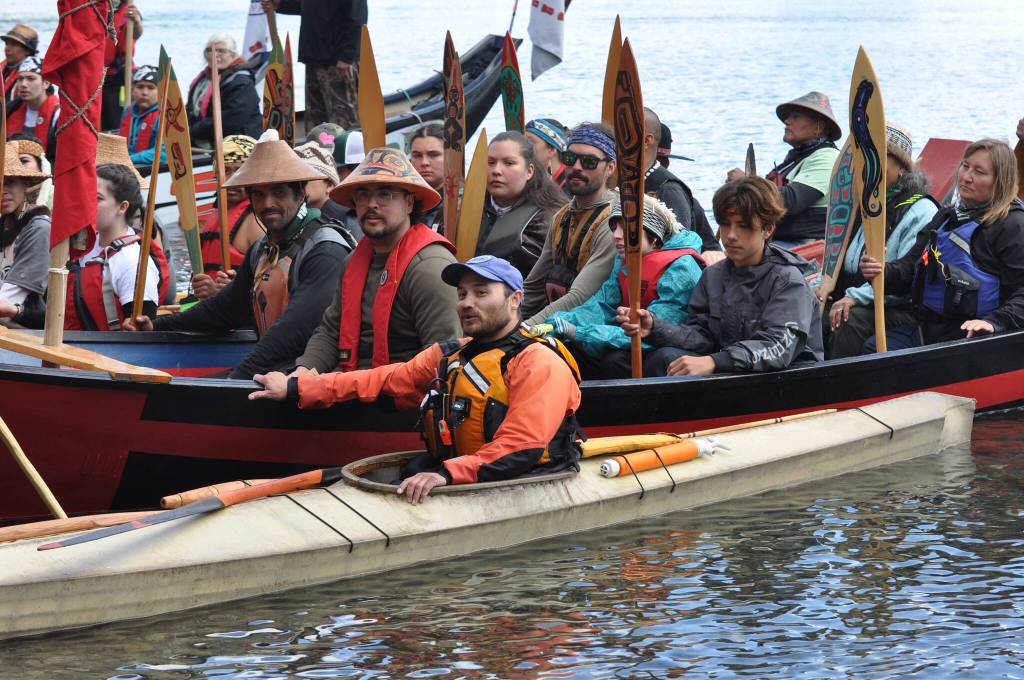
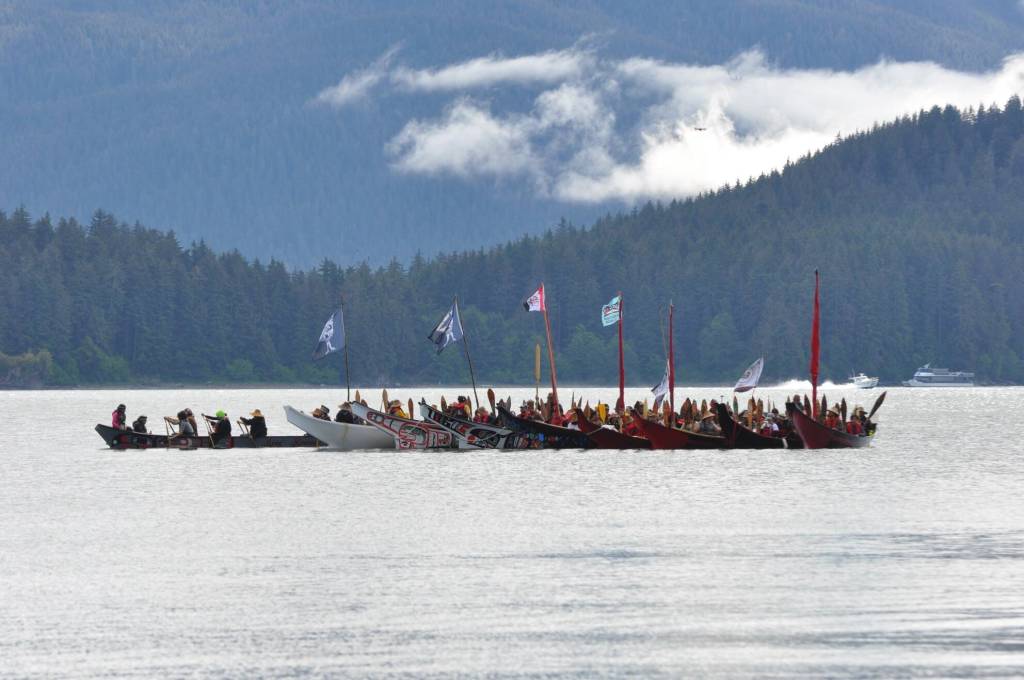
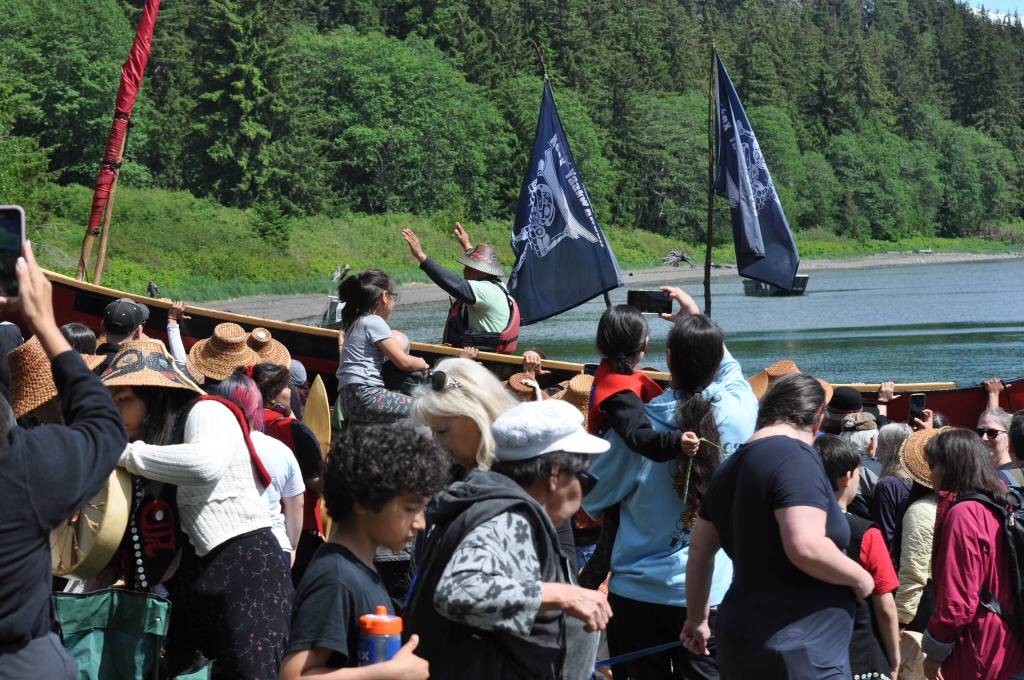
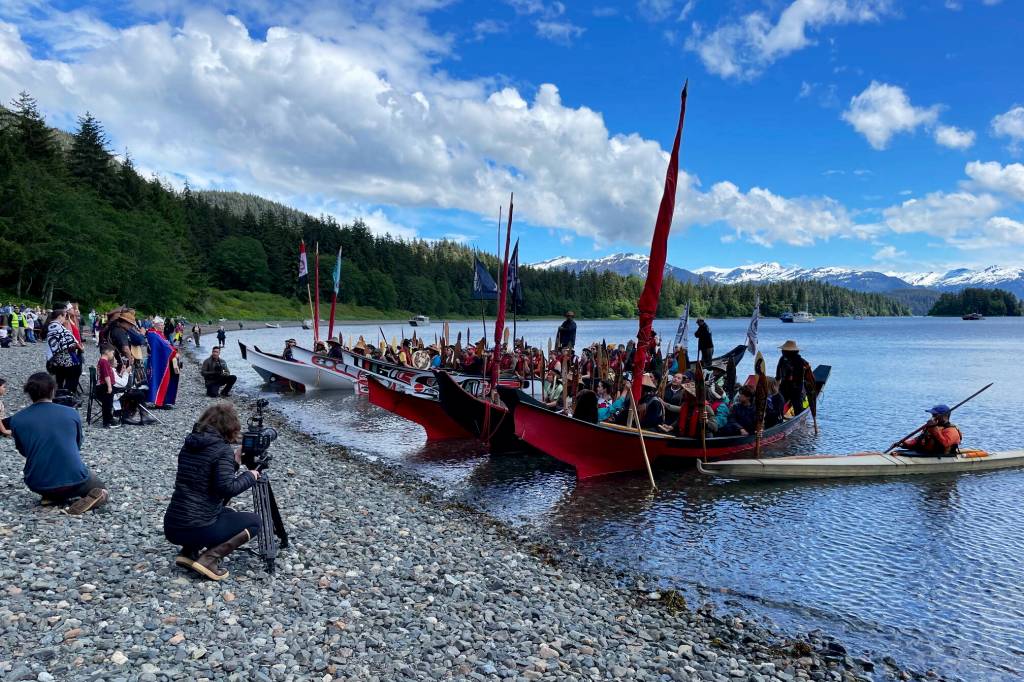

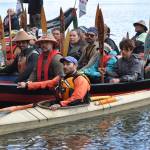
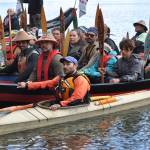
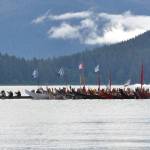

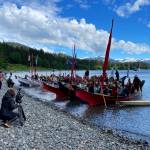
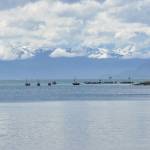
A crowd cheering from shore greeted paddlers in traditional canoes who departed from Haines four days earlier, joining people from other Southeast Alaska communities making their way through Inside Passage waters, as the boats landed at the Auke Village Recreation Area at midday Tuesday as part of the launch for the biennial Celebration festival.
Nearly a dozen dugout boats known as Yáxwch’i Yaakw (sea otter canoes), and filled with people from as far away as Hawaii and interior Canada, nosed around Point Louisa at about 11:30 a.m., aiming for the wide cobbled beach where the Aak’w Kwaan Tlingit made their homes and village for generations.
Between Wednesday and Saturday thousands of people gathering for Celebration in Juneau will pay tribute to those ancestors and many others during one of Alaska’s largest cultural and traditional Indigenous events. Also arriving at about the same time Tuesday to participate in Celebration was another group led by the One People Canoe Society that departed from Wrangell and other communities south of Juneau for multi-day voyages.
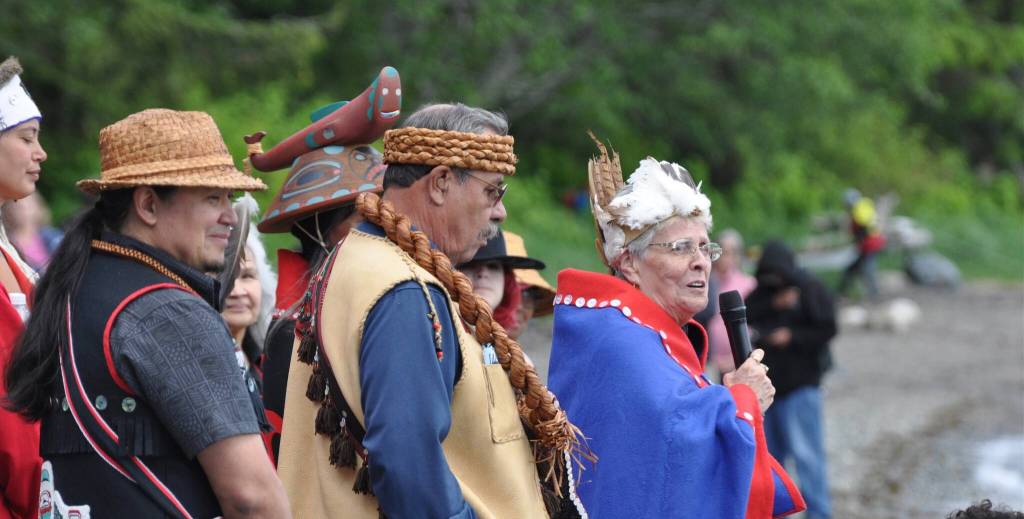
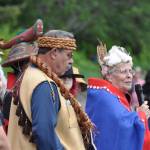
Waiting to welcome the canoes in Auke Bay were Fran Houston, whose Tlingit name is Siekoonie, spokesperson for the Aak’w Kwaan and member of the Raven moiety, with her counterpart from the Eagle moiety Mike Tagaban, whose Tlingit name is Yaanishtuk.
Houston stood erect on the beach wrapped in a blue and red button blanket and feather headdress. Tagaban, leader of the Thunderbird House, wore a leather vest embroidered with beaded designs and an octopus bag featuring a seaweed pattern made by his son Ricky Tagaban, whose Tlingit name is L’eiw Yeil, who stood by his father’s side in a blue and white robe.
Earlier in the morning Houston noted the changes in culture.
“My mom [the late Elder Rosa Miller] was punished for speaking her language. Now there is hope for the future of my great-grandchildren,” to speak Tlingit, she said. The language is being taught in elementary schools and online courses through the University of Alaska Southeast by Xunei Lance Twitchell.
As the canoes drew closer, each one circled single file in front of the beach accompanied by shoreside drumming and singing as spectators stepped back from the rising tide that had been creeping higher through the morning. Each boat was greeted by applause and cheers. A short distance offshore all the canoes gathered together and rafted side-by-side for a unified formal approach to the shore with paddles pointing skyward in acknowledgement.
Twitchell, standing with the leaders on the cobbles, and Houston asked questions of each canoe: “Where are you from?” and “Why are you here?”
Each canoe’s spokesperson stood and, speaking in both Tlingit and English, introduced their home communities and those of the paddlers. Several people spoke of their purposeful presence to connect with families and culture in Lingít Aaní.
A single slender skin boat from the Bering Sea Village of Wales accompanied the larger boats. It was paddled by Lou Logan, who is replicating a similar traditional northern kayak — known as a qayak to the Inuit — onsite at the Alaska State Museum downtown through October.
There were also newly-carved dugout canoes by master carver Wayne Price who was at the helm of one of his dugouts. After the formal greetings, several people hefted Price’s wood canoe — with him aboard — onto their shoulders and marched ashore to the cheers of the crowd with Price smiling and waving.
• Contact Laurie Craig at laurie.craig@juneauempire.com.