Urban Alaska’s high costs of living driven by health care and groceries
Published 11:39 am Wednesday, July 8, 2026
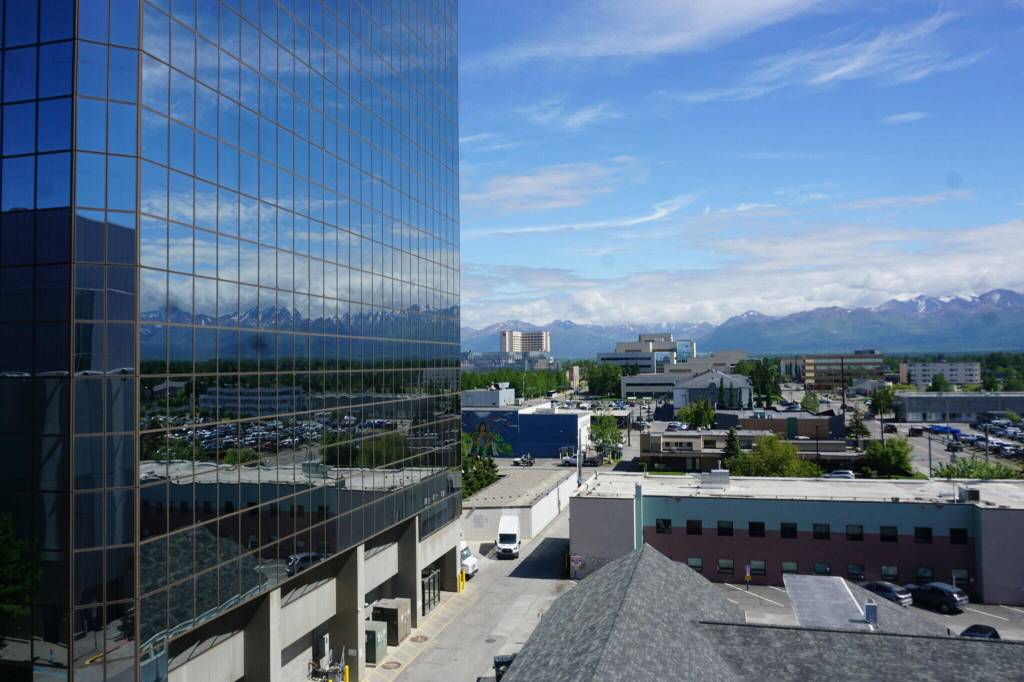
Alaska’s three major cities continue to have higher living costs than most of the nation’s urban areas, according to a newly released analysis published by the Alaska Department of Labor and Workforce Development.
Juneau, Anchorage and Fairbanks are in the top 25 among 257 metropolitan national areas. Among the three, Juneau had the highest overall cost of living, at 31.7% above the national urban average in 2025, according to the analysis, published in the July issue of Alaska Economic Trends, the department’s monthly research magazine. Anchorage’s cost of living was 25.5% above the national average, while Fairbanks’s costs were 22.9% above the national average, according to the analysis.
While significantly higher than the national urban average, the Alaska cities last year were much cheaper than cities like New York, where the borough of Manhattan has overall living costs that were 139% above the national average, or Honolulu, where overall costs were 83.9% above the national average.
The Alaska cities’ rankings are driven in large part by two categories – health and groceries.
Alaska’s three major cities continue to have some of the nation’s highest health care costs, according to the 2025 statistics. But in a departure from past years, the Alaska cities no longer top the health-cost list. Winchester, Virginia, wound up with the highest health costs last year, at 49.4% above the national average, followed by New York City’s Manhattan Borough, at 43.3 % above the national average. Anchorage had the third highest health costs, at 42.7% above the national average, followed by Juneau at 39.5% and Fairbanks at 35.4%, according to the statistics.
“It was surprising, a little, to see them fall to three, four and five this year,” said Sam Tappen, the state labor economist who authored the report.
The three cities also continue to have significantly higher grocery costs than other U.S. cities, according to the analysis. In Juneau, grocery costs in 2025 were 28.4% above the national average. Anchorage’s grocery costs were 23.7% above the national average, while groceries in Fairbanks ran 23% above the national average.
Fairbanks had modest costs in one important category in 2025. Housing costs last year in the Interior city were actually 1% lower than the national urban average, the analysis found. But that is more than offset by the high costs of energy — with utility costs that were 113% higher than the national urban average, according to the analysis. Fairbanks had the highest utility costs of all the metropolitan areas in the study group.
Overall, urban Alaska’s 2025 inflation rate was a modest 2.1%, below the state’s long-term average of 3.3%, according to a companion report in the July issue that was also authored by Tappen. The state’s 2025 inflation rate was also below the national rate of 2.6%, and it was the third consecutive year in which the U.S. inflation rates outstripped Alaska’s rate.
Tappen said that probably reflects a lingering influence of the COVID-19 pandemic.
“Alaska took longer to recover from the COVID recession than the nation did, so our economy has just been a little bit cooler than in the Lower 48,” he said.
The calculations reflect conditions before the U.S. invasion of Iran, which started at the end of February and which have caused energy costs to spike.
The annual inflation rate calculated for 2026 will almost certainly be higher than the 2025 rate, both nationally and in Alaska, Tappen said. It is hard to say whether Alaska’s rate of inflation will outstrip that in the Lower 48, but it is likely that the state’s stretch of higher prices will persist longer.
That is thanks to Alaska being at the end of the national transportation chain, he said.
“Our energy prices and the prices of our products that depend on energy are going to stay higher than the rest of the nation,” he said.
Even before the Iran war, Alaska had higher energy prices than the rest of the nation. Gasoline prices in urban Alaska averaged $3.66 a gallon in January, compared to the national average of $3.10, according to the analysis. Costs in rural Alaska were much higher, with six villages in Western or Interior Alaska posting average January gasoline prices above $10 a gallon.
Higher fuel prices are the norm in Alaska, even in urban areas, despite Alaska’s status as a major oil producer, Tappen said.
“Even though we are the fifth highest producer of oil among states, very little of that oil is refined in-state for consumers,” he said. Most of what is refined goes to the military or industry, and for the small amount that is produced in-state for consumers, “it’s just more expensive to make it here,” he said.
This article originally appeared online at alaskabeacon.com. Alaska Beacon is part of States Newsroom, the nation’s largest state-focused nonprofit news organization.
Yereth Rosen came to Alaska in 1987 to work for the Anchorage Times. She has been reporting on Alaska news ever since, covering stories ranging from oil spills to sled-dog races. She has reported for Reuters, for the Alaska Dispatch News, for Arctic Today and for other organizations. She covers environmental issues, energy, climate change, natural resources, economic and business news, health, science and Arctic concerns — subjects with a lot of overlap. In her free time, she likes to ski and watch her son’s hockey games.