OPINION: Flood fears take center stage again
Published 1:22 pm Thursday, March 5, 2026
The specter of progressively damaging floods in Juneau’s Mendenhall Valley for years to come had been diminishing in the last several months as plans proceeded to investigate and implement both short and long-term solutions.
Abruptly, that all changed recently when the U.S. Army Corps of Engineers (USACE) announced they decided not to move forward on their chosen long-term fix for flooding, creating uncertainty about a more permanent solution.
This flood phenomenon occurs when unstable lakes are formed from retreating glaciers resulting in glacial outbursts of billions of gallons of water. Juneau’s Mendenhall Glacier has created such a lake in Suicide Basin that is causing severe flooding along the Mendenhall River.
Last October, after Juneau experienced its third flood event with record water flows, there was still room for cautious optimism. During meetings with USACE officials, the “Corps” agreed to manage and pay for Phase 2 of the Mendenhall River short-term flood mitigation project, including design, engineering and installation of additional HESCO barriers along parts of the river that were still unprotected.
Since HESCO barriers have a limited capability and service life, USACE also agreed to research and fast-track a more enduring solution that would protect Juneau for the foreseeable future. In December, this resulted in a 3-day meeting of city officials and government agencies in Juneau. At its conclusion, officials announced that their preferred long-term alternative involved drilling a 2 ½ mile tunnel through Bullard Mountain, creating a “lake tap” so Suicide Basin’s water can drain more slowly into Mendenhall Lake.
While it’s unclear why USACE has changed direction, USACE has reiterated their support for current flood-fighting efforts and the Phase 2 HESCO barriers. Nevertheless, this leaves our community in a precarious situation without a formally identified long-term plan. The 8–10-year service life of HESCO barriers dictates that whatever plan is chosen, it must be implemented within this time frame.
Initial concerns about the lake tap solution due to lack of transparency have been allayed as additional details were released at a Juneau Assembly meeting on February 23. For several reasons, the lake tap appears to be superior and merits further investigation.
Primarily, the initial selection of a lake tap relied on several assumptions and conclusions by USACE and government experts. First, the geology and topography around Mendenhall Lake makes the building of a dam problematic.
Additionally, under some scenarios, the river could rise six feet over current record levels and peak water flows could reach 118,000 cubic feet per second, double last summer’s flood flows.
The difficulty, time, and expense of engineering and building a dam/levee system to accommodate this worst-case scenario is significant. Hence the shift to the simpler less expensive lake tap solution.
Any assumptions must be tested and analyzed before proceeding. Funding for a permanent solution also needs to be explored and nailed down. Towards that end, city leaders have submitted a Federal request for $8 million to support the geotechnical and planning work necessary to advance the lake tap solution. This study will help determine its cost and feasibility.
Our Congressional delegation remains dedicated to assist our community in resolving this situation. Sen. Sullivan, particularly, in his key role on the U.S. Senate Committee on Environment and Public Works, which oversees USACE, is in a unique position to help. While USACE’s step-back from leading the effort to a permanent solution is regrettable, we still need their support for interim flood mitigation while we move forward on our own.
There never will be a perfect plan. City leaders are in uncharted territory and need to make tough, expensive decisions. The Phase 1 HESCO barrier project initially generated controversy and pushback but, as it turned out, the Assembly’s decision to move ahead was correct and prevented significant property damage.
An enduring solution must remain a top priority within the Assembly’s budget decision process and allocation of city staff. City Manager Katie Koester underlined what’s at stake when she said that inaction would “threaten the longevity of our entire community.” She vowed the city would “continue fighting to protect our community and our future.”
Anything less would result in catastrophic consequences.
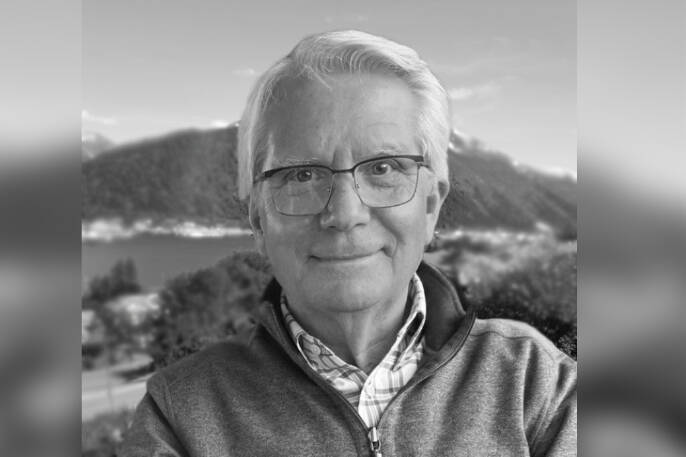
Win Gruening retired as the senior vice president in charge of business banking for Key Bank in 2012. He was born and raised in Juneau and graduated from the U.S. Air Force Academy in 1970. He is active in community affairs as a 30-plus year member of Juneau Downtown Rotary Club and has been involved in various local and statewide organizations.