Opinion: Roads don’t rust
Published 9:30 pm Wednesday, March 4, 2020
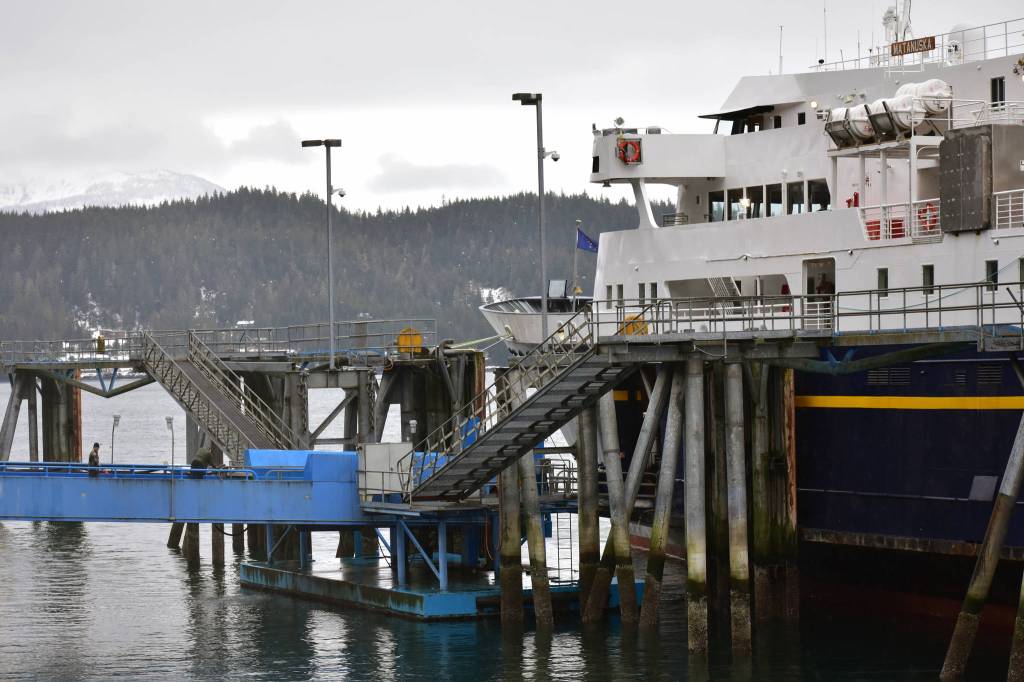

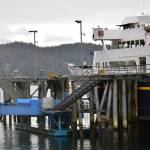
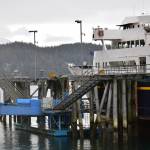
It has been said that, “A boat is a hole in the water into which you throw money.”
This is a truism known to every boat owner. A ferry is a boat, too and, as Alaskans have learned the hard way, just a bigger hole into which you throw even more money.
Corrosion may be a nuisance on your vehicle’s bumper, but on ships, it can be catastrophic. Hulls can collapse, ballast tanks weaken and motors fail, all because of rust. There’s no way to fully eradicate it.
According to a recent article in the Los Angeles Times, no organization knows this better than the U. S. Navy. Dealing with rust isn’t cheap. According to a 2014 report, the Defense Department has pegged the annual cost for anti-rust measures for Navy vessels at $3 billion, 25% of their overall maintenance expenses.
[Ferry supporters demand action]
Rust is the result of a chemical reaction between air, water and iron — a major component of steel. Add saltwater to the mix, and corrosion accelerates.
Ships denied maintenance for long periods are likely to develop corrosion problems along the waterline where the seawater and air meet. Deferring remedial measures allows rust to accumulate and causes serious problems in just a few years.
The only deterrent is regular maintenance. So it’s not surprising that, as of this week, possibly only two of the 12 Alaska Marine Highway System vessels will be operational. Some are on long-term layup, but others are suffering from unanticipated maintenance problems, including rust-related issues.
Where does maintenance rank as an overall AMHS budget priority? Apparently, not as high as labor costs that consume almost 70% of the AMHS budget.
Broken-down ferries have severely impacted coastal towns relying on their heavily subsidized ferry service to transport people, vehicles and goods. Estimates for return to service range from weeks to months depending on the nature of the problem and funding availability.
The long-ignored Southeast Alaska Transportation Plan has always advocated putting roads where you can and ferries where you must. But the politics of extreme environmentalism and ferry unions have stymied that commonsense effort for decades.
Even now, opposition to the Kake Access Project championed by Southeast Alaska state Sen. Bert Stedman, R-Sitka, continues. This year, DOT plans to begin building a road link between Kake and Petersburg with 13 miles of new single-lane road connecting existing U.S. Forest Service roads on northern Kupreanof Island. While this project will require additional road construction and a short shuttle ferry to complete the connection, when it’s completed, it will provide more efficient transportation than past ferry service and give Kake residents access to daily jet service from Petersburg.
Likewise, a similar project on Baranof Island would provide less expensive and faster ferry connections for Sitka residents. Yet, these projects, like the Lynn Canal Highway project connecting Juneau with Haines and Skagway, languish as our ferries continue to rust.
The irony surrounding obstructionism of roadbuilding shouldn’t be lost on anyone.
For all the caterwauling about fossil fuel use and carbon footprint, some road opponents continue to perpetuate the myth that ferries are “environmentally friendly.”
Nothing could be further from the truth.
The Juneau Access — Lynn Canal Highway — environmental impact statement explains it very well. The project, when built, would increase travel capacity over 800%, and, at the same time, lower the average gallons of fuel used per vehicle by 70% — a direct result of the disproportionately higher fuel usage of gas-guzzling ferries.
Just another reason to build roads where you can and only deploy ferries where you must.
Ferry system subsidies (which are much higher relative to roads) will never be acceptable to the vast majority of Alaskans until serious efforts are undertaken to “right-size” the system, minimize expenditures, and increase efficiency by building road links where possible.
Millions of dollars have been wasted studying the ferry system while ridership has declined, and ships have deteriorated. Defeating rust is only part of the challenge. Whether it’s corrosion, bad engines, or inefficient operation, roads will always be more reliable and less expensive than ferries.
Hopefully, the newly formed AMHS Reshaping Working Group will reverse AMHS’s course and include road building as part of the revitalization of our ferry system.
• Win Gruening retired as the senior vice president in charge of business banking for Key Bank in 2012. He was born and raised in Juneau and is active in community affairs as a 30-plus year member of Juneau Downtown Rotary Club and has been involved in various local and statewide organizations. Columns, My Turns and Letters to the Editor represent the view of the author, not the view of the Juneau Empire.