Opinion: Community affordability takes a back seat to Assembly spending
Published 9:30 pm Tuesday, January 21, 2025
Less than four months ago, Juneau voters approved a $10 million bond for wastewater facility upgrades and a $12.75 million public safety communications bond.
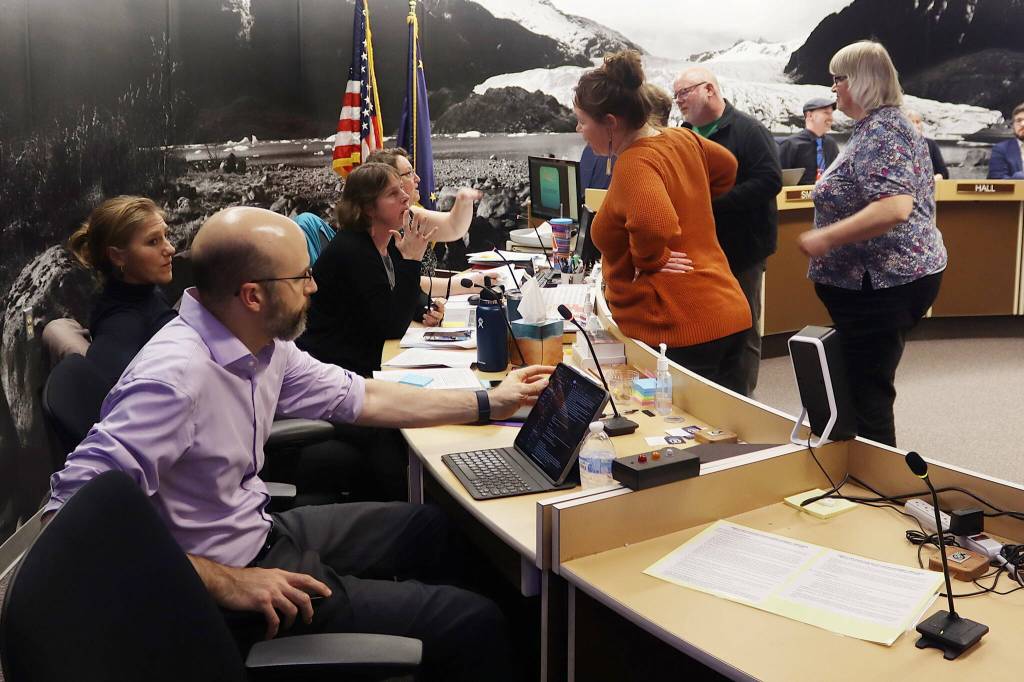
At last week’s CBJ Assembly meeting, members discussed boosting Juneau’s property tax millage rate as well as proposals to place another $30 million in bonds on this year’s ballot.
The two new bond proposals are $20 million to upgrade water and wastewater utilities, and $10 million for Juneau School District capital improvement projects.
Last fall, did anyone foresee the need to ask for another $20 million on top of the $10 million voters just approved for wastewater? Had voters been made aware of that prior to the election, they may have had questions about city management and finances of utility operations.
This is occurring amid a backdrop of spectacular water and sewer rate increases. In December, residents were warned of proposed increases of more than 60% in water rates and 80% in sewer rates over the next five years. According to the city, a current total monthly water and sewer bill of $147 would rise to $258 by 2029, a combined 76% increase.
The new bonds would moderate some of the increase, but only enough to barely offset the additional 5% CBJ sales tax most residents will pay.
City bonding capacity is not unlimited. It will be tested even further when CBJ is responsible for tens of millions of dollars in matching funds for flood mitigation projects and when the Second Channel Crossing project is approved.
The sudden emergencies that have continued to crop up in budget discussions over the last several years are troubling. The police communications bond (while necessary) was an emergency, and now school building repair and utility upgrades are critical. These may be legitimate projects, but why are they ignored for so long that they become emergencies?
Today, when faced with a real crisis (the threat of widespread glacial flooding), the Assembly’s knee-jerk reaction is to jack up taxes and debt to preserve their status-quo spending.
Taxpayers deserve to know why the Assembly is perfectly willing to balloon our debt for so-called critical projects while they have no problem sequestering millions for discretionary Assembly grants and squirreling away $16 million of taxpayer funds for a new city office building. Rejected twice by voters, the bulk of the fund created by the Assembly for that project remains unused and available for other uses.
Instead of a new office building, city leaders decided to rent expensive office space to house employees. But they are considering spending $8-11 million in repairs and improvements to vacated school buildings — space that could be used for offices. Does that make sense?
Assembly members apparently have also agreed to double cruise ship docking fees by adding another $7 per berth tax on top of the existing $7 fee.
Higher cruise dock fees, while increasing revenues, seem less transparent when learning the Assembly intends to use them for dock-related operating expenses, traditionally funded by Marine Passenger Fees (MPF). Freeing up MPF funds in this way allows a wider range of uses in projects and services that presumably address cruise tourism impacts. As readers will recall, the “wider range of uses” apparently includes the millions of dollars the Assembly has shoveled into the voter-rejected arts and culture center, all without the approval of voters who will be taxed to operate and maintain it.
Taxpayers should rightfully question why community priorities like public safety, utilities, and schools are put on the ballot while the Assembly allocates large cash appropriations for discretionary grants and projects that voters have rejected.
Little, if any, consideration is being given to reducing the budget in any significant way to address Juneau’s affordability.
Assembly priorities should promote affordability. Taxes diverted for discretionary projects could be used for paying down debt or rebating back to taxpayers, thereby lowering property taxes and the overall cost of housing.
City leaders seem to believe that no matter what the financial demands are, they can be met from an endless pot of money.
Ultimately, one way or another, that means it will be coming from the often ignored and increasingly stretched Juneau taxpayers.
• After retiring as the senior vice president in charge of business banking for KeyBank in Alaska, Win Gruening became a regular Opinion Page columnist for the Juneau Empire. He was born and raised in Juneau and graduated from the U.S. Air Force Academy in 1970. He is involved in various local and statewide organizations. Columns, My Turns and Letters to the Editor represent the view of the author, not the view of the Juneau Empire. Have something to say? Here’s how to submit a My Turn or letter.