Trump declines to rule out recession as tariffs begin to bite
Published 9:30 pm Saturday, March 8, 2025
President Donald Trump declined to rule out the possibility that his economic policies, including aggressive tariffs against America’s trade partners, would cause a recession in an interview aired Sunday on Fox News.
Trump also told Maria Bartiromo, the host of “Sunday Morning Futures,” that he was considering increasing tariffs against Mexico and Canada.
In the interview, which took place Thursday at the White House, Bartiromo referenced “rising worries about a slowdown” and asked Trump: “Are you expecting a recession this year?”
“I hate to predict things like that,” Trump responded. “There is a period of transition, because what we’re doing is very big. We’re bringing wealth back to America. That’s a big thing, and there are always periods of, it takes a little time. It takes a little time, but I think it should be great for us.”
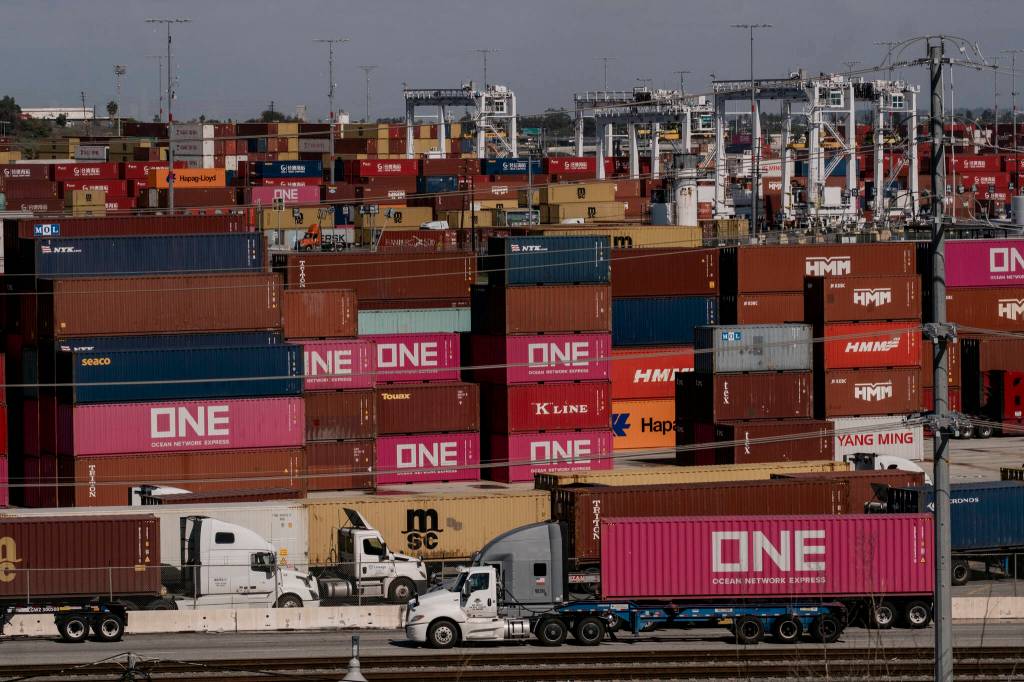
Trump’s imposition of tariffs on Canada, Mexico and China last week rocked stock markets and invited pushback from industries, including the largest automakers, who told the president that the duties would decimate their business. Canada immediately retaliated with tariffs on $20.5 billion worth of American exports and threatened additional measures. China has also placed tariffs on U.S. goods and plans to impose another round Monday.
On Thursday, Trump abruptly reversed his 25% tariffs on many Canadian and Mexican exports.
But the president is planning more tariffs soon — increasing the odds of an economically damaging global trade war. On Wednesday, his administration is set to put in place a 25% tariff on all foreign steel and aluminum, which he previewed last month. And the president has said to expect further levies on April 2, when he plans to impose what he is calling “reciprocal tariffs” to answer back to other countries’ tariffs and other trading practices.
Bartiromo told Trump that business leaders appreciate certainty: “The public companies want to make sure that we have clarity after April 2, when those reciprocal tariffs go in. Are you going to change anything after that? Will we have clarity?”
“We may go up with some tariffs. It depends. We may go up. I don’t think we’ll go down, or we may go up,” Trump said. “They have plenty of clarity. They just use that. That’s almost a sound bite. They always say that we want clarity. Look, our country has been ripped off for many decades, for many, many decades, and we’re not going to be ripped off anymore.”
Economists have turned gloomier on the economic outlook amid Trump’s dizzying approach to tariffs, which has fueled considerable uncertainty and hamstrung businesses considering new investments and hiring. The concern is that the ongoing volatility chills this activity further, intensifying an economic slowdown that is already underway.
Heading into Trump’s second term in the White House, the economy had downshifted to a more modest pace of growth, the labor market had cooled and inflation, although still sticky, was well off its 2022 peak. The economic backdrop is still solid by many metrics, but policies like tariffs, deportations and steep government spending cuts that are central to Trump’s economic agenda are expected to test that resilience.
Tariffs, for example, are broadly expected to raise prices for everyday goods while also dampening growth as businesses and consumers are forced to redeploy resources and cut back on spending elsewhere. Elevated inflation has limited to a degree how much the Federal Reserve may be able to support the economy if conditions deteriorate. For the time being, the central bank has opted to keep interest rates on hold at 4.25% to 4.5%.
Jerome Powell, the Federal Reserve chair, reiterated Friday that the Fed was not in a “hurry” to lower interest rates because the economy remained in good shape, but acknowledged the potentially disruptive nature of Trump’s plans, especially on inflation.
Lackluster growth combined with rising prices has stoked fears of stagflation, a toxic combination that would put the Fed in an even more difficult position.
In an interview Friday, Austan Goolsbee, president of the Chicago Fed and a voting member on this year’s policy-setting committee, said that such a dynamic was increasingly “on the radar screen,” especially as he heard from companies in his district that they were grappling with an “uncertainty-induced chill.”
Speaking on “Meet the Press” on Sunday, Commerce Secretary Howard Lutnick said that tariffs would help “grow our economy in a way we’ve never grown before.”
Asked about forecasts from banks like JP Morgan and Goldman Sachs, which say a recession in the next 12 months has become more likely, Lutnick said that Americans should not be bracing for a recession.
“I would never bet on recession,” he said. “No chance.”
Lutnick claimed that the Trump administration’s efforts to reduce government deficits would drive interest rates down, while drilling more oil would also bring down the price of energy. He acknowledged that tariffs could increase the price of foreign goods, but said that domestic goods would get cheaper.
Many economists have expressed other views, saying that tariffs on foreign products can help U.S. companies become more profitable by giving them space to raise their prices, as well.
“Foreign goods may get a little more expensive,” Lutnick said. “But American goods are going to get cheaper, and you’re going to be helping Americans by buying American.”
• This article originally appeared in The New York Times.