Trump administration rescinds freeze on federal grants and loans
Published 9:30 pm Tuesday, January 28, 2025
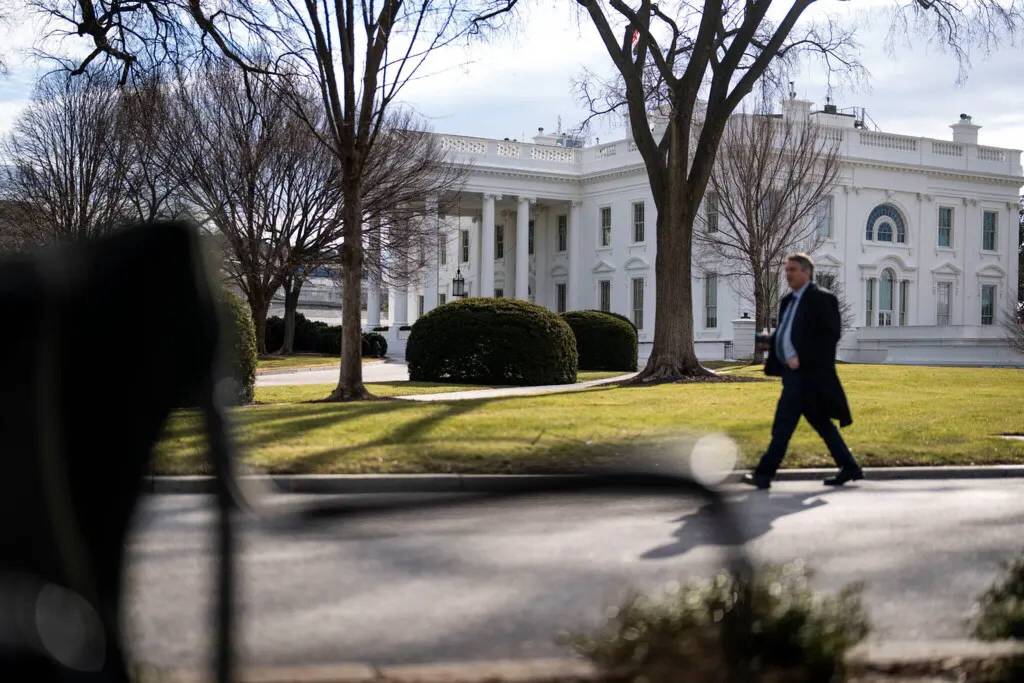
The White House on Wednesday rescinded a directive that froze trillions of dollars in federal grants and loans after the order led to mass confusion and legal challenges that accused the Trump administration of violating the law.
The order, issued Monday night, was an attempt to purge the government of what President Trump has called a “woke” ideology. A federal judge in the District of Columbia temporarily blocked it Tuesday afternoon, but the lack of clarity sent schools, hospitals, nonprofits and other organizations scrambling to understand if they had lost their financial support from the government.
On Wednesday, Matthew J. Vaeth, the acting director for the Office of Management and Budget, told federal agencies that the memo freezing aid had been “rescinded.”
In a brief notice, Mr. Vaeth said: “If you have questions about implementing the president’s executive orders, please contact your agency general counsel.”
The decision to pull the directive was a significant reversal and the first major capitulation by Mr. Trump since returning to the White House. Less than two weeks into his term, he has not hesitated to use his executive power to reshape the federal government in his image and rid the work force of any dissent.
Karoline Leavitt, the White House press secretary, wrote on social media that “This is NOT a rescission of the federal funding freeze.” She said the president’s executive orders on federal funding “remain in full force and effect, and will be rigorously implemented.”
She appeared to be referring to the fact that the executive orders Mr. Trump signed last week — which directed government agencies to review and eliminate spending on so-called woke ideologies — remain in force.
Monday’s Office of Management and Budget memo was an effort to carry out those executive orders by freezing all spending while the administration determined which programs violated the president’s directive. That memo is no longer in force.
But the underlying presidential intention remains, and the administration is expected to find other ways to put Mr. Trump’s wishes into practice.
Still, the chaotic 48 hours suggested that Mr. Trump and his allies had overestimated their ability to impose ideological purity tests on federal funding. The order interrupted the Medicaid system, which provides health care to millions of low-income Americans, and left thousands of people in limbo.
The confusion recalled Mr. Trump’s haphazard rollout of travel restrictions on Muslim-majority countries during his first term, limits that ended up being blocked temporarily and pared back in court.
During a bill signing on Wednesday, Mr. Trump accused the media of mischaracterizing the rollout of his directive and said his administration was “merely looking at parts of the big bureaucracy where there has been tremendous waste and fraud and abuse.”
The disruption appeared to invigorate Democratic opposition and allowed Mr. Trump’s political opponents to find a unified message.
Senator Patty Murray of Washington, the top Democrat on the Appropriations Committee, called the decision to rescind the order “an important victory for the American people,” commending those who spoke out against it and put pressure on the White House.
She accused the Trump administration of sowing chaos through “a combination of sheer incompetence, cruel intentions and a willful disregard of the law.”
Skye Perryman, the chief executive of Democracy Forward, a liberal organization that filed the lawsuit that led to the temporary block on Mr. Trump’s order, said the directive was “unlawful” and “had a callous and harmful effect on millions of Americans.”
“They thought that no one was going to hold them accountable,” Mr. Perryman said.
Federal agencies on Wednesday raced to keep pace with the reversal by the White House.
On Wednesday morning, the Housing and Urban Development Department sent an email ordering researchers to stop work on their federally funded projects immediately while officials undertook a “comprehensive review.” Then on Wednesday afternoon, the department sent another email, this time saying that researchers could continue their work because the budget office memo had been rescinded.
Companies that provide technology support and other services to the federal government were also struggling to understand the implications of Mr. Trump’s executive actions.
David Berteau, the president of the Professional Services Council, a trade group for federal contractors, said that some firms were not being paid for work they did before Mr. Trump took office. Banks were declining to lend to companies whose federal contracts are drying up, while smaller companies were preparing to furlough workers, Mr. Berteau said.
“We have had a number of member companies who have notified us that they will begin furloughing people as soon as possibly the end of this week,” he said.
The precise scope and effect of the freeze was revealed in part by the declarations of state officials in a lawsuit they filed Tuesday to block the Trump administration’s order. In Arizona, $200 million was inaccessible as of midday Tuesday.
Colorado, Rhode Island and New Jersey said they had been locked out of the Payment Management Services system, which processes billions of dollars each in year in grant payments to the states.
Washington State said that as much as 32 percent of its fiscal year budget was potentially at risk. Even a temporary pause, the state said, “would interfere with critical state programs,” including substance abuse treatment, school lunches, highway maintenance and child care for low-income workers.
New Mexico said that with the freeze in place, it expected to run out of cash within five months. Minnesota said it was locked out of a Medicaid system and could not submit a request for $408 million.
Diane Yentel, the president and chief executive of the National Council of Nonprofits, said that nonprofits across the United States could now “breath a sigh of relief.” She said the halt on funding would have affected “critical programs from homeless and housing assistance, to disaster relief and rebuilding, to rape crisis centers and suicide hotlines.”
Kendra Davenport, the chief executive of Easterseals, a charity that gets federal grants to help people with disabilities, said that her affiliates experienced a temporary halt in funding on Tuesday from at least three federal streams: the Labor, Health and Human Services and Housing and Urban Development Departments.
Ms. Davenport said some of the charity’s affiliates were in a panic, calculating that they could afford to work for only a few days without federal funds.
The reprieve, Ms. Davenport said, was a warning that much bigger, and lasting, cuts could be coming.
“We did not imagine it could happen. And we were not prepared for it. And the shock was, how could this happen? This is federal funding that we competed to receive, and were awarded, in a very highly competitive process,” Ms. Davenport said. “For certain, it wouldn’t be taken away. No. Not for certain at all. And that was sobering, to say the least.”
• Reporting was contributed by Mattathias Schwartz from Philadelphia, and Glenn Thrush, Michael D. Shear, Emily Badger, Andrew Duehren, Nicholas Nehamas and David A. Fahrenthold from Washington. This article originally appeared in The New York Times.