Tribal recognition bill arrives with lessons
Published 9:30 pm Wednesday, July 27, 2022
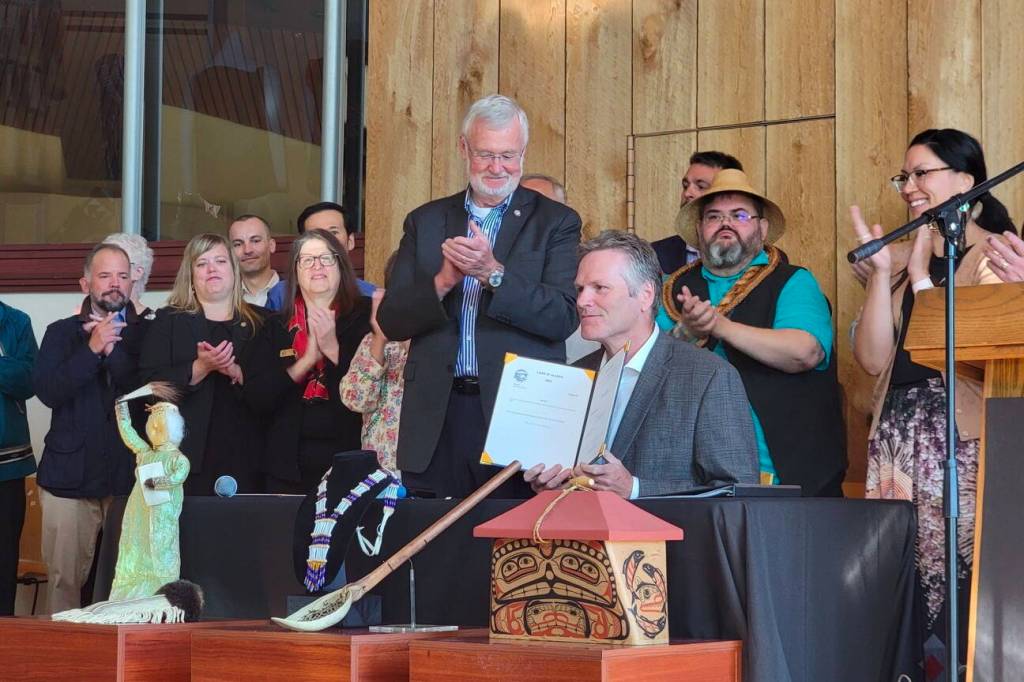
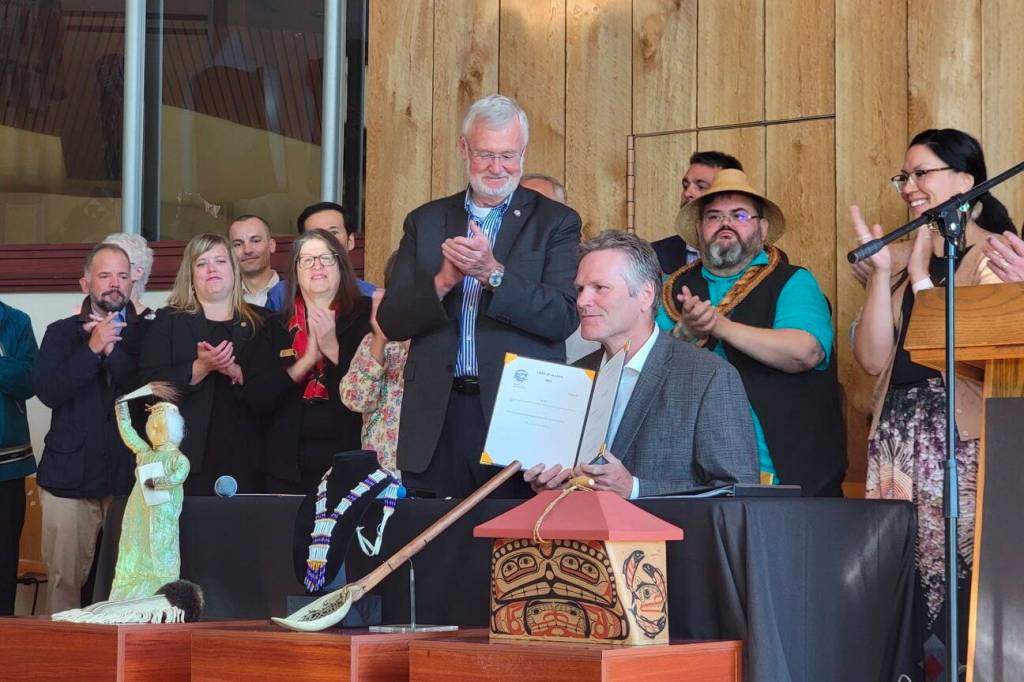
A day Alaska tribes got big headlines for a huge symbolic win with long-sought state recognition also was a lesser-publicized occasion for some substantial schooling in the form of a tribal-state pilot program now on the horizon.
The signing of a bill recognizing Alaska’s 229 federally recognized tribes was the highlight event during a four-hour event at midday Thursday, where Gov. Mike Dunleavy briefly did his official duty between an array of dances and speeches from the roughly 200 Alaska Native attendees at the Alaska Native Heritage Center in Anchorage. But since the bill has no impact on tribes’ legal relations with the state, the emphasizes was on hopes for an improved working relationship.
“If it doesn’t change anything legally, what’s the point?” said Rep. Tiffany Zulkosky, a Bethel Democrat who sponsored House Bill 123, repeating a question she says she’s been asked frequently. “Alaska has had a long, hostile and tenuous relationship with its tribal governments, and yet Alaska relies on tribes and tribal governments to provide its essential services.”
While numerous recent and ongoing conversations about leveraging federal relationships with tribes and expanding state involvement have occurred, “how can you expand relationships with tribes if you’ve never taken the most fundamental step of working with them in its legal code?” she added.
Dunleavy, who’s frequently been at odds with tribes with challenges to their sovereignty during his first term, chose to highlight the harmonizing moment by repeatedly referring to protests, riots and destruction of monuments in other states due to racial and cultural tensions.
“In Alaska we add things to complete our history” rather than tearing them down, he said.
Having youths learn from elders sets an example others can follow, Dunleavy added.
“As long as we’re dedicated to working together and not divided ourselves Alaska can be shining star for the country,” he said.
The day’s “other” bill signing during the ceremony may ultimately make a much longer journey toward achieving that goal.
Allowing tribes to apply to establish compact schools is now permitted with Dunleavy’s signing of Senate Bill 34. Sponsored by Sen. Gary Stevens, a Kodiak Republican, proponents say it will expand school choice options, give tribes greater control over education programs for tribal members, and create opportunities to incorporate Native cultures and languages into tribal school curricula.
“It’s not just for Native students, but for all students as we move through our schools,” he said.
Stevens noted one of the prominent advocates for the bill was Julie Kitka, president of the Alaska Federation of Natives, and said its enactment will allow her to pursue the pilot program in the most substantive way possible.
“I know once this bill is passed and signed she will use that to get a lot of federal funds coming in to use in those schools in ways that will be creative,” he said.
Juneau already has extensive Alaska Native educational content in schools, and Kristin Bartlett, chief of staff for the Juneau School District, said she isn’t aware of any local entities that have expressed interest in establishing a compact school as permitted by the bill.
“But I would imagine there would be interest in taking advantage at some point in time,” she said.
• Contact reporter Mark Sabbatini at mark.sabbatini@juneauempire.com.