Tlingit and Haida president presents at UAS to start Alaska Native Heritage Month
Published 10:10 am Tuesday, November 6, 2018
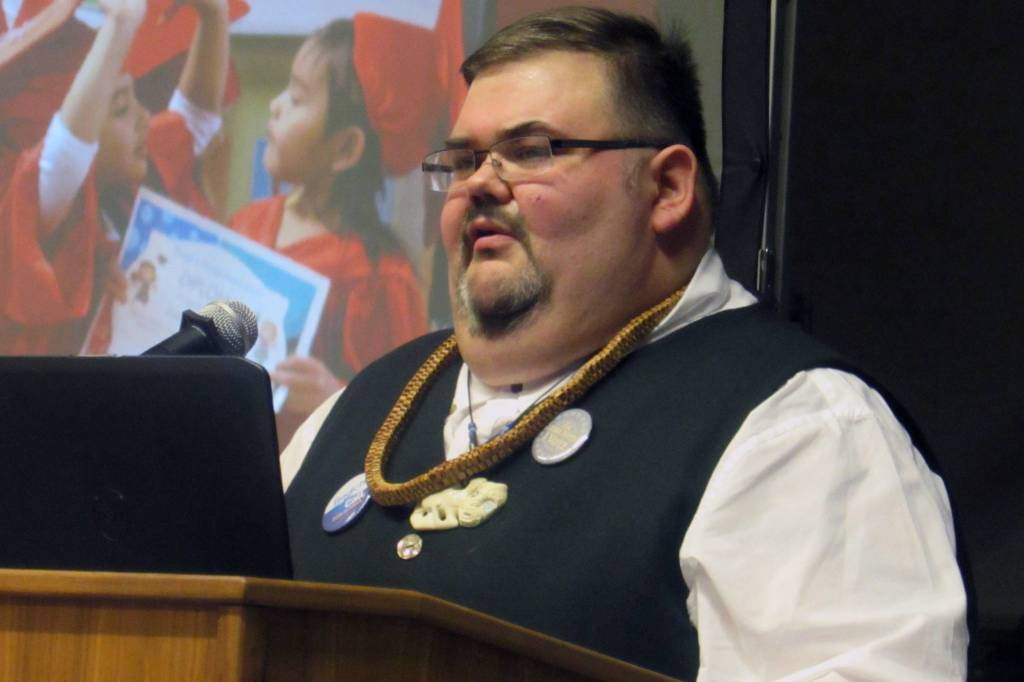
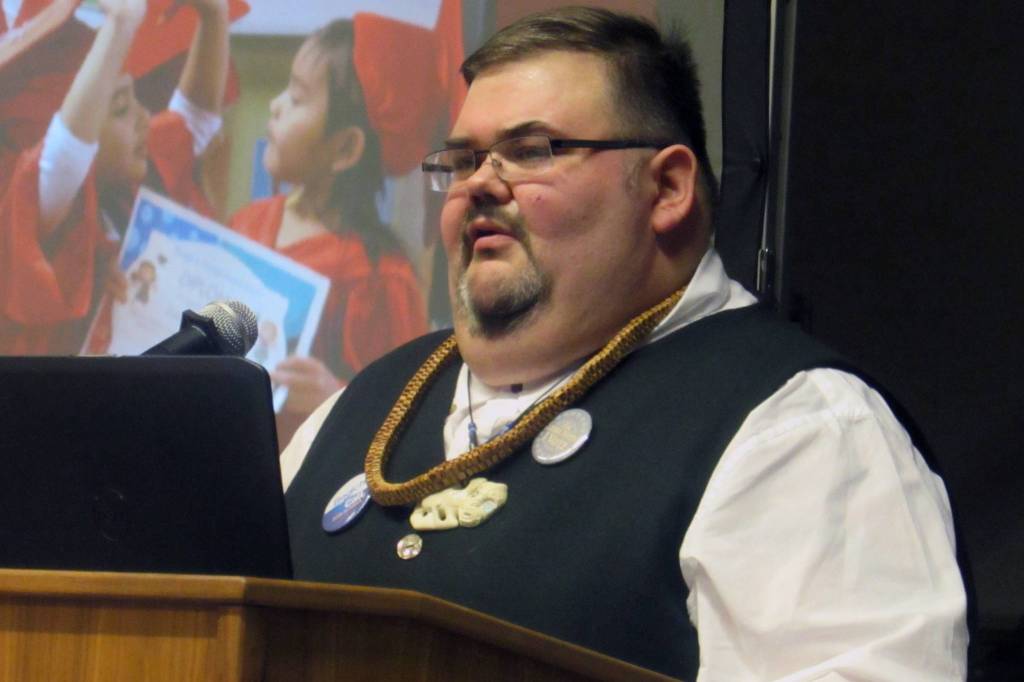


The youngest, second youngest and third youngest person ever elected Tlingit and Haida President spoke at University of Alaska Southeast on Friday night.
Richard Peterson, 42, Central Council Tlingit and Haida Indian Tribes of Alaska’s third-term president, holds all three of those designations. He spoke about tribal governance as part of the university’s Evening at Egan series and to kick off Alaska Native and Native American Heritage Month.
“Healthy tribes make healthy communities,” Peterson said. “That’s something you’ll hear from me a lot.”
During his speech, which is available to watch online , Peterson detailed some of the ways in which the local tribes are healthy and areas that could be improved.
He also explained some of the basics of tribal governance and discussed current-day challenges facing Tlingit and Haida.
“One of the things I find is most people don’t even know who Tlingit and Haida is or what we do,” Peterson said.
He said while Tlingit and Haida tribes have thousands of years of history, they have been federally recognized for about 80 years as a result of a lawsuit.
Peterson said Tlingit and Haida plays a role in how villages are policed, transportation and many other facets of life for Alaska Natives and described the basic form of governance.
Every two years, communities elect delegates, Peterson said. Juneau is the largest of the communities with more than 7,000 of about 31,000 worldwide tribal citizens.
Of the tribal citizens, about 15 percent are younger than 18, which is about equal to the barely more than 15 percent who are 65 or older. The remaining population falls somewhere in between, according to a slide shown by Peterson.
Delegates then handle governance changes and every two years elect an executive council, including the president.
“People ask a lot, ‘Every two years? That’s a lot,’” Peterson said. “For continuity’s sake, you’d probably wish for longer terms, but my belief is I should be held accountable, and I kind of consider it my report card.”
What could be improved
One thing that was repeatedly lamented by Peterson — as well as University of Alaska Southeast Vice Chancellor of Enrollment Management and Student Affairs Joe Nelson, who introduced Peterson to the audience, and audience member and UAS associate professor of Alaska Native Languages Lance Twitchell — was a lack of Alaska Native representation in classrooms.
Twitchell is a proponent of Native language immersion, and Nelson said Native history should be taught in public schools.
“It (Native history) is a big deal,” said Nelson, who is also chairman of the Sealaska board of directors. “It should be part of our general education requirements, but is not.”
Nelson said some elements of it are taught, and he was not bashing the education system, but it could stand to be improved.
Peterson said a language-immersion daycare is in the works, and that could be a stepping stone toward a K-12 immersion school.
Also, Peterson said he hopes Tlingit and Haida’s vocational school could expand to become a tribal college that could work closely with UAS.
In all educational endeavors, Peterson said he wants equal attention given to Tlingit, Haida and Tsimshian languages.
“We will have equity in language,” Peterson said.
Another thing Peterson highlighted as needing significant improvement is Village Public Safety Officer Program, which he characterized as being severely underfunded.
“You hear cuts to law enforcement, and times that by 100, and that’s us,” Peterson said.
He also said many villages lack adequate law enforcement presence in general, and asked the audience to imagine living in a “community where someone can be murdered and no one shows up.”
What’s going well
Peterson painted a relatively rosy financial outlook for Tlingit and Haida, which had a tribal trust fund of $21.99 million at the end of 2017, according to a slide shown during the presentation, and currently sits closer to $25 million.
He also outlined the success of business enterprises including Tlingit and Haida’s catering company, coffee shops, governmental contracts and more.
“In the next couple of years, we’re going to see some really big paydays to our tribes,” Peterson said, and he credited “amazing people in the tribe” with those successes.
Those numbers could soon be boosted by a cultural immersion park, which Peterson said is hoped to be opened and operated in 2021.
A 35-year lease agreement was reached between the Central Council and the City and Borough of Juneau in 2016 for a property on Thane Road — the former Thane Ore House — connected to the project.
It will included multiple buildings, a “ginormous” carving shed, repatriated items, a gift shop and more, Peterson said.
He also outlined successes related to transportation, the tribal court and more.
“If you’re not a tribal member, and you live in Juneau, you benefit from a healthy tribe,” Peterson said.