The original road to the glacier
Published 9:30 pm Friday, May 2, 2025
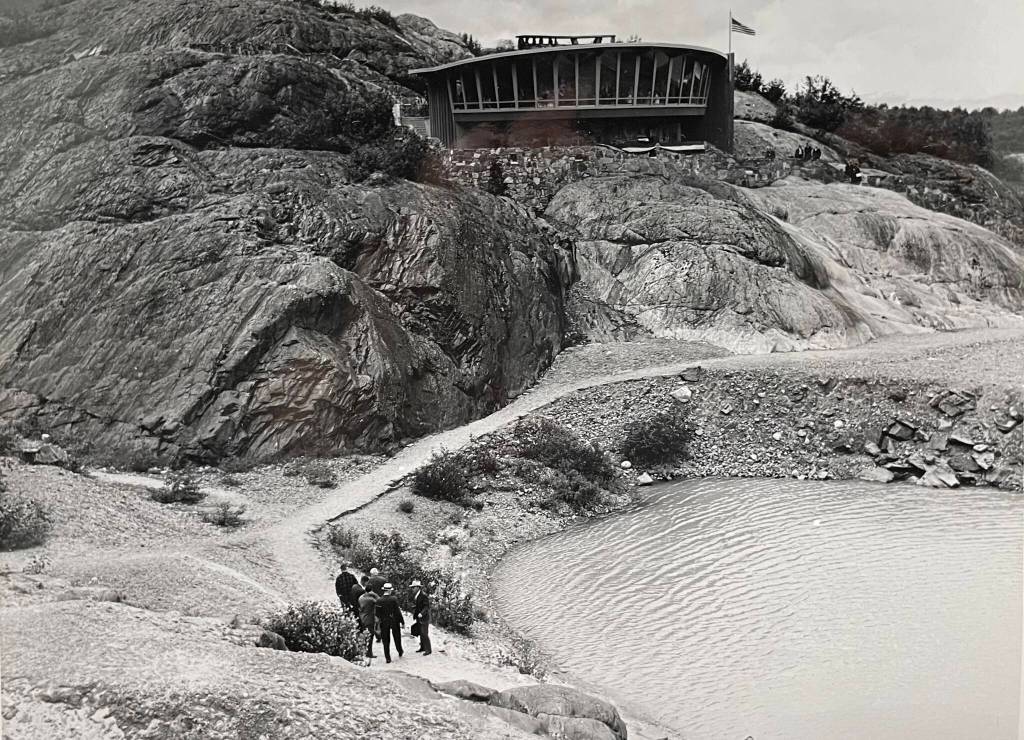
Despite the flurry of activity and development proposals in the 1960s, the first road to the glacier was not constructed for scenic access. It was for mining by Benjamin Bullard who staked placer gold claims in 1904-05 around Nugget Creek and the glacier, eventually locating a hydroelectric power claim which he sold to Treadwell Mining Company.
In the early 1900s Juneau and Douglas’s fortunes depended on gold mining. Gold processing mills used a lot of electricity. During those early years Annex Creek, Gold Creek, Sheep Creek and Salmon Creek all became hydroelectric resources to energize gold milling operations.
Nugget Creek was also utilized during that time to provide power to the Treadwell Mines in Douglas more than 15 miles away. The creek was initially diverted with a small temporary 25-foot high log dam so a 650-foot-long tunnel could be drilled in bedrock. Inside the tunnel a 48-inch diameter wood stave pipe began its more than mile-long journey channeling Nugget Creek water through a connected narrower 36-inch diameter steel pipeline to a powerhouse located at the toe of the glacier. (To envision the distance the glacier extended into Mendenhall Valley at that time, hikers should search for the powerhouse ruins in the woods beside the road.) This work was performed between 1910-1915. The original plan anticipated a 120-foot tall dam be built in Nugget Creek but only the temporary dam — built during low-water winter conditions starting in 1912 — was constructed. It was completed in 1915. The small dam still exists today. The larger dam was never built.
Meanwhile, the bustling gold operations in Douglas were facing decline. Then in April 1917 catastrophe struck. The Treadwell mines’ underground tunnels collapsed suddenly and Gastineau Channel seawater gushed into the caved-in underground workings, immediately halting most mining operations on Douglas.
Within a few years mines and hydropower plants were consolidated by the AJ Mine, and with Nugget Creek not as functional as other water-driven electricity, by 1934 things looked iffy for the plant by the glacier. When all mining operations ended in the 1940s, the Nugget Creek facility was “closed and boarded up,” according to the transcript of a Fireside Lecture presented in January 2005 by AELP’s historians David Stone and Scott Willis.
Ultimately, Nugget Creek hydro failed for three reasons: glacial silt from tiny Nugget Glacier destroyed plant equipment, cold weather in winter froze the flow of creek water and other projects such as Salmon Creek reservoir were more efficient. But the area was opened to curious people with a dirt road and the attraction of a truly accessible glacier.
Today, remnants of the metal hoops that held the pipe together along with iron train rails that were laid atop the pipeline can be seen on East Glacier Trail. The temporary log dam remains; sediment has filled in behind it. Occasionally the sediment plugging the tunnel ruptures and allows Nugget Creek to bypass its normal course and flow over AJ Falls. The concrete foundations of the power plant are covered with moss and forest overgrowth not far from the road. The plant was dismantled in 1965 to reduce public hazard.
• Laurie Craig has researched and written local history articles for the Empire for the past two years. She was a U.S. Forest Service park ranger at the glacier from 2004-2018 when she retired.