Sustainable Alaska: Adventures in a changing climate
Published 9:30 pm Tuesday, October 17, 2023


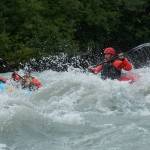
It’s difficult to quantify and rank the threats of climate change — how do you weigh the complete collapse of a Yukon salmon run against the forced relocation of village — yet whatever your priorities the impact of a changing climate on outdoor recreation is likely pretty far down the list. I recognize I’m in an extremely privileged place, both to be able to recreate in the beautiful and wild Lingít Aaní, and to be able to talk about the changes I’m seeing not to my livelihood or household, but to the things I do entirely for fun.
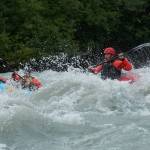
My friends and I have paddled the whitewater on the Mendenhall River for years now and — although the flow is always changing depending on rain and melting snow and ice — the rapids, boils, and boulders we found as we maneuvered downstream were pretty consistent. We became intimately familiar with each breaking wave; each turn around a rock as we bounced our way down the river under the Back Loop Bridge. There’s an idea at least as old as the ancient Greeks that you never step foot in the same river twice. Water flows one direction so it’s always different water beneath you, a different river carrying you downstream. Philosophically I can get behind this idea, but on a more practical level I can tell you that rivers are more consistent than you might imagine.
Yet the river we knew is gone. The jökulhlaup on Aug. 5 which destroyed homes and left dozens of families displaced has been replaced with a new river, one with new waves, turns and hazards. Newly eroded riverbanks are dropping large trees into the river at an alarming rate. In September a commercial raft became stuck on a fallen tree in the river, necessitating a rescue for the clients and guides by a private jet boat while trees continued to fall in the rain-swollen river.
Two years ago a US Coast Guard officer drowned while paddling the swollen Eagle River after several days of intense precipitation. While rain has shaped this landscape for thousands of years, a recent report from my colleagues at the Alaska Coastal Rainforest Center and the University of Alaska Southeast suggests that precipitation and atmospheric rivers are increasing in intensity and frequency. More recently, in July of this year a kayaker drowned on Mendenhall Lake in strong currents at the outflow of the glacier, a section of river which has only been exposed in the last decade as the Mendenhall Glacier retreats. Anyone who recreates outdoors in Alaska knows that many activities have inherent risk — the changing severity and frequency of these risks as the climate changes is yet another facet to consider when decision-making.
Much further upstream, the effects of climate change are being seen on even larger, if less destructive, way. In August of this year I had the opportunity to climb a peak on the Juneau icefield which has only seen a few attempts since the original ascent in 1973 by the legendary Fred Beckey. Beckey described his ascent as a straightforward snow ramp followed by “two class-5 pitches”. While we attempted to follow the original route, the snow ramp which Beckey used to access the rocky ridge had shrunk significantly 40 years later, requiring our party to climb several hundred feet of dangerously loose blocks no longer reinforced by snow and ice.
This phenomenon is not unique to Southeast Alaska. A recent study from 2022 found that mountain communities around the world are seeing increased hazards due to the melting of permafrost and glaciers. Slopes are becoming less stable leading to increasing landslides, and retreating glaciers are increasing the formation and volume of glacial lakes leading to glacial outburst floods.
It’s interesting to consider how the risks for outdoor recreation are changing. While in some ways adventurers can be safer than ever with the popularization of satellite communication devices, modern safety equipment, and safety education — new risks are appearing and disappearing as our landscape is altered by climate change. Fred Beckey may have not noticed loose rock on his climb in the ‘70s, and paddlers of the Mendenhall would likely not have dreamed that an ice dam could quadruple the flow of the river in just a few hours. Yet those dangers are present for adventures now and may continue to pose a threat to the next generation of explorers.
Maybe you can’t step foot in the same river twice after all.
• John Harley is a researcher at the University of Alaska Southeast and a member of the Sustainability Committee. Sustainable Alaska is a monthly feature by the University of Alaska Southeast Sustainability Committee. The views expressed here do not necessarily represent the views of the University of Alaska Southeast.