Southeast tribes unite to oppose lifting Roadless Rule
Published 1:00 pm Thursday, October 31, 2019
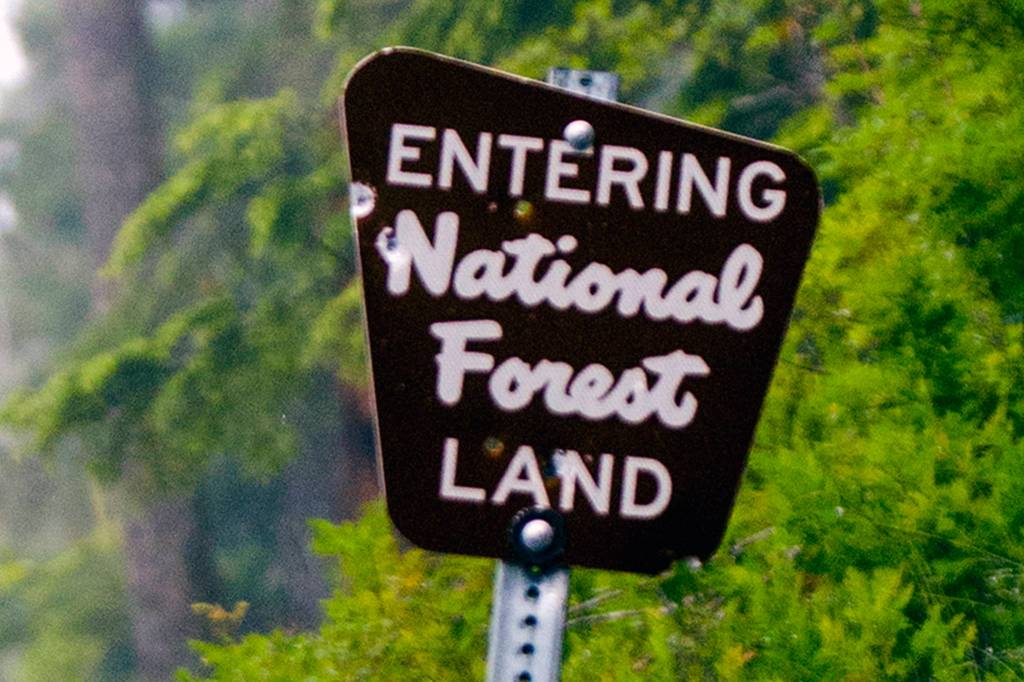


Six tribal governments in Southeast Alaska on Tuesday issued a joint statement condemning the Forest Service’s plan to roll back the Roadless Rule, which protects 9.2 million acres of the Tongass National Forest from development.
The tribes’ statement accused the federal agencies involved with the planning process of ignoring tribal government’s concerns, and said they were “deeply disappointed” by the process.
“The year-long process … has not been designed to be fair or equitable from the beginning and has completely ignored the Tribal governments’ voices and concerns,” said the statement. The six tribes are the Angoon Cooperative Association, Central Council of Tlingit & Haida Indian Tribes of Alaska, Hoonah Indian Association, Hydaburg Cooperative Association, Organized Village of Kake and Organized Village of Kasaan.
The Forest Service could not immediately be reached for comment.
It’s rare for tribes to show unity like this, said Joel Jackson, council president of the Organized Village of Kake.
“We all got different issues, even in this situation, there’s some of us that have different opinions on this,” Jackson said by phone Thursday. “But we’ve all decided that we need to come together to have a unified front on this.”
The group is one in a growing list of those in Southeast who are voicing opposition to lifting the Alaska Roadless Rule, ever since Oct. 15 when the U.S. Department of Agriculture, which oversees the Forest Service, laid out six potential alternatives to the Roadless Rule. USDA’s preferred alternative (Alternative 6) would fully exempt the Tongass National Forest from the national Roadless Rule. The five other alternatives have a range of options including leaving the Roadless Rule entirely in place. Alternative 1, the “no action” alternative, has already been endorsed by environmental groups both in Alaska and nationally.
President Donald Trump expressed an interest in opening the Tongass to timber following a meeting with Gov. Mike Dunleavy, who supports lifting the Roadless Rule, aboard Air Force One in June, The Washington Post reported in August. U.S. Sen. Lisa Murkowski, R-Alaska, also supports lifting the Roadless Rule, and wrote an op-ed in the Post in September supporting its removal.
On Monday, the Alaska Longline Fishermen’s Association also weighed in this week by penning a letter to U.S. Secretary of Agriculture Sonny Perdue and U.S. Forest Service Chief Viki Christiansen requesting any changes to the rule be made with conservation of fish habitats in mind.
“Please protect our livelihoods and Alaska’s salmon spawning grounds by selecting an alternative that broadly protects fish habitat,” the letter, signed by more than 220 fisherman, says, “continues the phase-out of industrial scale old-growth clear-cutting, and prioritizes the restoration of degraded watersheds and streams.”
[Politicians praise, conservationists condemn effort to amend Roadless Rule]
Eric Jordan, 70, is a commercial fisherman based in Sitka who fishes off his boar the F/V “I Gotta.” Jordan signed on the letter sent to Perdue and Christiansen because he says the forest is still recovering from industrial logging in the 1970s and ‘80s.
“I depend on cohos that need old-growth timber and unimpeded access (to rivers and streams),” Jordan told the Empire Thursday. “I make a living on commercial fishing. I live on subsistence, I hunt and fish to survive.”
Jordan said that he might support the third Alternative, which would open up some timber lands but provide protections for key watersheds. But he said he doesn’t trust the leadership of Dunleavy or Trump.
“The top-down, arbitrary position they taken over all the other people involved in the Tongass is just wrong,” Jordan said.
Last Thursday, the Borough Assembly of Skagway passed a resolution opposing Alternative 6 and endorsing Alternative 1. Skagway’s economy is highly dependent on tourism, the resolution says, citing that industry as the town’s main economic driver.
“Tourism in Skagway, the Inside Passage, and the broader region of Southeast Alaska is dependent on maintaining pristine, wild landscapes of the surrounding coastal temperate rainforest and the iconic wildlife it supports,” the resolution says.
[Roadless Rollback? Dunleavy and Trump eye Tongass National Forest.]
Those who support lifting the Roadless Rule say it’s needlessly burdensome, and that there are still numerous protections already in place for the Tongass.
Owen Graham is executive director of the Alaska Forest Association, a logging industry group.
“The Forest Service pretty much has monopoly power over the land in Southeast Alaska,” Graham said. “We need access to that land for resource development.”
Graham said the exemption to the Roadless Rule would not affect the Forest Service’s 2016 Forest Management Plan which provides a number of protections to the forest.
The Forest Service must create and occasionally revise land and resources management plans for national forests, according to the National Forest Management Act of 1976. The Tongass’ 2016 plan says timber harvest is prohibited on inventoried roadless areas.
“Removing the Roadless Rule will not affect the (2016) plan,” Graham said. “What it does is allow the Forest Service to make a plan to include Tongass.” That process would take several years and be subject to public comment and environmental review.
“Before authorizing a land-use activity, the Forest Service must complete a site specific environmental analysis, pursuant to the National Environmental Policy Act (NEPA) and its implementing regulations,” the Regulatory Impact Statement for the Roadless Rule alternatives says.
Graham, like those supporting the Roadless Rule and its protections, says people’s economic livelihoods are at stake. He was referring to the Viking Lumber sawmill on Prince of Wales Island. The Viking mill is not Southeast Alaska’s last mill, but it is the last of any considerable size.
“We’re getting pretty desperate,” Graham said. “We don’t want to lose our last sawmill. All those people that work out there, they’re going to have to leave Alaska. There’s no other opportunity out there.”
Weigh in
Public comment on the DEIS for the Alaska-specific Roadless Rule exemption will be accepted until Dec. 17 and can be made to the Forest Service website.
• Contact reporter Peter Segall at 523-2228 or psegall@juneauempire.com.