Second-worst chinook forecast since ‘95
Published 6:00 am Wednesday, December 5, 2018

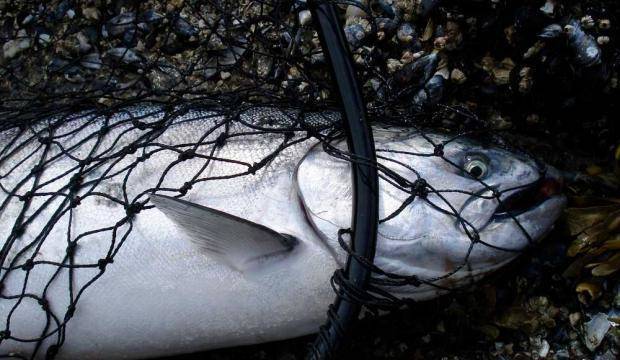


Numbers released last week by the Alaska Department of Fish and Game forecast “very low” numbers of chinook salmon will spawn this summer on the Taku and Stikine rivers.
This is the fourth straight year that too few salmon were expected for there to be an allowable catch.
“It’s been trending down for quite awhile,” said David Harris, area management biologist for Juneau for the Alaska Department of Fish and Game commercial fishers division. “Hopefully things start to improve.”
ADF&G expects 9,050 adult chinook will spawn on the Taku River, which means there is no allowable catch expected because the expected number is well below the escapement goal range of 19,000-36,000 fish, according to the report. The report forecasts 8,250 chinook will spawn on the Stikine River, which is below the escapement goal range of 14,000-28,000 fish.
“Due to the very low forecasts and recent poor runs to these transboundary rivers, all salmon fisheries in Districts 8 and 11 will have extensive conservation measures in effect through the duration of the chinook salmon runs in 2019,” states the ADF&G report, which was issued by the division of commercial fisheries.
Escapement goal ranges represent the number of chinook the ADF&G estimates are needed to keep the run healthy. This is the fourth year in a row that the ADF&G has estimated too few chinook will return to the Taku and Stikine rivers.
The estimated terminal run size represents how many Chinook the agency expects to spawn every summer based on data gathered from fisheries during the summer months. The report is issued annually in December.
“For the fourth year in a row, the Alaska Department of Fish & Game has forecasted that too few Chinook will return to the Taku and Stikine rivers to support commercial fishing,” said Jill Weitz, Salmon Beyond Borders Campaign Director, in a statement. “This forecast adds urgency to the need to address abandoned, operating, and planned British Columbia large-scale mines upstream from Alaska in the Taku and Stikine watersheds, about which Alaskans have had very little meaningful input — despite receiving all of the risk and none of the benefits from these projects.”
While the numbers are lower than usual, they are an increase from last year’s predictions, which forecast some of the lowest figures since the mid-1970s. In 2018, ADF&G expected only 4,700 Chinook will spawn on the Taku River and only 6,900 Chinook were expected.
“The forecasts are much improved from last year, but they’re still among the worst,” Harris said. “They’re probably the second worst ever.”
Harris said the numbers go back to 1995.
The reason for the low number of fish seems to be mainly driven by what happens to the fish once they leave fresh water systems, Harris said.
“It’s circling around ocean survival right now,” Harris said. “There’s no evidence the freshwater portion of a fish’s life cycle is compromised. Once they go out to sea, they’re just not coming back.”
Harris said there’s many factors, including predation and pollution, that could be impacting the salmon.
“We’ve improved from last year,” Harris said.“We’ve taken of really the only thing we can control and that’s harvest.”
Weitz expressed the hope that those who can control other environmental factors take action.
“It is Salmon Beyond Borders’ hope that Governor Mike Dunleavy joins the Alaska congressional delegation in pushing B.C. and Canada to follow through on decades of promises to clean up the abandoned, polluting Tulsequah Chief Mine in the Taku River watershed, and in defending Alaska’s fishing communities and Southeast Alaska’s overall economy,” Weitz said in a statement. “Alaska must have a strong role in establishing binding protections for transboundary salmon rivers like the Taku, Stikine and Unuk.”
It’s unknown whether the improved forecast represents an actual improvement or if last year’s forecast’s were so abysmal that some regression was unavoidable.
Whether the numbers are improving won’t become clear for several more seasons when more data is available.
“This year, there were some glimmers of hope,” Harris said. “We’re all kind of holding our breath. We just don’t know what to expect in a lot of cases.”
• Contact reporter Ben Hohenstatt at (907)523-2243 or bhohenstatt@juneauempire.com.