Salmon advocates: Dire Washington report offers warning to Alaska
Published 10:30 pm Thursday, February 25, 2021

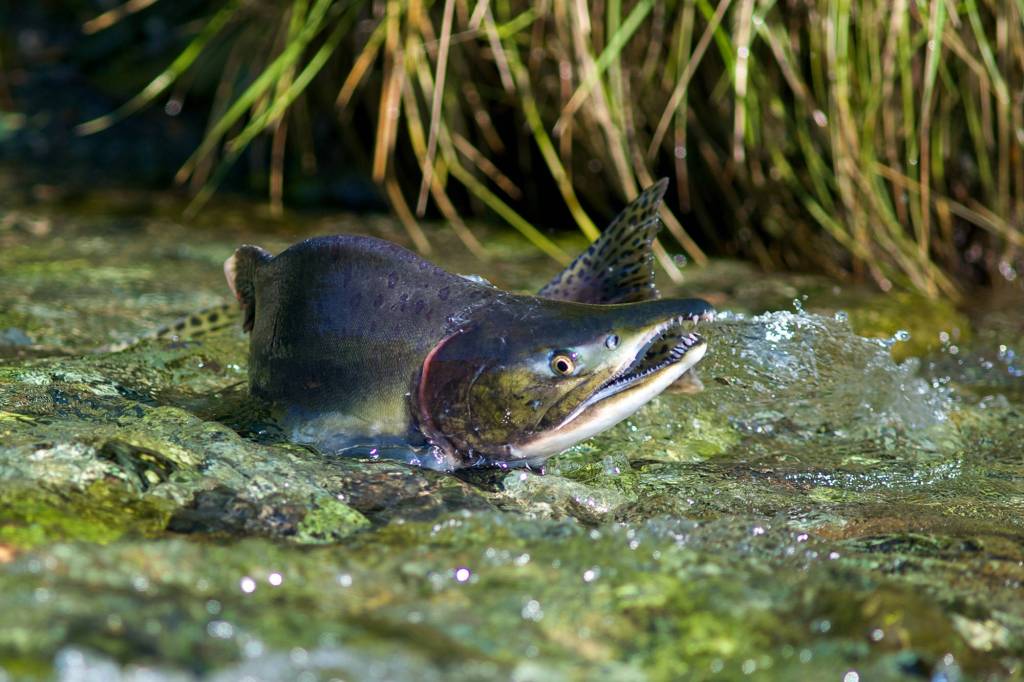
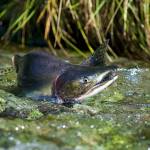
Salmon in Washington state are at the diverging paths of recovery and extinction, according to a recent report.
Although the exact circumstances are different in Alaska, where salmon runs remain relatively robust despite dwindling numbers in some portions of the state, salmon advocates in the Last Frontier say there are clear lessons that can be gleaned to prevent the state’s future from resembling Washington’s present as detailed in the 2020 State of Salmon in Watersheds report.
“We are absolutely replicating what they have done wrong,” said Lindsey Bloom, campaign strategist for SalmonState, in a Zoom interview. “We’re just a younger state in terms of development and whatnot.”
Bloom specifically cited potential development in the Tongass, proposed projects such as the Pebble Mine, proposed water regulation changes and a lack of salmon-safe requirements for hydroelectricity projects as some areas of concern.
Erik Neatherlin, executive coordinator of the Governor’s Salmon Recovery Office in Washington, said Alaska certainly has unique characteristics, but some concerns raised by the State of Salmon report are applicable.
In Washington, a State of Salmon report is prepared on a biennial basis, as directed by state statute. The Governor’s Salmon Recovery Office, the U.S. Fish and Wildlife Service and National Oceanic and Atmospheric Administration are among the agencies credited for producing the information contained in the report.
[Planet Alaska: Fishing for winter kings]
Neatherlin identified dealing with the impact of climate change and protecting the quality of freshwater and shoreline habitats as things important to salmon whether the fish are in Washington or Alaska.
“Those are all factors that I think would be lessons learned,” Neatherlin said in in a phone interview. “Especially, when you have a place like Alaska where you have a lot of habitat, a lot of freshwater, a lot of shoreline. Those are areas you want to pay attention to and make sure you’re protecting them for salmon.”
Alaska Department of Fish and Game Commissioner Doug Vincent-Lang, in a statement provided by a department spokesperson, acknowledged some commonalities shared by Alaska and Washington.
However, he said there are also some important differences, including relatively pristine freshwater habitats in Alaska.
“We share many of the same concerns but also differ on their relative importance,” Vincent-Lang said in a statement. “For example, in comparison to WA where freshwater habitats (are) a major issue Alaska’s freshwater habitats are relatively pristine and unaltered. And we have a robust Title 16 program to ensure for habitat conservation into the future. We are also involved in the Pacific Salmon Treaty as well as other international groups which help govern salmon management in the North Pacific to ensure salmon will be around for future generations.”
Title 16 requires that people or agencies that want “to construct a hydraulic project, or use, divert, obstruct, pollute, or change the natural flow or bed of a specified river, lake, or stream, or to use wheeled, tracked, or excavating equipment or log-dragging equipment in the bed of a specified river, lake, or stream” to notify the commissioner of their plans before construction or use.
Per statute, “the commissioner shall approve the proposed construction, work, or use in writing unless the commissioner finds the plans and specifications insufficient for the proper protection of fish and game.” The would-be builder or user is then notified of the decision and has 90 days to initiate a hearing.
Bloom said she would like to see policy with more explicit guidelines and protections.
“At this point, it’s more that Alaska has dodged bullets rather than having solid rules in place,” Bloom said in an email. “ADF&G has proven to be world class at managing runs but as a state we have been lucky rather than good when it comes to habitat management. Pebble Mine, Susitna Dam, stripping away roadless area protections for the Tongass, these are near misses and/or looming threats that will send Alaska down the exact same road as Washington. What we decide to do on these and other projects that threaten salmon habitat moving forward will determine whether Alaska’s salmon story remains different than Washington and almost everywhere else.”
• Contact Ben Hohenstatt at (907)308-4895 or bhohenstatt@juneauempire.com. Follow him on Twitter at @BenHohenstatt.