Congressional delegation: Resource development can be lifeline for Southeast
Published 10:30 pm Tuesday, September 22, 2020
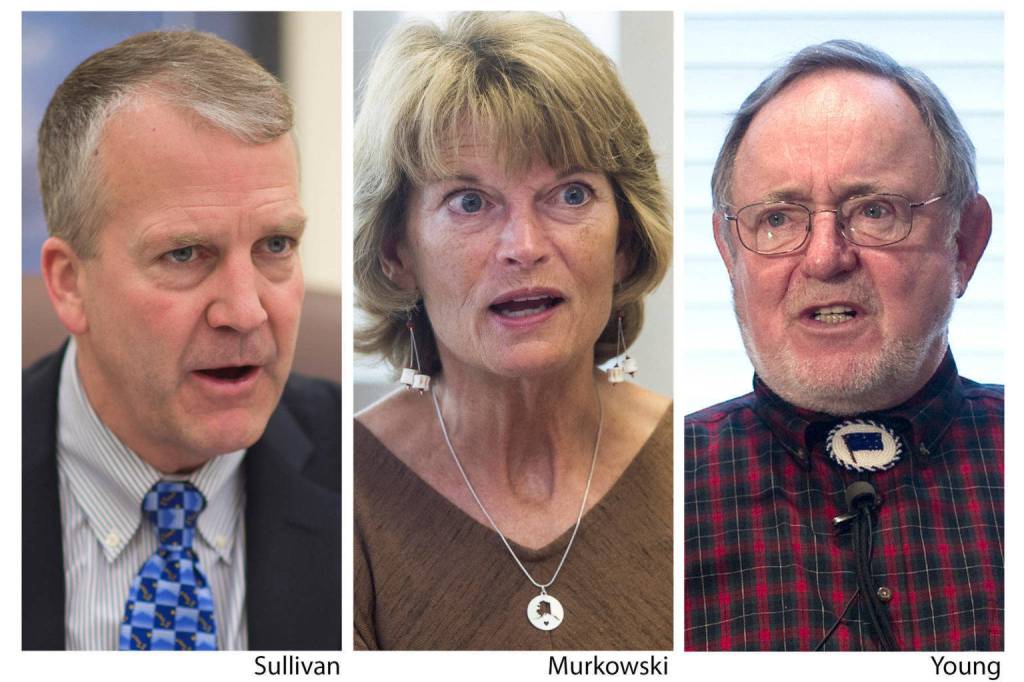
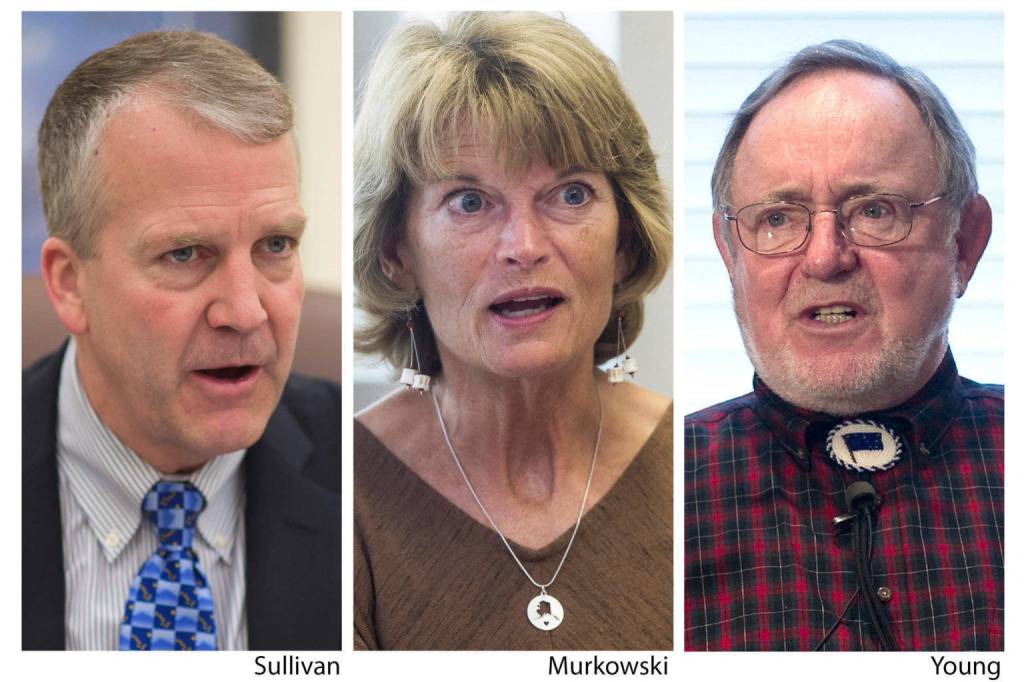


Southeast Alaska was hit harder than most other parts of the state by the COVID-19 pandemic, the state’s congressional delegation told a digital conference room Wednesday morning. The delegation spoke to the Southeast Conference Annual Meeting, held digitally this year, and the state’s senators and representative offered their vision of an economic recovery for the region.
Sen. Dan Sullivan and Rep. Don Young, both Alaska Republicans, spoke together, opening with an update on the delegation’s efforts in Washington.
“Southeast was hurt probably more than any other part of the state,” Young said, citing the lackluster tourism and fishing seasons over the summer.
Sullivan also pointed to Southeast’s specific troubles but said the Senate’s effort to pass another federal relief bill was stymied by Senate Democrats. That bill offered an additional $500 billion in relief funds, down from the $650 billion proposed by Republicans over the summer, according to the Associated Press. The larger amount was too much for some conservatives, and not nearly enough for Democrats who had passed a $3.4 trillion plan in the House in May, the New York Times reported.
The first CARES Act, set a record for the largest bill in U.S. history at $2.2 trillion and was what Sullivan called, “literally a lifeline to millions of small businesses and families,” and said the recent Senate bill was a more targeted relief bill.
[Sullivan: I look forward to seeing who the President nominates]
Democrats countered the bill was insufficient and not bipartisan. Earlier this month Senate Minority Leader Chuck Schumer, D-New York, said the Republican bill was “not going to happen because it is so emaciated, so filled with poison pills, so partisanly designed,” the AP reported.
But there was reason to be optimistic, the delegation said, both on the medical and economic fronts. Research is continuing on a vaccine and Alaska had a robust testing infrastructure which would be critical once the tourism industry returns, Sullivan said.
Alaska’s all-Republican delegation also touted Southeast’s resource industry as a potential source of economic development for the region and the state.
“If there’s a silver lining to (the pandemic),” Sullivan said, “it’s shown that we need to secure our supply chains,” particularly when it comes to minerals.
“This is a bipartisan issue,” he said. “We cannot continue to rely on foreign countries, especially China, for our minerals.”
The expansion of mining in Southeast was something mentioned by Sen. Lisa Murkowski, R-Alaska, as well, who pointed to the revenues and resources generated by the Kensington Gold Mine and the Hecla Green’s Creek Mine as positive examples of what the mining industry can bring to the region.
“This is all dependent on being able to develop our resources,” she said, which meant lifting the Roadless Rule on the Tongass National Forest.
Sullivan and Young mentioned the Roadless Rule as well. Young said he expected to get a “good” report back soon from the U.S. Department of Agriculture, which is currently reviewing regulations on the Tongass.
“The full exemption is something that I think will help our economy,” Sullivan said. “We can do it responsibly.”
Both Senators mentioned the importance of domestic mineral production for national security.
While advocating for a responsible resource industry in Southeast Alaska, Sullivan said he had also made progress with the Canadian government on cleaning up the Tulsequah Chief Mine Northeast of Juneau. The mine itself is in Canada but pollutants have been flowing into the Taku River which flows into Alaskan waters. Sullivan referenced a 2018 trip to Canada with then-Lt. Gov. Byron Mallot where he spoke to Canadian Prime Minister Justin Trudeau about transboundary mining.
In July, a Canadian court ruled the government of British Columbia would be responsible for cleaning the site. The mine site has been leaking pollutants since 1957 and its most recent owner, Chieftan Metals, went bankrupt in 2016, KSTK radio reported, and its creditor is still trying to recoup some of its losses and potentially sell the property.
The support for the resource industry follows on the heels of a report by an environmental investigative journalism group, EIA Global, which released videos of corporate executives behind the controversial Pebble Mine project near Bristol Bay talking about their close relationships with the State of Alaska and the congressional delegation.
Other resource industries in Southeast were hurting, too, Murkowski said.
“Unfair” tariffs China placed on Alaska’s timber had hurt Southeast’s logging industry, she said, but loggers had received a “tiny bit of relief” from the first phase of the trade agreement President Donald Trump signed with China earlier this year.
“The timber industry has had a tough go of it for far too long,” Murkowski said. “We are banging on the doors over there.”
The delegation voiced strong support for the Alaska Marine Highway System, particularly Young who said that a lot of education needed to take place about the impact ferries have on the rest of the state.
“It’s part of our intrastate program, if that system doesn’t function correctly it affects the whole state,” he said.
The delegation secures federal funding for highway transportation, Young said, and the state needs to start thinking about the ferries as part of the highway system.
“We have to revisit the ferry system on the state level. We could lose those (federal) dollars,” he said. “This is part of the Alaskan transportation system.”
Murkowski too mentioned the potential loss of federal dollars from lack of response to the 2020 Census.
“Alaska has the lowest response rate in the country,” she said. “If we undercount, we live with this for a decade. That translates into millions of dollars that our state misses out on.”
Murkowski urged attendees at the conference to promote the Census in their communities. She is working on getting an extension, she said, but “the reality is the deadline is still the Sept. 30. We have to assume that deadline is not going to be continued.”
The delegation also said there is bipartisan support for extending the end-of-year deadline to use CARES Act money, but only Young expressed optimism an agreement could be reached.
[City votes to create spending plan for federal relief money]
“Keep it in your pocket,” Young said of the CARES Act money. “We will get an extension I just don’t know when we’re going to do that.”
• Contact reporter Peter Segall at psegall@juneauempire.com. Follow him at @SegallJnuEmpire.