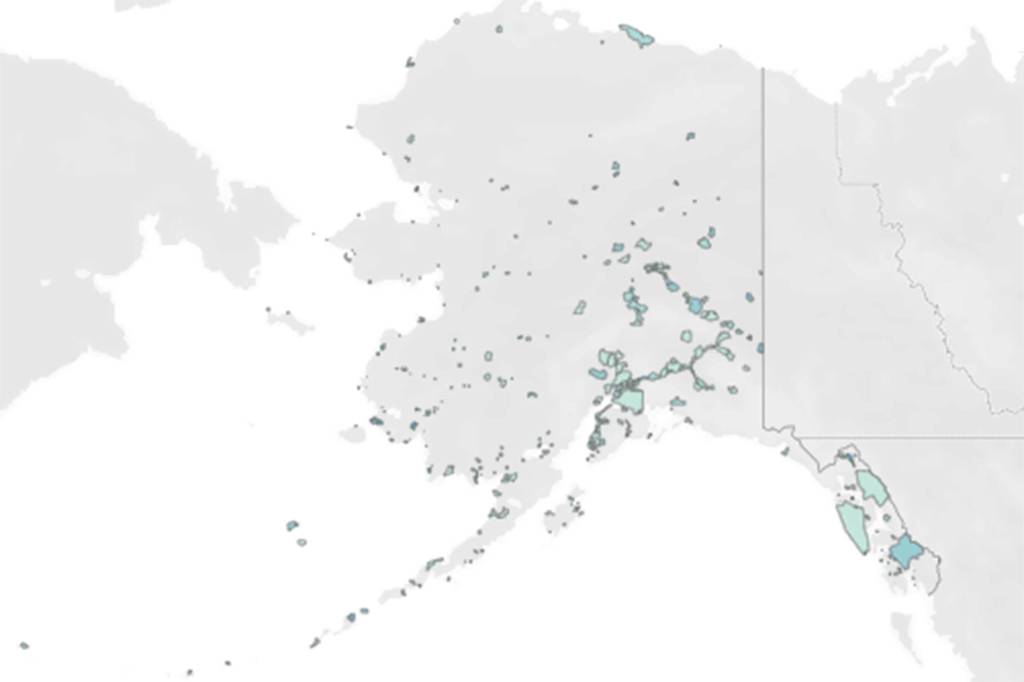
This screenshot from a project by University of Alaska Southeast postdoctoral researcher John Harley shows Alaska’s cities and census-designated places. Darker-colored areas on the map are communities with higher social vulnerability indices. (Screenshot)

This screenshot from a project by University of Alaska Southeast postdoctoral researcher John Harley shows Alaska’s cities and census-designated places. Darker-colored areas on the map are communities with higher social vulnerability indices. (Screenshot)

Researcher hopes map project can aid pandemic response

Work was done with Alaska in mind, but it could be adapted to other states and communities

Most maps of Alaska show governmental boundaries and geographic features, but offer little insight into where people live or which places might be especially vulnerable to pandemic or in need of relief.

A new project made by John Harley, a postdoctoral researcher at the University of Alaska Southeast, attempts to show exactly that via an interactive map of the state that identifies the pockets of populations scattered throughout the state and identifies potentially at-risk areas using factors such as age, financial security and more.

“The census regions and blocks and block groups that the Census Bureau uses to kind of slice up the populations, those work pretty well in heavily populated areas,” Harley said. “But one of the stipulations of those areas is they have to fill in the entire area of the stat, whereas in Alaska, you don’t have many people or any people living some pretty vast swaths of land. Having a
social vulnerability index that’s calculated for this huge area —kind of like Northwestern Alaska —it’s not really representative of where people are actually living, so that was sort of one of the motivations. ”
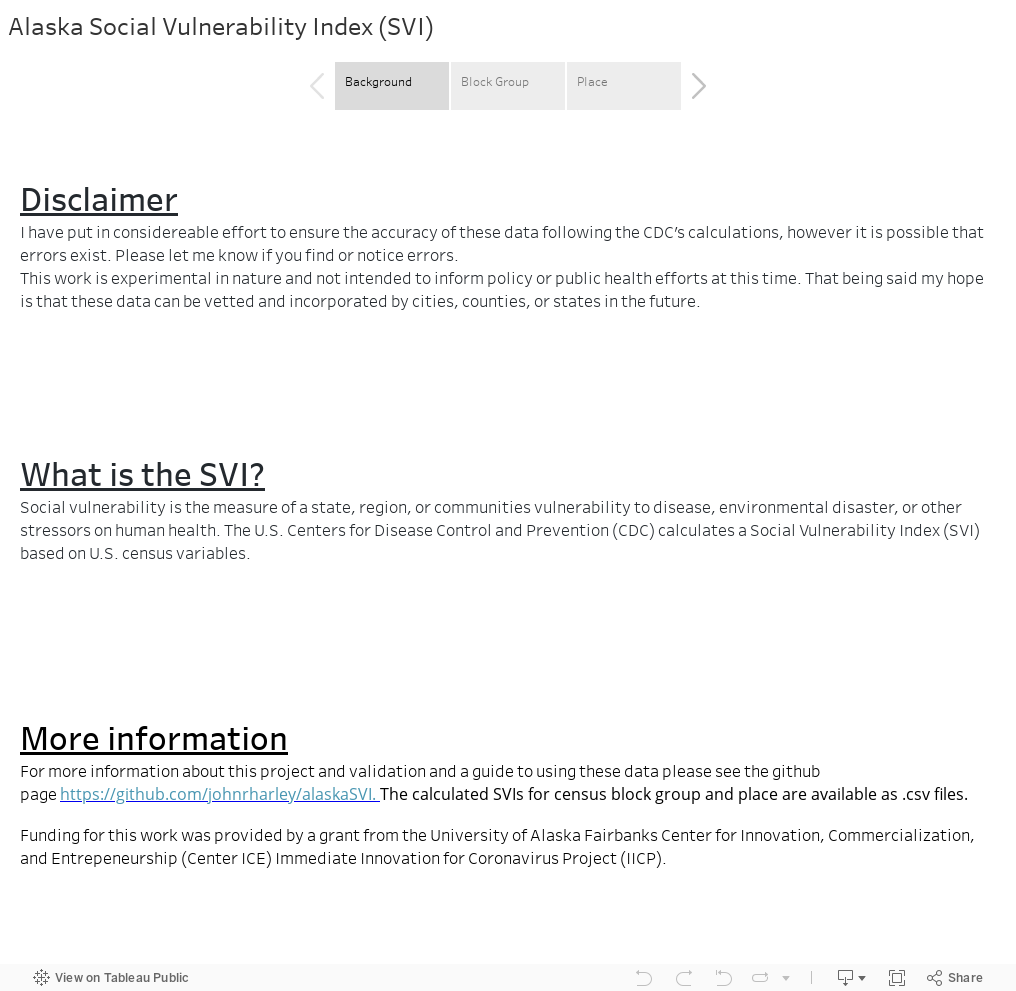

Social vulnerability index is a measurement of a community’s vulnerability to stressors such as disease or natural disaster. The federal Centers for Disease Control calculates SVI using census data to help emergence response planners and public health officials identify places most likely to need support before, during and after a hazardous event.

Harley’s map, which is
open-source so other states or communities could adapt it to their locale, allows users to apply filters to view the map in either traditional block groups or as a collection of more than 300 cities and census-designated places. The latter option essentially only displays the places people actually live.

[How the first week of schools went, according to school district staff]

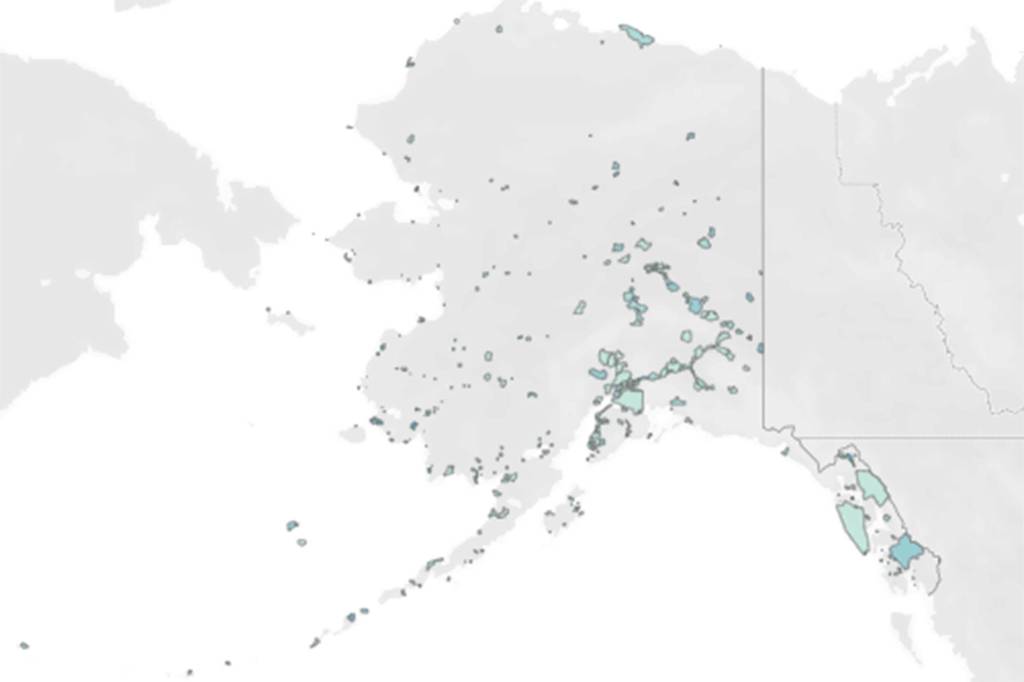
Darker shades of blue on the map denote communities that are more at-risk to external stressors. Generally, Southeast Alaska, including City and Borough of Juneau, are a light shade of blue as is South Central Alaska. The western edge of the state is comparatively much darker, and the North Slope is somewhere in between the shades.

The project was made possible by a $5,000 coronavirus response grant through University of Alaska Fairbanks’ Center for Innovation, Commercialization and Entrepreneurship.

Harley emphasized that the map is not yet ready to inform action. Instead, he hopes that now that his map exists, he can work with someone with a public health background to help it offer maximum public benefit.

“I have a data science background, and that’s kind of been my wheelhouse,” Harley said. “I don’t have a public health background, so it’d be great if we could collaborate on this, so someone from DHSS could come in and say ‘Hey, this looks great, let’s tweak it here and here, and then we can actually use this as a product going forward.’ And hopefully, they’d be able to use that for monitoring pandemic response, identifying vulnerable communities and planning distribution of resources that way. That’s my hope that DHSS will eventually pick up this tool.”

While Harley said the map was born of the pandemic, it also has future applications, since social vulnerability indices are calculated to account for susceptibility to many maladies.

“Even once we hopefully conquer this current coronavirus pandemic, hopefully, this will still be useful,” Harley said.

More in News

The Juneau road system ends at Cascade Point in Berners Bay, as shown in a May 2006 photo. (Michael Penn / Juneau Empire file)
State starts engineering for power at proposed Cascade Point ferry terminal

DOT says the contract for electrical planning is not a commitment to construct the terminal.

Members of the Alaska Air and Army National Guard, Alaska Naval Militia, and Alaska State Defense Force work together to load plywood onto a CH-47 Chinook helicopter, in Bethel, Alaska, Nov. 2, 2025, bound for the villages of Napaskiak, Tuntutuliak, and Napakiak. The materials will help residents rebuild homes and restore community spaces damaged by past storms. (U.S. Army National Guard photo by Spc. Ericka Gillespie)
Gov. Dunleavy approves Alaska National Guard assisting ICE in Anchorage

The National Guard said five service members will assist with administrative support; lawmakers and civil rights advocates worry that the move signals a ramping up of immigration enforcement operations in Alaska

A cruise ship, with several orange lifeboats visible, is docked in downtown Juneau. (Laurie Craig / Juneau Empire file photo)
CBJ seeks input on uses for marine passenger fees

Public comment period is open for the month of December.

Browsers crowd into Annie Kaill’s gallery and gift shop during the 2024 Gallery Walk. (Juneau Empire file photo)
Gallery Walk guide for Friday, Dec. 5

The Juneau Arts & Humanities Council announced community events taking place during… Continue reading

The Alaska State Capitol is seen on Tuesday, Nov. 25, 2025. (Photo by James Brooks/Alaska Beacon)
Alaska Senate Republicans confirm Rauscher, Tilton and open two vacancies in state House

The Alaska Republican Party is moving quickly after Republicans in the Alaska… Continue reading

Downtown Skagway, with snow dusting its streets, is seen in this undated photo. (Photo by C. Anderson/National Park Service)
Skagway’s lone paramedic is suing the city, alleging retaliation by fire department officials

This article was reported and published in collaboration between the Chilkat Valley… Continue reading

A spruce tree grows along Rainforest Trail on Douglas Island. (Mari Kanagy / Juneau Empire)
Where to cut your Christmas tree in Juneau

CBJ and Tongass National Forest outline where and how residents can harvest.

Winter dining has always carried more weight than the menu might suggest. In the off-season, eating out isn’t just about comfort food or convenience; it’s a way of supporting local businesses as they hold steady through the slower months. Photo credit: Canva.
Savoring local in Juneau: How a simple meal helps the whole community

Independent cafés and neighborhood restaurants keep Juneau strong through the slow season

Kaskanak Creek in the Bristol Bay’s Kvichak watershed is seen from the air on Sept. 27, 2011. The Kvichak watershed would be damaged by the Pebble mine project, the Environmental Protection Agency has determined. (Photo provided by Environmental Protection Agency)
Pebble Mine, halted by EPA order, gets support from national development groups

In 2023, the EPA invoked a rarely used “veto” clause of the Clean Water Act to say that there was no way that the proposed Pebble Mine could be developed without significant harm to the environment.

Most Read