On the Trails: Water drops on plants
Published 10:30 pm Monday, September 26, 2022
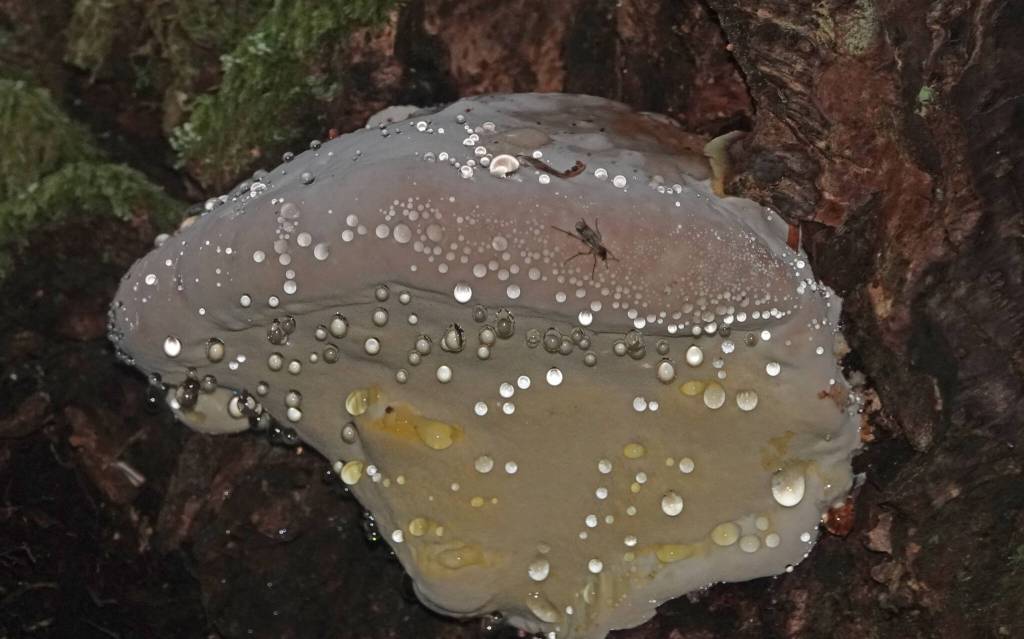
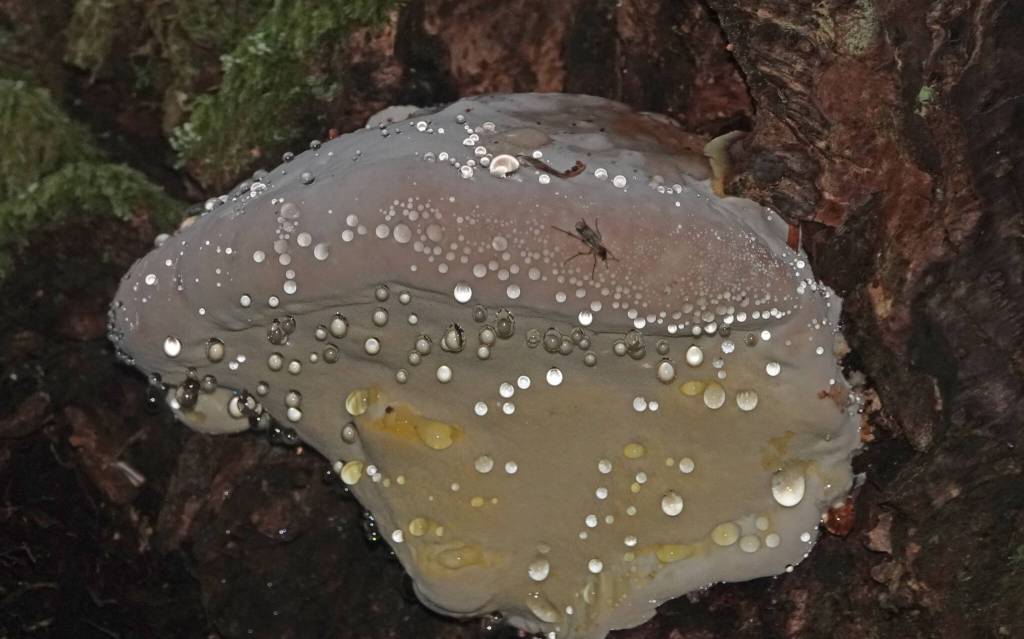

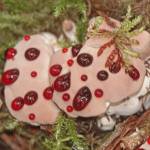
Gardeners sometimes see leaves fringed with droplets of liquid. The droplets are not dew or rain, and plants don’t sweat. So what are they? Those drops are a way for the plants to excrete excess water, perhaps taken up from very wet soil or resulting from metabolic activity. They are produced mostly at night. During the day, water is drawn up through the plant and evaporates from openings (stomata) on the leaf surfaces. Stomata often close at night, but root pressure still forces some water up to the leaves and out pores at the leaf edge. Production of those droplets is called guttation (from the Latin word ‘gutta’ for a drop).
Guttation drops contain not only water but also sugars, proteins and probably minerals. The additional substances are associated with a variety of interesting interactions, nutritional, protective, or otherwise.
A recent study examined the guttation drops of a blueberry species native in eastern North America. In this case, the drops were produced both day and night, especially during shoot and early fruit development. Researchers tested the survival and egg production of three insects (an herbivorous fly, a parasitic wasp, and a predator) on a diet of guttation drops compared to diets of water plus sugar or protein (or both). Sugars and proteins contributed to longevity and fecundity: Survival was better on guttation drops or sugar water for all three insects and for the predator on sugar and protein also. In general, females produced more eggs on guttation drops and on sugars plus protein. In short, guttation drops were indeed nutritious, providing useful nutrients.
Furthermore, there were effects on the arthropod community. Lots of arthropods visited the drops on plants in the field. The most common visitors were ants, fruit flies, lacewings, crab spiders, and parasitic wasps. Researchers set traps near plants with guttation drops and those without drops. More predators and parasites were captured in traps near plants with guttation drops, although herbivores were not affected. Given that the production of drops in this blueberry is unusually reliable for a period of time, it seems possible that the drops contribute to biocontrol of pests.
In other cases, the guttation fluid might contain certain proteins that would protect the plant from motile microbes on the leaf surface that could invade the plant through the leaf-edge pores. Another study noted that grasses are often associated with symbiotic endophytic fungi that grow in the inter- cellular spaces and produce alkaloids that help protect the grasses from grazers; in some cases, the alkaloids get into the guttation fluids, where they might provide additional protection. On the negative side, there’s a certain kind of bacteria that causes disease in tomato plants and gets into guttation drops; any contact with a contaminated drop can then transfer the disease to another tomato plant. Corn plants germinated from insecticide-coated seeds produced guttation drops laden with that insecticide, which is lethal to honeybees (and presumably other insects) that might come to sip on the fluid.
Fungi also produce guttation drops, although the process by which they do so is apparently not known. There’s a certain fungus that attacks sugar cane, producing necrotic lesions by secreting toxins in guttation drops (just when the fungus is making spores). A fascinating interaction may occur between two facultatively parasitic fungi that can attack the same fungal host. The guttation drops of one of the parasites contains hydrogen peroxide (plus enzymes), which is generally toxic to the second parasite—and species #1 produces guttation drops chiefly when in competition with species #2 for the same feeding space on a host.
Clearly, guttation drops can have ramifying effects on a variety of interacting species, although the possibility of such effects has not been explored extensively. There are probably lots more of these interactions still to be discovered—yet another way that plants (and fungi) can affect ecosystems!
• Mary F. Willson is a retired professor of ecology. “On the Trails” appears every Wednesday in the Juneau Empire.