New paper sheds light on mining’s impact on salmon and transboundary watersheds
Published 10:30 pm Tuesday, July 5, 2022
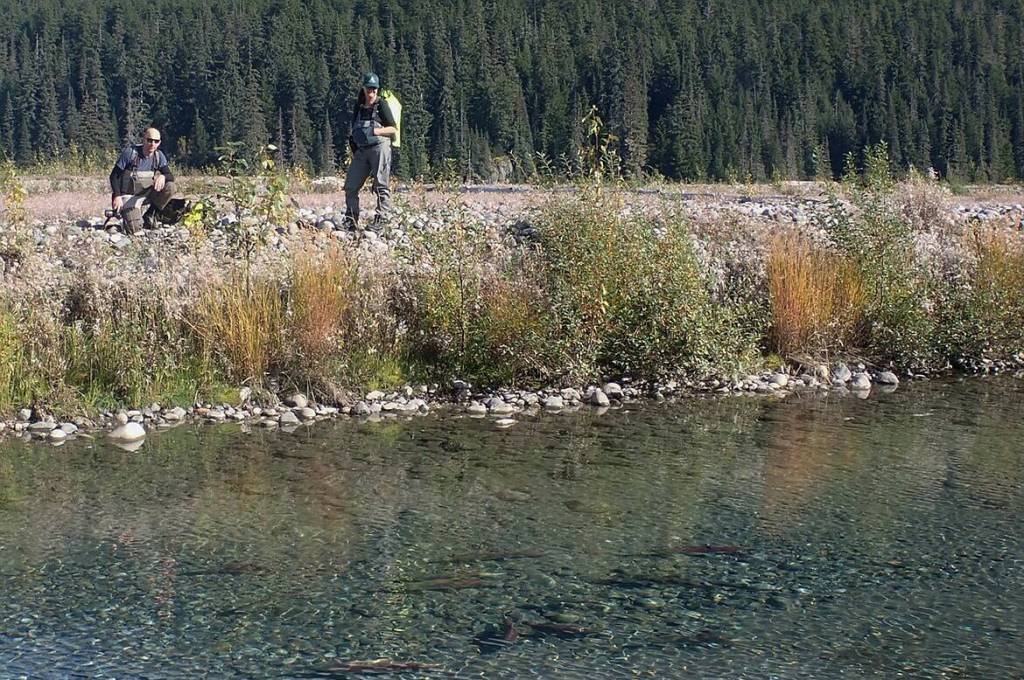

Mining’s impacts don’t stop at the U.S.-Canada border, according to a new study.
The recently published paper in Science Advances brought together 23 science and policy experts to assess the industry’s effects on salmonid species and watersheds from Montana to British Columbia and into Alaska.
Christopher Sergeant, a research scientist at the University of Montana Flathead Lake Biological Station and lead author of the paper titled “Risks of mining to salmonid-bearing watersheds” said it’s the first paper of its kind to directly link current mining policy’s lack of transparency to its impacts on the environment and its contribution to climate change. The paper looks into the ways mining has already changed and will continue to change watersheds like the Taku, Unuk and Stikine transcontinental rivers that salmon have lived in and relied on for centuries.
“We’re just trying to shine a light on how important decisions are in the future of mining,” he said.
Mining is currently responsible for 4-7% of greenhouse gas emissions globally according to a paper by McKinsey Sustainability, global management consulting firm that works to aid industry sectors to reach net-zero by 2050. Sergeant, who lived in Juneau for around 10 years, said he hopes this paper ignites Alaskans to “demand transparency” about mining and future implementation of the mining as the impacts of climate change occurring are already underway.
“Climate change is going to change the amount of water we have, it’s going to change the kind of infrastructure that we have built, and I hope people have a general notion of that,” Sergeant said.
[Sockeye harvest numbers soaring, other species see decline]
“And there is a big mineral rush going on right now, especially in Alaska, and the scale of mines has really increased over time from your ‘Ma and Pa on the side of the river with a gold pan’ to these big huge companies that are excavating millions of tons of earth.”
Though Sergeant emphasizes that this paper is not for or against mining, he said he hopes the paper gives people a way to grasp the impact or the scale on which mines are changing the environment around them and draw comparisons to scales people could understand. For instance, the paper examines the Highland Valley Copper Mine located in British Columbia. Sergeant said researchers found that in just 2017 alone, it removed the equivalent to approximately 20 Great Pyramid of Giza worth of rock from the ground.
“These are geological timescale changes that are happening in a year,” he said. But he notes that this could just be the beginning. From looking at the proposed mining operations that are planned to be built in the regions studied, the scale of mines only increases. Currently, the study approximates that around 3,600 active and abandoned mines exist around transcontinental waters in regions between Montana to British Columbia and into Alaska, and more are on their way.
Because of the close proximity to the watersheds, these mines have the potential to irreversibly impact the salmon species by exposing them to toxic waste and could impact the natural environment around them long after their lifetime, he said.
“I would want people to know that when you make a decision to move one of these mines forward, the potential impacts could last centuries,” he said.
Mary Catharine Martin, the communications director for SalmonState, an Alaska-based group that works to protect wild salmon, said this paper paves a way for people to demand more transparency for the future of mining, and to advocate for protecting salmon.
“I think the paper is really important because it points out the massive scale, the lack of adequate consideration of cumulative impacts and risk to wild salmon and wild salmon’s way of life and economies that are based on salmon,” Martin said.
She said it is interesting to see an objective look at the past and future of how mining impacts wild salmon and to see the scale and scope of how mining still continues to grow to this day despite the negative effects it has on the environment.
“Mining gold, which is not a critical mineral and 80% of it is used to make jewelry or bullion that sits in banks, the only reason to dig it up is to make some rich people richer, and meanwhile it’s endangering salmon runs.”
She said she hopes this paper starts a larger conversation around the number of environmental and cultural impacts the future of mining could bring if nothing changes.
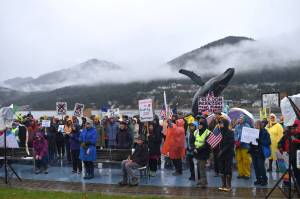
“It’s really important for us to think about what we want for the future of this region that we love to look like,” she said. “This study makes it clear what’s at stake and the scale of what’s happening. I think resolutions being passed around residents of Southeast Alaska show that people care about this issue and that we want change.”
• Contact reporter Clarise Larson at clarise.larson@juneauempire.com or (651)-528-1807. Follow her on Twitter at @clariselarson.