Long-distance, seasonal migrations are part of the animal world
Published 1:30 am Tuesday, June 16, 2020


Many animals make regular seasonal migrations. Some are quite short: I’m remembering the snakes that hibernated in deep crevices in Midwestern bluffs and came down to nearby swamps and floodplains for the summer, going back to the bluffs for the winter.
At the other end of the spectrum are some extremely long migration distances (note: that the following distance estimates take little account of detours to follow shorelines or concentrations of prey, etc.) The Arctic tern is generally considered to be the champion, migrating from Arctic to Antarctic and back every year, an annual round-trip distance of perhaps as much as 25,000 miles.
But other species are also impressive: the bar-tailed godwit flies nonstop (!) from Alaska to winter in New Zealand, a distance of almost 8,000 miles in eight days; on the way back, they take a longer route and stop over to fatten up in the Yellow Sea (between China and Korea) — in total, a round trip of over 18,000 miles. Aleutian terns go from Alaska to Indonesia and Southeast Asia for the winter, covering perhaps 20,000 miles each year. The little shorebirds called sanderlings breed in the High Arctic; some of them fly to Tierra del Fuego for the winter, and back again in spring, a round-trip of close to 20,000 miles.
Some seabirds that nest in the southern oceans go north for their winter. Sooty shearwaters fly from their nesting areas in the Falklands and Tierra del Fuego to Arctic waters near Norway and back again, over 17,000 miles in the Atlantic (round trip); in the Pacific, they fly even farther, from near New Zealand to the Gulf of Alaska. Short-tailed shearwaters fly still farther: they breed near Tasmania and migrate to the North Pacific; some even go through the Bering Strait to the Arctic Ocean.
All of these critters are relatively long-lived, with lifespans measured in years or decades, and may make those journeys many times in their lifetimes. And in most cases, they can feed along the way.
There are long-distance migrants among the insects, too, but they are relatively short-lived, with adult lifespans measured in days or weeks, and they do it differently. A single individual does not make the round-trip journey; instead, they breed along the way and the next generations take over the route.
The best-known example in North America is the monarch butterfly. Monarchs that are born and raised in the eastern U.S. and southern Canada migrate to special forests in northern Mexico for the winter (occasionally some go to southeastern U.S.). When spring comes, they start north again, but they stop to breed along the way. It takes two or three weeks for each generation of eggs and caterpillars to mature into the migrating adults. That new generation continues northward, and again they stop to breed. It may take three or four generations for monarchs to reach their northern-most range, where they produce the long-distance travelers to Mexico. There is also a smaller population of monarchs west of the Rockies; it migrates to California and northwestern Mexico. But monarchs are in deep trouble, due to habitat changes that reduced the availability of milkweed plants on which the larvae feed and to serious deforestation in their particular overwintering sites in Mexico.
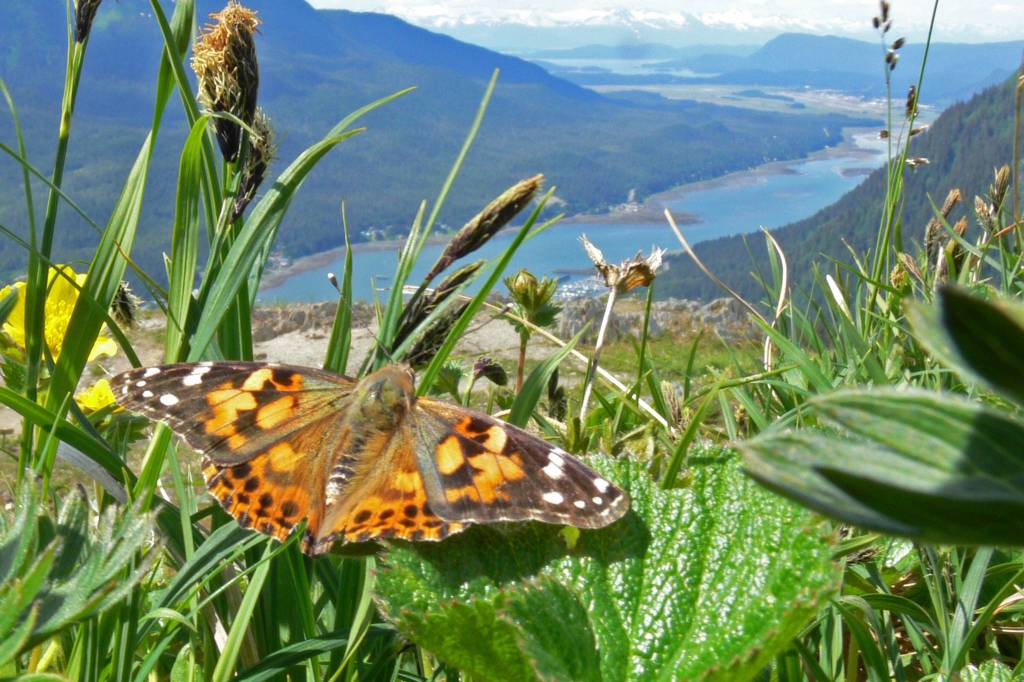
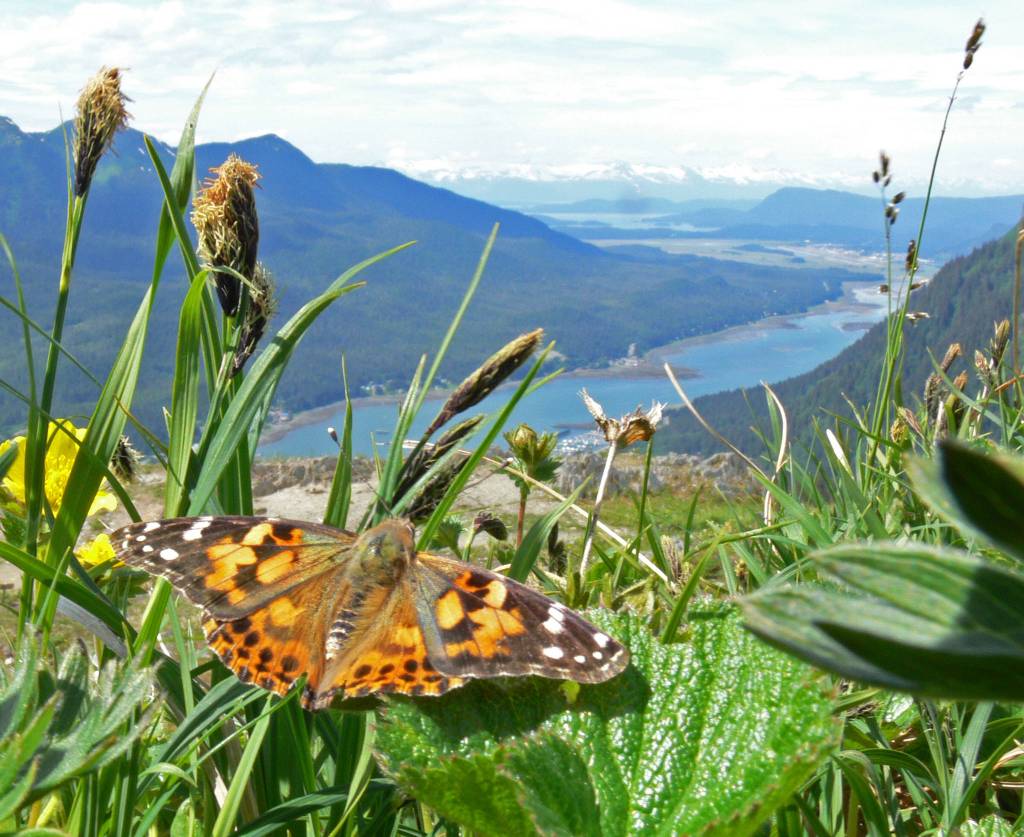
Painted lady butterflies do something similar. From wintering areas in Mexico they migrate northward in multiple generations to the Canadian border; the European populations migrate from south of the Sahara Desert in Africa to northern Europe and even Iceland, making several breeding stops on the way. Red admiral butterflies winter in southern U. S. or southern Europe and commonly migrate north in spring, but shorter distances than the painted ladies.
[There’s widespread in the natural world]
Perhaps surprisingly, some dragonflies are good migrants too.
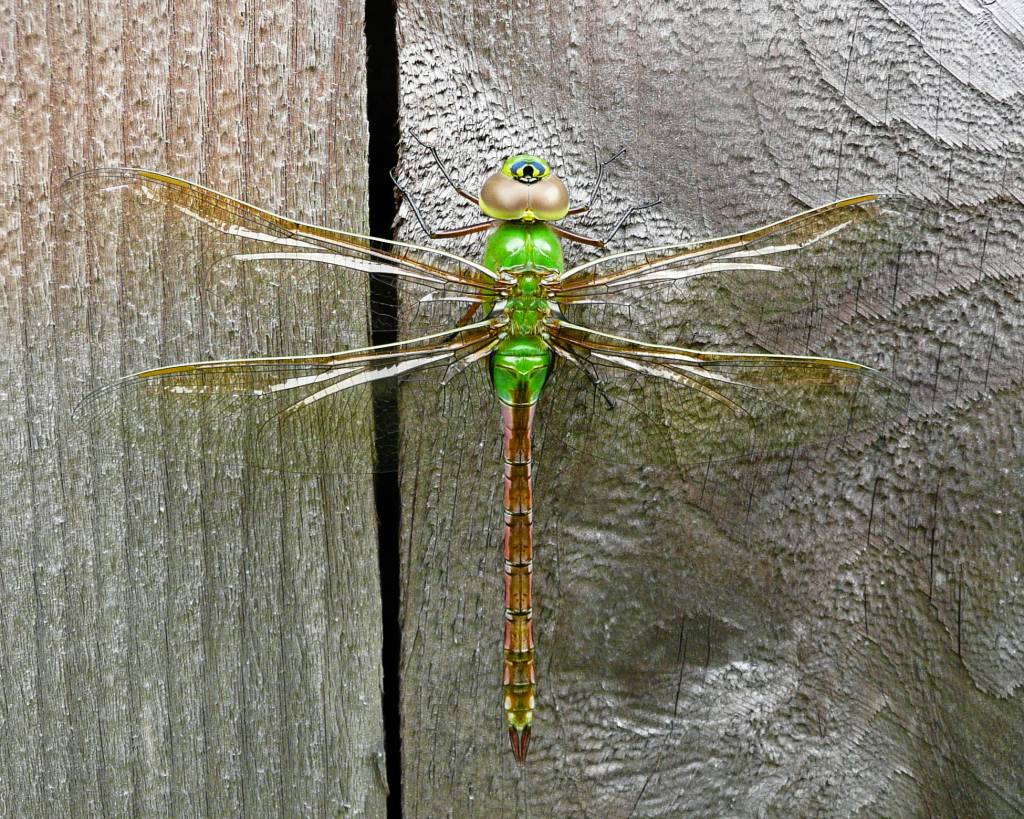
In North America, the big, beautiful green darner had a complicated arrangement, with a roundtrip distance of nine hundred miles or so. It migrates from wintering areas in southeastern U.S., the Caribbean and Mexico to as far as southeastern Canada. One generation makes this great leap and breeds. Some of the resulting offspring stay there, overwintering as larvae in ponds. Others migrate south to the wintering areas, where they reproduce, and these adults are residents in the wintering area, but their offspring will be the next year’s northward migrants.
A more far-traveling dragonfly is called the globe skimmer. It is widely distributed on many continents and apparently moves around a lot; they have been recorded flying over the Himalayas. But even better: Some of them fly over the Indian Ocean from India to East Africa. Some of this over-4,000-mile flight seems to be nonstop, although the skimmers might stop to breed if they happen to find an island with suitable conditions. After breeding in Africa, they go back.
That’s not the end of amazing insect migrations. Two kinds of hoverflies, less than a centimeter long, migrate from the European continent to Britain. There they pollinate many kinds of flowers and their larvae gobble up aphids. There may be several generations in a summer. Then the last of the summer-produced generation flies back to the mainland. From there, one species heads to North Africa to spend the winter and make a new northbound generation.
There is surely a lot more to be learned about insect migrations! For instance, how do they navigate? There are likely to be more of such interesting migrations, yet to be discovered.
• Mary F. Willson is a retired professor of ecology. “On The Trails” is a weekly column that appears every Wednesday.